
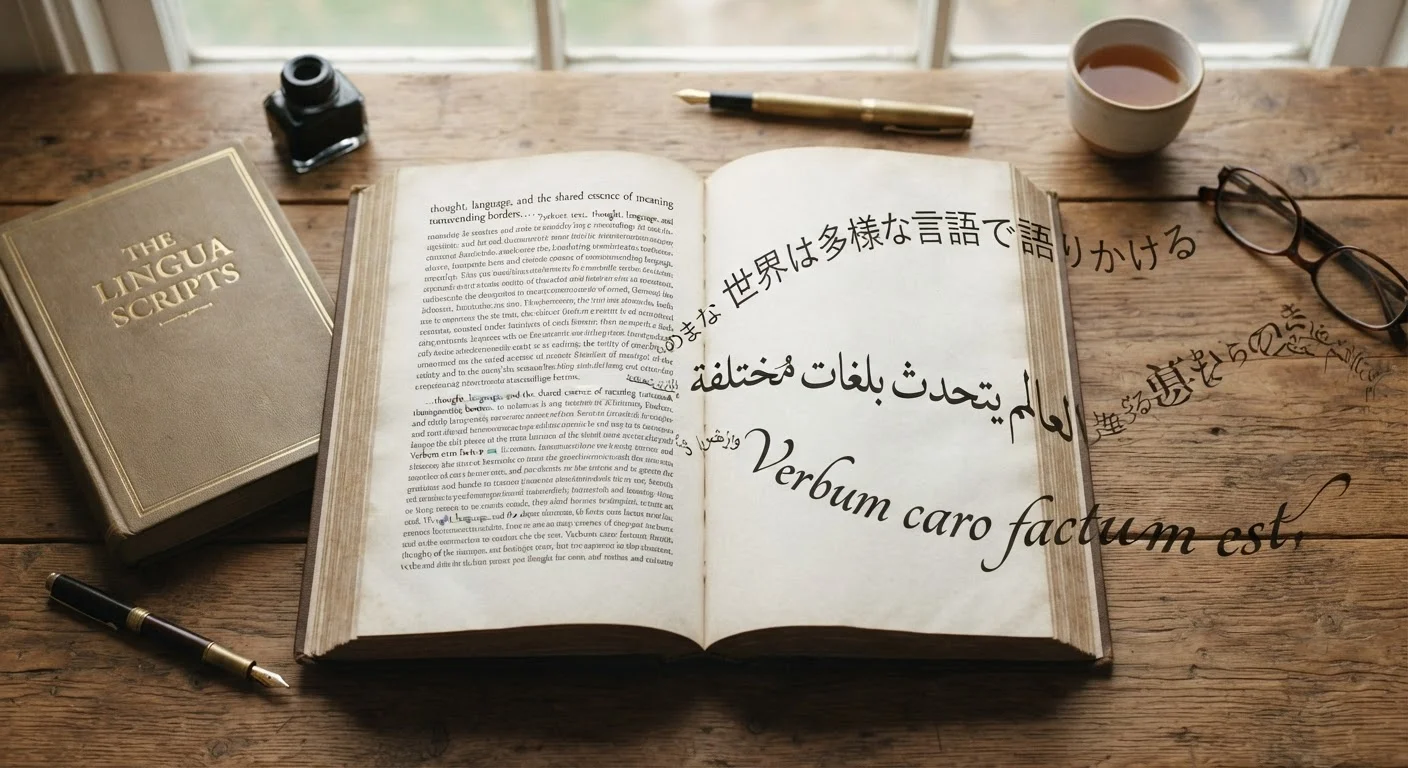
Translation as Interpretation, Not Just Conversion
When readers pick up a novel originally written in Spanish, Russian, or Japanese, they are reading the work of two authors: the original writer and the translator. This is one of the most underappreciated facts about world literature. Translation is not a mechanical substitution of words - it is a sustained act of interpretation that shapes everything from sentence rhythm to cultural meaning.
Consider a single sentence. A translator must choose whether to prioritize the literal meaning, the grammatical structure, the emotional tone, or the cultural implication - and those priorities can conflict. The resulting sentence may serve one goal well while inevitably compromising another. Multiply this across an entire novel, and the cumulative effect of those choices defines the version of the book a reader encounters.
This is why the same source text, translated by different hands, can feel like two different books. Readers who have compared multiple English translations of Anna Karenina or The Odyssey often describe them as having distinct personalities - one spare and modern, another ornate and archaic. Neither is wrong; they reflect different translators' understandings of what the text is and who it speaks to. For a broader look at how literary works take on cultural meaning, see what literary culture really means.
“The translator is an artist who works in someone else's studio - every choice made is an act of creative responsibility, not just linguistic duty.”
— Lawrence Venuti, Translation theorist and author of 'The Translator's Invisibility'
The Problem of Untranslatable Concepts
Every language contains words and ideas that resist direct translation. Portuguese has saudade - a melancholic longing with no precise English equivalent. German has Weltschmerz, the pain of perceiving how the world falls short of how it should be. Japanese literature is full of concepts rooted in cultural and aesthetic frameworks that English simply does not share.
When a translator encounters these gaps, they have several options: use the original word and trust readers to absorb it, substitute a rough English equivalent, add a footnote, or restructure the surrounding prose to imply the meaning. Each solution changes what the reader experiences. Using the foreign word preserves authenticity but can create distance; substituting an English equivalent risks flattening nuance; footnotes interrupt the reading flow entirely.
These micro-decisions accumulate into something larger: they determine whether a foreign book feels genuinely foreign or comfortably familiar. Translation theorists describe this as the difference between bringing the reader to the text versus bringing the text to the reader - and both approaches have legitimate defenders. This same tension between source and audience appears in other forms of communication too; international news reporting faces similar challenges when cultural context doesn't cross borders cleanly.
3%
Share of books published in the U.S. that are translations
This figure, widely cited in publishing industry discussions, highlights how little translated literature reaches American readers compared to other countries.
50+
Languages 'Don Quixote' has been translated into
Cervantes' novel is among the most translated works in history, with each version reflecting a different era's understanding of the text.
7,000+
Languages spoken worldwide
Only a small fraction of the world's languages have active literary translation programs, meaning vast bodies of literature remain inaccessible to most global readers.
How Translation Shapes a Book's Cultural Legacy
Translation is not a neutral act - it is a gatekeeping function that determines which stories reach which audiences. A book that is never translated simply does not exist for readers who cannot access the source language. A book that is translated poorly may reach those readers but fail to move them. A book that finds a gifted translator can cross borders and become a genuine part of another culture's literary canon.
The role of translation in making works culturally durable is significant. Gabriel García Márquez's One Hundred Years of Solitude became a global phenomenon partly because Gregory Rabassa's English translation was widely praised as exceptional - García Márquez himself reportedly said it was better than his original. That single translation introduced magical realism to millions of English-speaking readers and helped reshape what world literature could look like.
Understanding why some books endure while others disappear requires accounting for translation quality as a genuine variable - not just the story itself or the era in which it was written. For more on the forces that make books last, see why certain novels become cultural touchstones.
For readers who want to engage more critically with translated literature, building a basic literary vocabulary helps. Key literary terms like voice, register, and diction become especially useful when thinking about what a translation preserves and what it changes.
How to Read Translated Literature More Critically
When reading a translated book, look up who the translator is and read a short biography. Understanding their background, era, and stated approach can reveal a great deal about why the prose feels the way it does. If a beloved book is available in multiple translations, reading even a few pages of an alternate version can sharpen your sense of what each translator emphasized.