Before the Written Word: How Humans First Stored Knowledge
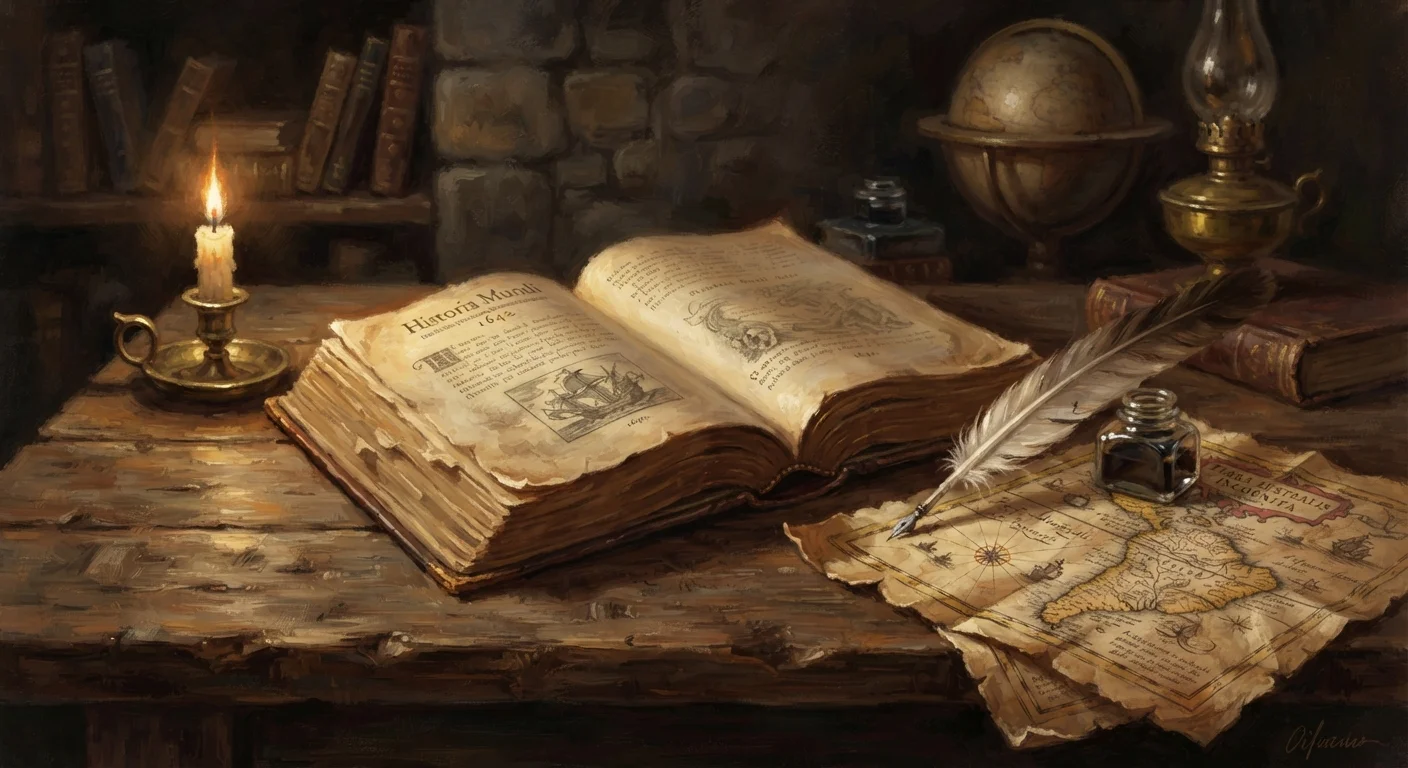
Writing, as technologies go, is a relatively recent invention. The earliest known writing systems - Sumerian cuneiform and Egyptian hieroglyphics - emerged roughly 5,000 years ago. But Homo sapiens have communicated complex ideas, beliefs, and histories for far longer. For the overwhelming majority of human existence, the spoken word was the only medium available.
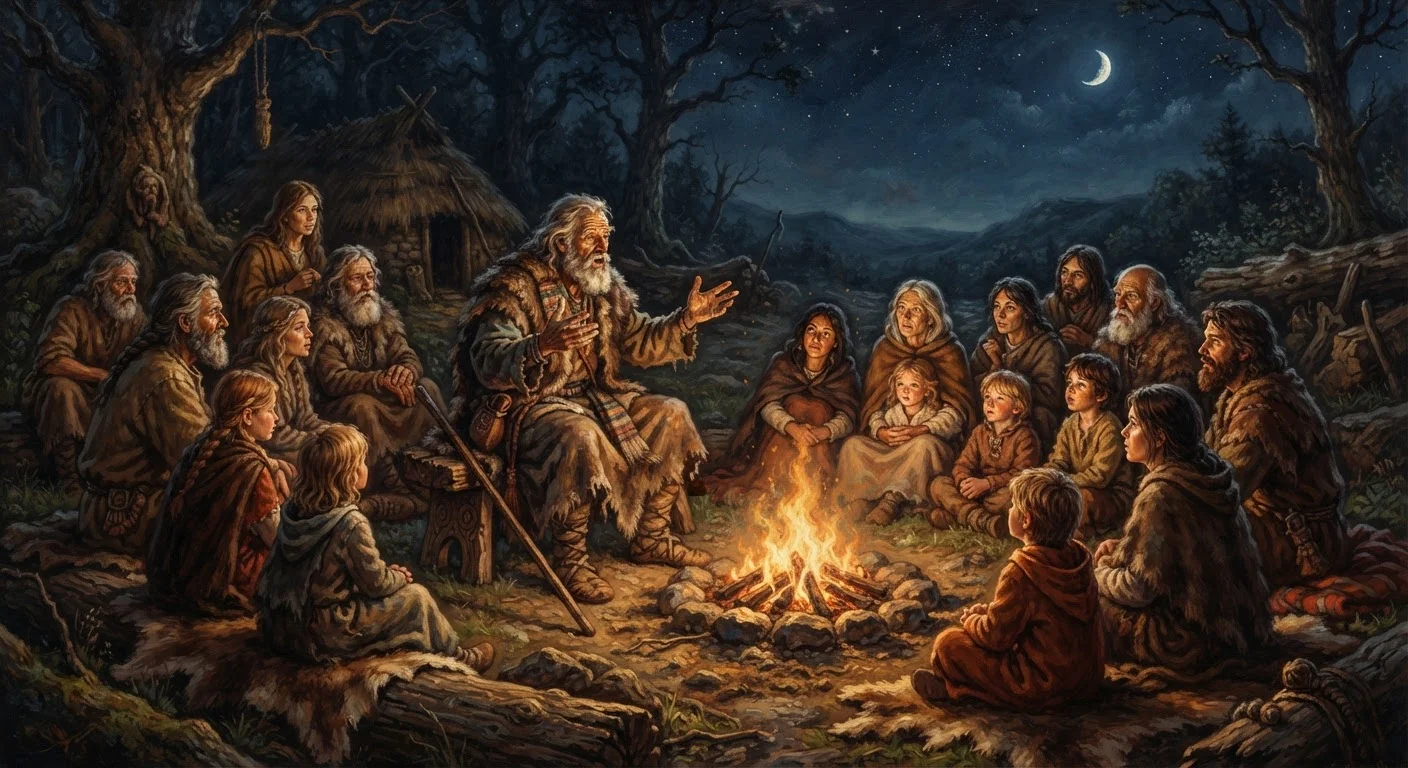
Oral tradition filled every role that books, databases, and legal codes fill today. Communities used narrative to record genealogies, encode geographic knowledge, transmit religious belief, codify social rules, and celebrate collective identity. These were not casual conversations - they were highly structured, socially important performances that entire communities depended on for cultural continuity.
~5,000
Years since earliest known writing systems emerged
Sumerian cuneiform and Egyptian hieroglyphics are among the oldest identified writing systems, both dating to roughly 3000 BCE.
10,000+
Years some Aboriginal Australian oral traditions may span
Some researchers believe certain Aboriginal Australian songlines encode geographical knowledge stretching back to the end of the last ice age.
~7,000
Languages estimated to exist worldwide today
According to UNESCO, many of these languages carry active oral traditions that have never been fully committed to writing.
Understanding oral tradition is essential to understanding what literary culture is and why it matters, because storytelling did not begin with the printing press or even the scroll. It began around fires, in temples, and in village squares.
The Mechanics of Oral Storytelling
Oral narratives were not simply improvised each time. Skilled practitioners developed sophisticated techniques to ensure stories survived generations intact. The scholar Milman Parry, studying Homeric epics in the early twentieth century, identified what he called oral-formulaic composition - a system in which bards assembled narratives from a memorized repertoire of rhythmic phrases, epithets, and plot templates rather than reciting a fixed script word for word.
This approach had several advantages. Repeated refrains and rhythmic structures made long texts easier to recall. Stock phrases - like the Homeric "rosy-fingered Dawn" - served as reliable building blocks. And the live performance setting allowed storytellers to adapt content to their audience while preserving the essential core of the narrative.
Listen to Oral Tradition in Action
If you want to experience oral tradition beyond the page, seek out recordings of traditional griot performances, Indigenous storytelling sessions, or spoken word poetry events in your community or online. Hearing these forms delivered aloud clarifies why rhythm, repetition, and vocal dynamics were - and still are - central tools of the storytelling craft.
Different cultures developed distinct roles for these practitioners. In West Africa, the griot served as a living archive - a professional keeper of history, genealogy, and communal memory. In ancient India, sutaputras recited the great epics at public gatherings. In medieval Europe, bards and skalds composed and performed poetry honoring rulers and recording battles.
Oral Roots of the Written Canon
Many texts considered foundational to world literature began their lives as oral compositions. Homer's Iliad and Odyssey, likely composed in the eighth or ninth century BCE, show clear signs of oral-formulaic construction - they were performed from memory before being committed to writing. The Sanskrit Vedas, some of the oldest religious texts in the world, were transmitted orally across centuries through a rigorous system of phonetic memorization before scribes recorded them. The Old English epic Beowulf similarly circulated in oral form long before its sole surviving manuscript was written down around 1000 CE.
This history matters for how we read these works. The episodic structure, the repeated epithets, the rhythmic cadences - these are not stylistic quirks. They are architectural features inherited from a tradition in which the ear, not the eye, was the primary receiver of narrative.
The West African griot tradition: professional oral historians who memorize and perform centuries of dynastic genealogy and community history.
Homer's Iliad, an epic poem of roughly 15,000 lines, circulated orally in ancient Greece before being written down.
Indigenous oral histories in North America that record the locations of ancient lakes and geological events passed down across hundreds of generations.
The spoken word poetry movement, which emerged prominently in the late twentieth century in the United States.
The Living Legacy of Oral Tradition
Oral tradition did not disappear when writing arrived. The two have coexisted - sometimes in tension, often in collaboration - for millennia. Today, oral forms such as spoken word poetry, storytelling festivals, and community oral history projects continue to thrive alongside print and digital media.
In many Indigenous communities worldwide, oral tradition remains the primary vehicle for transmitting cultural and spiritual knowledge. Researchers and linguists have worked with community elders to document these traditions, recognizing that their loss would mean the permanent disappearance of irreplaceable human knowledge.
For readers of books and students of literature, tracing the oral roots of written texts adds a dimension of meaning that enriches the reading experience. It is a reminder that literature is not primarily a technology - it is a human impulse, one that existed long before ink met paper.
“The act of narration - oral or written - is one of the fundamental ways in which human beings make sense of their experience and communicate that sense to others.”
— Walter J. Ong, Scholar of orality and literacy, author of Orality and Literacy (1982)