A Brief History of the American Public Library
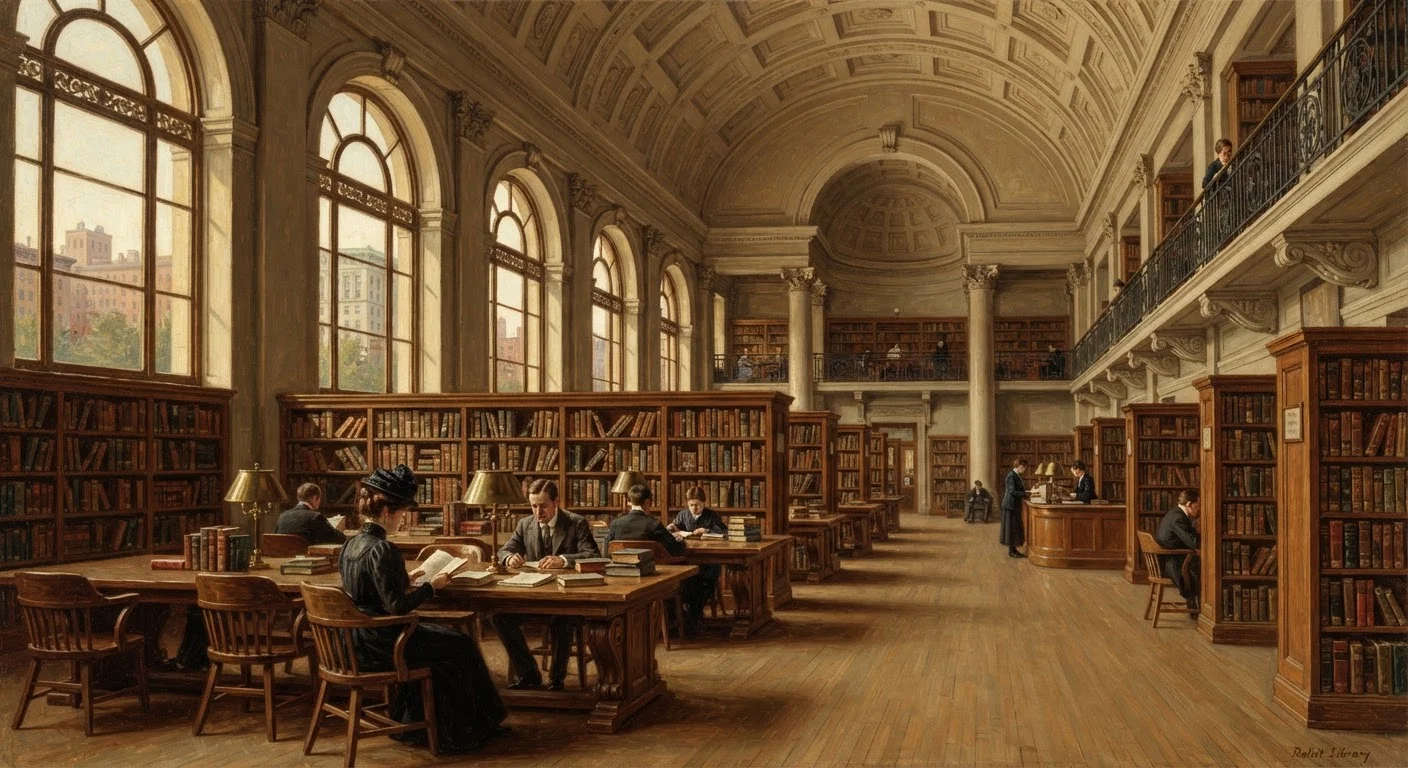
The American public library is rooted in Enlightenment ideals about the democratizing power of knowledge. Early subscription and social libraries in the colonial and post-revolutionary era required membership fees, which limited access to the educated middle class. The pivotal shift came in the mid-19th century, when cities began funding libraries from public taxes - grounded in the belief that an informed citizenry required free access to books.
The Boston Public Library's founding in 1848 is commonly cited as a landmark moment. Its charter declared that books purchased with public funds should be freely available to all residents - a radical notion at the time. That principle spread. By the late 1800s, the industrialist Andrew Carnegie had begun his famous library-building program, which ultimately funded construction of more than 2,500 library buildings in the United States alone between 1883 and 1929. Carnegie's libraries gave physical form to the idea that literary culture belonged to everyone.
This history is inseparable from broader questions of what literary culture means and why it matters to a society - libraries were, from the start, an institutional answer to those questions.
Libraries as Equalizers in Literary Life
One of the public library's most enduring functions is leveling access to literature across economic and social lines. Book ownership has never been uniformly distributed in America. For working-class families, immigrants, and rural communities, the public library has historically represented the only realistic path to a broad reading life.
This equalizing role has taken on renewed urgency in discussions about why American reading rates have shifted over time. Library access remains one of the structural factors researchers point to when examining disparities in reading outcomes. Communities with well-funded libraries tend to show stronger literacy indicators across age groups.
17,000+
Public library locations across the U.S.
According to the American Library Association, the United States has more public library locations than McDonald's restaurant locations.
1.3 billion
Annual library visits nationwide
The Institute of Museum and Library Services has reported that annual visits to U.S. public libraries consistently exceed attendance at all major professional sports events combined.
92%
Americans who say libraries are important to their community
A Pew Research Center survey on American library use found that strong majorities across demographic groups viewed public libraries as important community resources.
Libraries have also been crucial venues for literary communities to form. Book clubs in America have long found institutional homes in library meeting rooms, and many author reading series that shaped local literary culture were library-sponsored events.
Intellectual Freedom and the Censorship Battleground
Public libraries sit at one of American literary culture's most contested intersections: the tension between open access to ideas and community pressure to restrict certain materials. Libraries have regularly been targeted by efforts to remove books from their shelves - a history documented in detail alongside the long history of literary censorship in the U.S..
The American Library Association's annual list of challenged and banned books reflects the ongoing nature of this conflict. Titles challenged in one community's school district often remain freely available at the local public library branch - and librarians have frequently positioned themselves as the last line of defense for a reader's right to access.
Know Your Library Card's Full Benefits
A standard public library card typically unlocks far more than physical book loans. Many systems now offer free access to e-books, audiobooks, digital magazines, online courses, and research databases - all included at no charge. Check your library's website or ask a librarian to get a full picture of what your card makes available.
This commitment to intellectual freedom has not been without controversy or cost. Librarians have faced political pressure, budget threats, and public criticism. Yet the profession's core ethical stance - codified in the Library Bill of Rights, first adopted in 1939 - continues to prioritize reader access over institutional gatekeeping.
The Library's Evolving Role in the Digital Era
The arrival of the internet, e-readers, and digital databases prompted repeated predictions that physical libraries would become obsolete. That has not happened. Instead, libraries have adapted by layering digital services over their traditional collections. Today, most American public libraries offer e-book lending through platforms like OverDrive and Libby, access to research databases, digital audiobooks, and free public internet terminals.
Equally important, libraries have deepened their programming role. Author talks, writing workshops, children's literacy events, and community reading initiatives have made branches into active literary hubs rather than passive book warehouses. In this way, libraries contribute to the same ecosystem of literary prizes, reading culture, and public engagement with books that shapes what Americans read and how they think about literature.
The public library's staying power reflects something fundamental: it embodies a civic commitment to shared literary life that no algorithm or subscription service fully replicates.