The Core Question: What Is Each Genre Trying to Do?
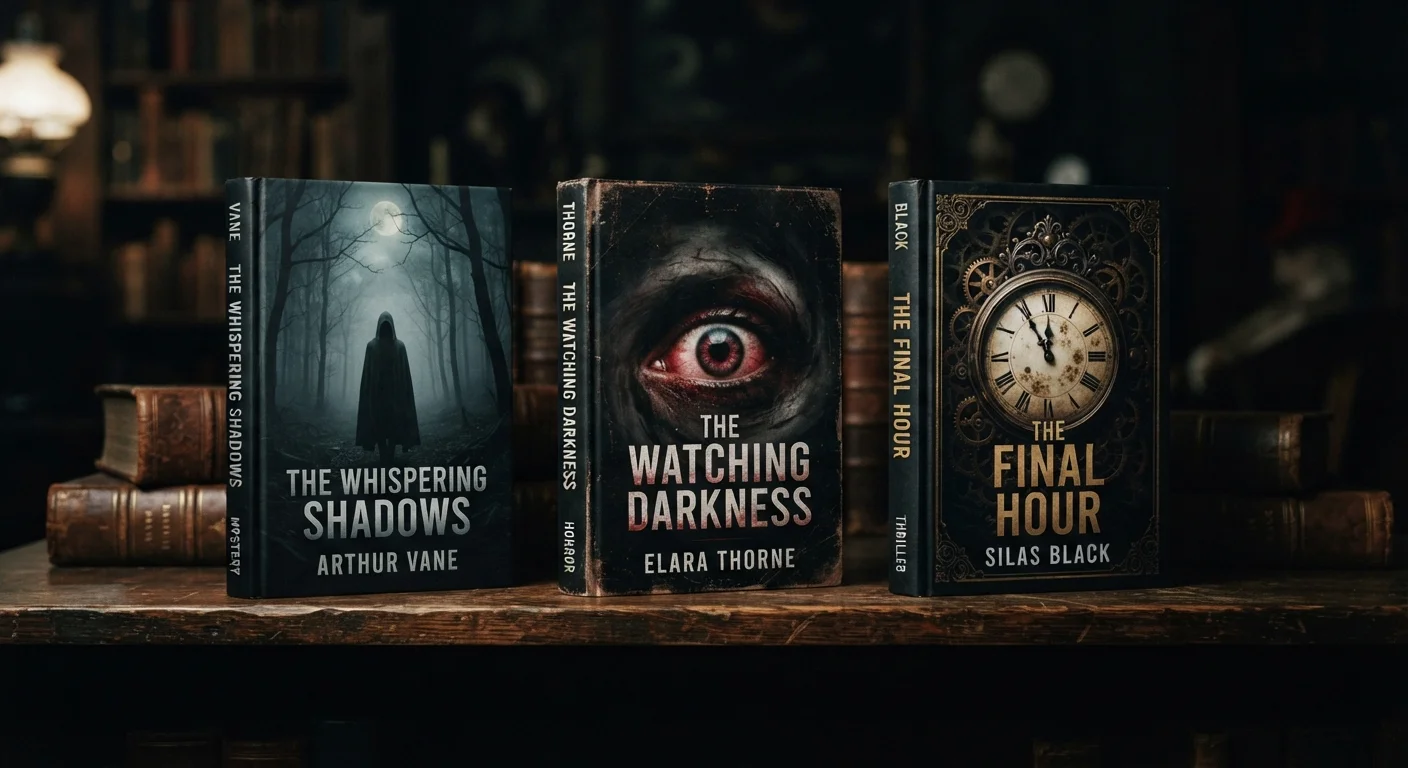
Genre labels exist to set expectations. When a reader picks up a thriller, a suspense novel, or a horror story, they're entering into an unspoken agreement with the author about the kind of experience they'll have. The trouble is, these three genres are frequently lumped together - on bookstore shelves, in marketing copy, and in casual conversation - as if they're interchangeable.
They aren't. Each genre has a distinct emotional engine.
Thrillers are about danger in motion. The protagonist faces a clear external threat - a killer, a conspiracy, a ticking bomb - and the plot races toward confrontation or escape. The dominant feeling is urgency. Readers feel compelled to turn pages because something terrible is actively happening or about to happen.
Suspense is about anticipation and uncertainty. The threat may be known or unknown, but the emphasis falls on waiting - on the reader knowing more than the character, or wondering what a character will choose to do. The dominant feeling is dread, more psychological than kinetic.
Horror is about fear itself. It may use threats both internal and external, natural and supernatural, but its purpose is to disturb, unsettle, or frighten the reader at a deeper level than mere plot danger. The dominant feeling is unease or outright terror.
As genre labels can sometimes mislead, it's worth understanding what each category actually promises before relying on a cover sticker alone.
How the Genres Compare Across Key Dimensions
Breaking the three genres down across specific craft and reader-experience dimensions makes the distinctions concrete rather than abstract.
| Thriller | Suspense | Horror | |
|---|---|---|---|
| Primary emotional goal | Urgency and excitement | Dread and anticipation | Fear and unease |
| Nature of the threat | External, often concrete | Often ambiguous or internal | Can be supernatural or psychological |
| Pacing | Fast, action-driven | Measured, tension-building | Variable; atmosphere-focused |
| Reader's relationship to information | Often knows as much as protagonist | Often knows more than protagonist | Often knows less; mystery is key |
| Typical resolution | Clear, conflict resolved | Resolution often uneasy or ambiguous | May leave dread unresolved |
| Common settings | Urban, global, institutional | Domestic, psychological spaces | Isolated, uncanny, liminal |
One pattern worth noting: thrillers tend to be plot-forward, suspense novels character- and psychology-forward, and horror atmosphere-forward. That doesn't mean any of these genres lacks the other elements - it means each prioritizes differently.
Where the Boundaries Blur
The honest complication is that these genres bleed into each other constantly. A psychological thriller can operate almost entirely through suspense mechanics. A horror novel can move at thriller pace. A suspense story can incorporate supernatural horror elements without anyone agreeing on what shelf it belongs to.
Consider the distinction between a novel about a woman who suspects her husband may be a killer (suspense - the threat is uncertain, the horror is intimate and psychological) versus a novel about an operative dismantling a terrorist network (thriller - the threat is known, the plot is propulsive). Both are marketed as thrillers. Both use fear. But they work differently.
Use Reader Reviews as Genre Clues
When a book's genre label feels ambiguous, reading a handful of reader reviews - not critic blurbs - can clarify what the experience actually felt like. Readers frequently describe emotional responses: 'I couldn't breathe,' 'I was more creeped out than scared,' or 'I just needed to know what happened next.' Those responses map directly onto horror, suspense, and thriller respectively, and are often more useful than the genre sticker on the cover.
Horror occupies perhaps the most contested space. Literary horror - think Shirley Jackson rather than splatter fiction - can read more like suspense than what most people picture when they hear the word "horror." Meanwhile, some horror novels move at thriller speed. Genre blending in modern fiction is increasingly the norm rather than the exception, and authors frequently resist the neat categories publishers assign them.
If you're trying to navigate adjacent dark genres, it's also useful to understand what makes something a mystery novel, since mystery overlaps with all three of these categories in ways that can add to the confusion.
Practical Guidance for Genre Readers
If you know which emotional experience you're after, you can use these distinctions as a filter rather than getting tripped up by marketing.
- Want momentum and resolution? Lean toward thrillers. They're built to satisfy the desire for action and closure.
- Want to feel unsettled and think about human psychology? Suspense and psychological fiction will serve you better.
- Want to be genuinely scared or confronted with something deeply strange? Horror - particularly literary horror - is the appropriate destination.
It's also worth considering your tolerance for ambiguity. Horror and suspense are more likely to leave threads unresolved or end on disturbing notes. Thrillers typically provide resolution, even if it's costly for the protagonist.
If you're exploring a genre for the first time, asking a few questions before committing to a new genre can save you from investing time in something that isn't a good fit for your reading preferences.