
Why Genre Labels Exist - and Who They Serve
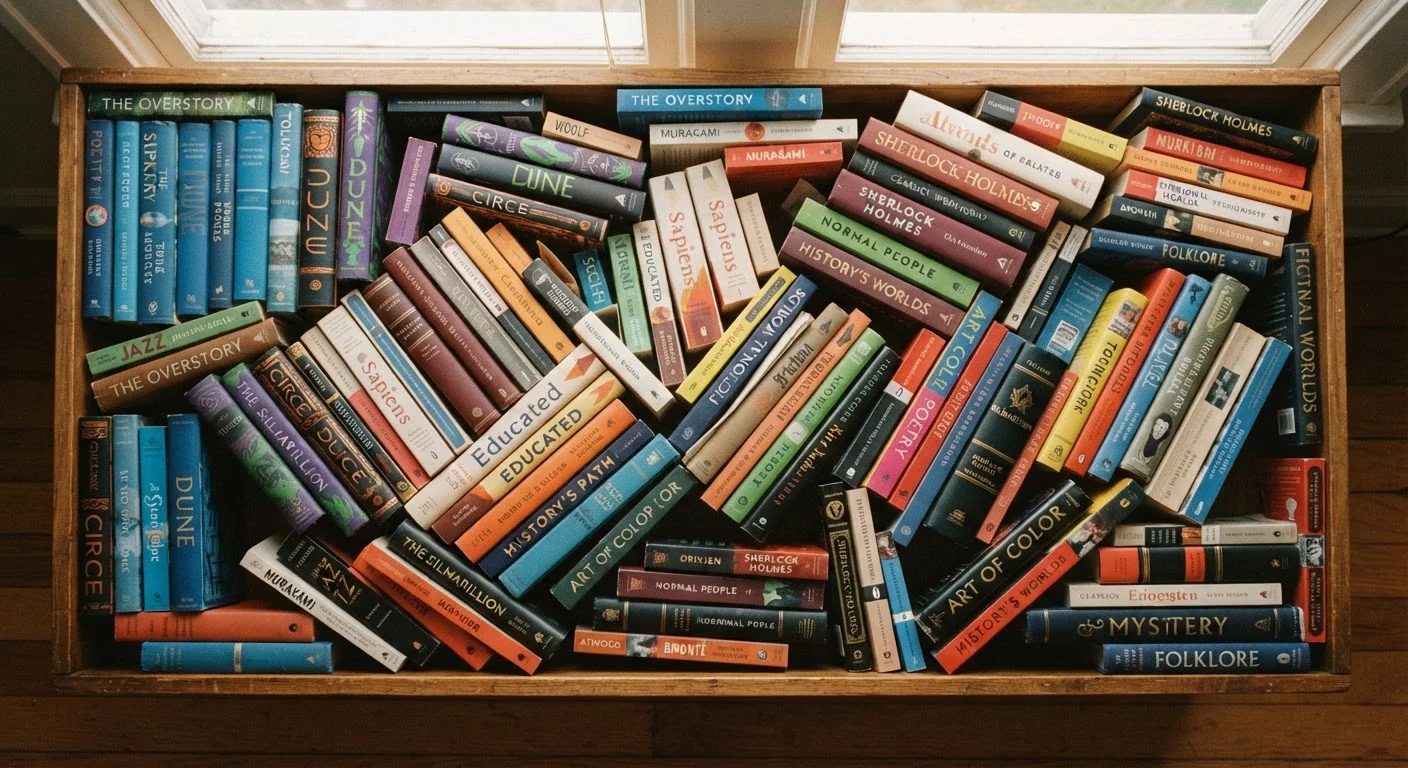
Genre labels were not invented to help literary critics sort great books from lesser ones. They emerged as practical tools for booksellers, librarians, and publishers trying to match readers with the kinds of stories they already know they enjoy. A mystery reader browsing a store benefits from a clear shelf label; so does the retailer trying to stock efficiently. In that sense, genre labels work well for their original purpose.
The problems arise when readers treat these commercial categories as if they carry deeper meaning - as if a label guarantees a certain quality level, a strictly defined set of content, or a fixed position in some literary hierarchy. None of those assumptions are warranted. Genre labels are signals about reader expectation and market positioning, not verdicts on a book's merit or complexity.
Myth
Genre labels are objective, standardized categories that all publishers and booksellers agree on.
Fact
Genre labels are fluid, commercially driven, and inconsistent across publishers, retailers, and even countries.
There is no universal authority that defines genre boundaries. A book sold as literary fiction in one market may be shelved under contemporary fiction or even drama in another. Publishers assign categories based partly on where they think a book will sell best - a decision shaped by marketing strategy as much as by the book's actual content. Retailers may re-shelve titles independently. This is why the same novel can carry different genre tags on different platforms.
Myth
If a book has a genre label, it must follow that genre's rules strictly.
Fact
Many celebrated books openly subvert genre conventions while still carrying a genre label.
Genre conventions - such as a mystery's detective figure or a romance's happy ending - are reader expectations, not requirements. Authors regularly bend or break these conventions intentionally. A thriller might withhold the satisfying resolution readers expect; a science fiction novel might focus almost entirely on interpersonal relationships rather than technology or world-building. The label signals a general territory, not a binding contract. For a deeper look at how authors deliberately mix and stretch these boundaries, see Genre Blending in Modern Fiction.
Myth
Authors choose how their own books are categorized.
Fact
Publishers and sales teams typically make final genre categorization decisions, often with little author input.
By the time a manuscript reaches its release date, the author's influence over shelving category has usually been modest at best. Acquisitions editors, marketing departments, and sales representatives weigh in on genre placement because it directly affects which retail sections, trade catalogs, and online algorithms will surface the book. An author who wrote what they consider a literary novel may find it packaged and sold as upmarket commercial fiction - and vice versa.
Myth
Genre fiction is less serious or valuable than literary fiction.
Fact
The literary/genre divide is a cultural and commercial construct with a contested history, not an objective quality measure.
The idea that "literary" fiction is more artistically serious than genre fiction emerged from specific cultural and institutional contexts in the twentieth century. It does not reflect a reliable quality gap. Science fiction, crime writing, and horror have produced works of acknowledged lasting importance. Conversely, books marketed as literary fiction vary enormously in quality and ambition. The Assumptions About Genre Fiction That Don't Hold Up examines this divide in more detail.
Myth
Subgenre labels like 'cozy mystery' or 'dark fantasy' are precise and universally understood.
Fact
Subgenre terms are informal shorthand that different communities use in overlapping and sometimes contradictory ways.
Subgenre labels develop organically within reader communities, bookselling circles, and online fan spaces. Because no single body defines them, the same term can mean slightly different things depending on who's using it. "Dark fantasy," for instance, might refer to high fantasy with grim themes, urban fantasy with horror elements, or something else depending on context. Treat subgenre labels as useful conversation starters, not precise specifications.
Where Genre Labels Break Down
The clearest evidence that genre categories are imprecise is the ongoing debate about where one genre ends and another begins. Thriller, Suspense, and Horror: Where One Genre Ends and Another Begins illustrates exactly this problem - three genres that share overlapping dark territory and regularly borrow from one another, yet are treated as distinct shelf sections.
Labels also struggle when books refuse to stay in a single lane. A novel can be a love story, a historical narrative, and a political thriller simultaneously. Publishers must pick a primary category for retail purposes, which means some aspect of the book is always underrepresented on the label. Before committing significant reading time to any genre that's new to you, Questions to Ask Before Committing to a New Genre offers a useful set of prompts to evaluate fit.
~40%
U.S. adult fiction sales from genre categories
According to industry tracking by the Association of American Publishers, genre fiction - including romance, mystery, and science fiction - consistently accounts for a substantial share of adult fiction unit sales.
3+
Average genre tags per title on major retail platforms
Most major ebook and online retail platforms allow publishers to assign multiple genre and subgenre classifications to a single title, reflecting how rarely books fit neatly into one category.
Understanding what genre labels actually signal - and where they fall short - makes you a more confident, better-informed reader. Use them as a starting point for discovery, not a final word on what any given book is or what it's worth.