What Centralized Data Storage Actually Means
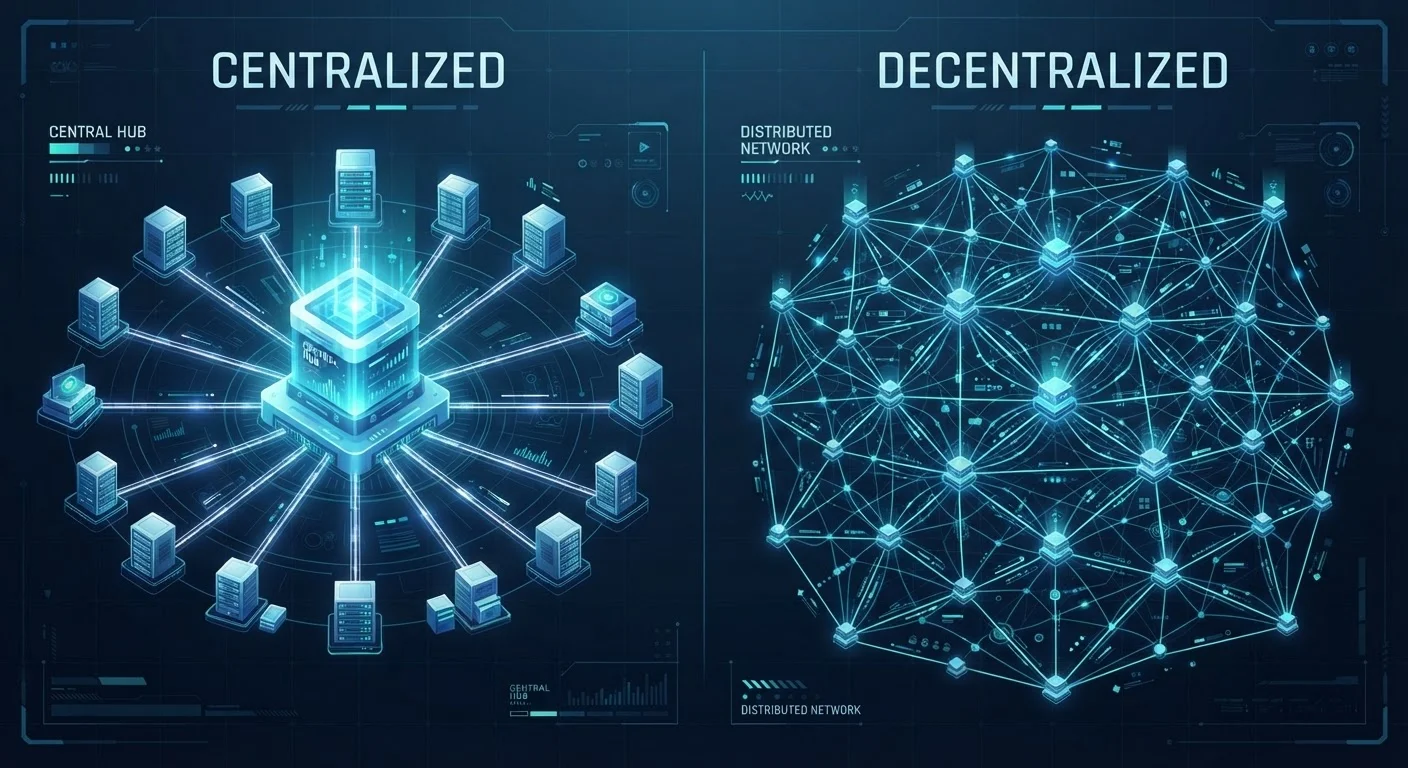
Centralized data storage means that all - or the vast majority of - a service's user data is held on servers owned or controlled by a single company or organization. When you upload a photo to a mainstream cloud service, store a document in a corporate productivity suite, or message someone through a popular app, your data almost certainly lands in a centralized system.
This architecture has clear practical advantages. Centralized systems are easier to manage, update, and audit. Providers can apply consistent security patches, deploy enterprise-grade encryption, and maintain compliance with regulations like HIPAA or GDPR from one controlled environment. Performance tends to be predictable, and customer support has full visibility into your data if something goes wrong.
The privacy trade-off is concentration of risk. A single breach - whether from an external attacker or an insider threat - can expose data belonging to millions of users simultaneously. The provider also holds the keys: it can, in principle, access your data, respond to government subpoenas, or change its data practices. If you're new to thinking about these dynamics, this primer on digital privacy fundamentals is a useful starting point.
| Centralized Storage | Decentralized Storage | |
|---|---|---|
| Data location | Single provider's servers | Many independent nodes |
| Breach risk | High-value single target | No single point of failure |
| Provider access to data | Possible unless end-to-end encrypted | Varies by implementation |
| Ease of use | Generally simple and familiar | Often complex, technical setup |
| Regulatory accountability | Clear jurisdiction, enforceable | Fragmented or unclear |
| Right to erasure | Usually supported | Often technically impossible |
How Decentralized Storage Distributes the Risk
Decentralized storage breaks data into fragments and distributes them across many independent nodes - computers run by different individuals or organizations - rather than a single server farm. Blockchain-based storage networks and peer-to-peer file systems are common examples of this model.
From a privacy standpoint, the key benefit is the elimination of a single point of failure. There is no central administrator who holds all your data, no one master database for an attacker to target. In some implementations, data is encrypted before being split across nodes, meaning no single node operator can read what they're storing.
However, decentralized does not automatically mean private. Data written to a public blockchain is often permanently visible to anyone. Metadata - information about who accessed what, and when - can still leak identity even when content is encrypted. Governance is also murkier: if something goes wrong, there may be no company to contact or regulatory body to hold accountable. Decentralized social networks illustrate both the promise and the complications of this model in practice.
422M+
Records exposed in data breaches in 2022
According to the Identity Theft Resource Center's 2022 Annual Data Breach Report, over 422 million individuals were affected by data compromises that year - the majority involving centralized systems.
~60%
Of breaches exploit credential theft or phishing
IBM's Cost of a Data Breach reports consistently find that stolen or compromised credentials are among the leading attack vectors against centralized data stores.
The Privacy Lens: What Actually Matters
Storage architecture is just one layer of a broader privacy picture. Two factors matter more than the centralized-versus-decentralized label alone.
Encryption and Key Control
Who holds the encryption keys determines who can read your data. End-to-end encryption in a centralized system - where only you hold the decryption key - can be more private than an unencrypted decentralized system. Encryption and anonymization serve distinct roles and should not be conflated with storage architecture choices.
Data Governance and Jurisdiction
Even with strong encryption, the legal and organizational framework around a storage system shapes your real exposure. A centralized provider headquartered in the U.S. is subject to U.S. law. A decentralized network with nodes in multiple countries creates a patchwork of legal jurisdictions - which can be protective or confusing depending on circumstances.
For a plain-English breakdown of terms like end-to-end encryption, zero-knowledge proofs, and metadata, see this glossary of key digital privacy terms.
Choosing the Right Mental Model for Your Situation
Most people do not choose their storage architecture - it is chosen for them by the services they use. Understanding the difference still matters because it helps you ask better questions before signing up for a service or storing sensitive information.
Ask: Does the provider offer end-to-end encryption, or do they retain the ability to read your data? Is the storage infrastructure audited by independent third parties? What happens to your data if the company is acquired or shuts down? For decentralized systems: who validates the network, and what recourse do you have if data is lost or exposed?
Neither model is a silver bullet. Centralized systems can be highly secure when operated responsibly. Decentralized systems can introduce risks of their own, including immutability - the fact that data written to some networks cannot be deleted - which is itself a privacy concern under regulations like the GDPR's right to erasure.
This article is for informational purposes only. It does not constitute legal, security, or professional technology advice. Readers with specific data protection concerns should consult a qualified professional.