What Makes Sci-Fi and Fantasy Different From Other Fiction
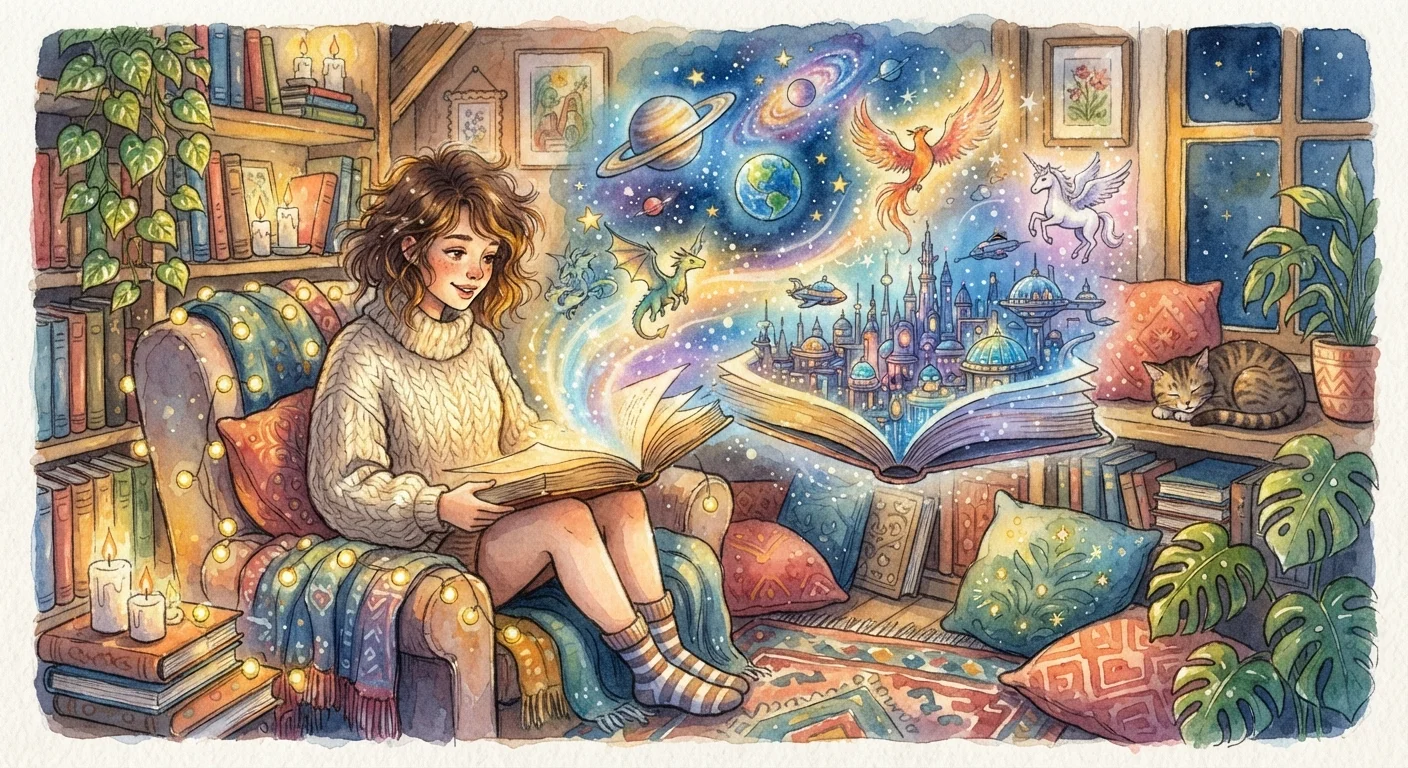
Most fiction asks you to accept the world more or less as it is. Speculative fiction - the umbrella term that covers both science fiction and fantasy - asks you to accept a world that operates by different rules. That single shift is what makes these genres feel both thrilling and, for some first-timers, slightly disorienting.
Science fiction builds its alternate reality on a foundation of plausible extrapolation. It imagines what could happen if technology, science, or society evolved in a particular direction. Fantasy, by contrast, draws on magic systems, mythological creatures, and supernatural forces that don't seek scientific justification. In both cases, the invented rules are consistent - authors establish them early and follow them throughout, which is why dedicated readers talk about a story's internal logic so seriously.
What both genres share is a commitment to using the impossible as a lens on the very possible. Stories about alien contact often explore isolation and miscommunication. Epic quests through invented kingdoms tend to be about courage, corruption, or belonging. The fantastical backdrop doesn't distance these stories from real human experience - it frequently sharpens it.
Key Concepts Every New Reader Should Know
Speculative fiction
A broad category that includes any fiction exploring worlds, technologies, or realities that differ from the known world. Science fiction and fantasy are its two most prominent branches.
World-building
The process by which an author constructs the rules, history, geography, and culture of an invented setting. Readers experience this as the background detail that makes a fictional world feel real and consistent.
Magic system
The set of defined rules governing how magic works in a fantasy story. A well-developed magic system has clear capabilities and limitations, preventing the author from using it as an unlimited plot device.
Standalone novel
A book that tells a complete story within a single volume, with no required sequels. Standalones are often recommended as entry points for new genre readers.
Hard sci-fi
A subgenre of science fiction that prioritizes scientific accuracy and rigor. Stories typically explore the consequences of real or near-real scientific concepts in careful detail.
Internal logic
The consistent set of rules a fictional world follows. Even in a story with magic or faster-than-light travel, readers expect the rules established early on to hold throughout.
Knowing a handful of foundational terms makes the reading experience significantly smoother. Genre discussions, reviews, and community forums all assume familiarity with these ideas, and understanding them helps you navigate recommendations with more confidence.
How to Choose Your Starting Point
The most common mistake new speculative fiction readers make is starting with the most famous or longest book they've heard of. Reputation and length are poor guides for first-timers. A better approach is to work backward from what you already enjoy.
If you're drawn to tight plots and fast pacing, look for science fiction thrillers or urban fantasy - subgenres that keep world-building lean and action central. If you prefer character depth and emotional complexity, literary fantasy or social science fiction tends to deliver that. If you liked a particular film or television series, searching for novels by the same author or in the same subgenre is a reliable shortcut.
For a structured look at how to ease into an unfamiliar genre without getting overwhelmed, see our guide to picking up a new genre. And if you want to understand the full range of what science fiction contains before you commit, a breakdown of sci-fi's major subgenres is a useful companion read.
Common First-Timer Challenges (and How to Handle Them)
New readers most often report two stumbling blocks: information overload and terminology density. Both are real, and both are manageable.
World-building-heavy novels - particularly epic fantasy - can front-load a lot of unfamiliar names, places, and histories in the opening chapters. If that happens, resist the urge to treat it like a textbook. Let unfamiliar details wash over you at first; most well-crafted stories will clarify what matters through context as the narrative moves forward.
Terminology is a related issue. Science fiction especially uses technical or invented vocabulary as atmosphere. You don't need to fully decode every term on first encounter. Experienced readers often describe a "click" moment - usually within the first fifty pages - when the language of a particular book starts to feel natural.
Give Yourself Permission to Quit Early
Not every highly praised book is the right entry point for every reader. If a novel isn't engaging you after the first 80-100 pages, it's perfectly reasonable to set it aside and try a different title or subgenre. Abandoning one book doesn't mean you won't love the next - genre fit matters as much as quality.
If a book genuinely isn't clicking after 80 to 100 pages, it's reasonable to set it aside. Not every entry point suits every reader. The genre is broad enough that a different starting book often resolves the problem entirely. You can use the prompts in this guide to evaluating a new genre before you invest significant reading time.
Building Your Reading Life in Speculative Fiction
Once you've finished your first book, the most useful thing you can do is pay attention to what worked and what didn't - not whether the book was considered a classic, but whether it engaged you. That personal data point is more valuable than any ranked list.
Award shortlists from recognized genre organizations provide a reliable quality filter and tend to reflect current conversations within the genre community. Public libraries offer access to a wide catalog without financial risk, and many maintain curated reading lists specifically for new genre readers.
Online reading communities organized around speculative fiction can accelerate your learning considerably. Members often share detailed, spoiler-tagged discussions that help you understand context, themes, and reading order before you commit. If you're new to that kind of digital space, getting started in an online community covers the basics of finding your footing without feeling lost.
Speculative fiction rewards patience and curiosity in roughly equal measure. The readers who stay tend to be the ones who followed their genuine interest rather than a prescribed reading order - and that's a habit worth building from the very first book.
Hugo Award Reading Lists
The Hugo Awards, voted on by members of the World Science Fiction Society, produce annual shortlists across fiction categories. These lists are a well-regarded starting point for finding quality speculative fiction recommended by engaged genre readers.
Your Public Library's Genre Reading Lists
Most public library systems maintain curated reading lists for new genre readers, often organized by mood or theme. These are vetted by professional librarians and carry no commercial motivation - a trustworthy resource for discovery.
Speculative Fiction Online Communities
Dedicated forums and reader communities focused on sci-fi and fantasy offer spoiler-tagged discussions, subgenre breakdowns, and personalized recommendations. Browsing these spaces before committing to a book can save significant reading time.