
What Is an Online Community, Really?
An online community is more than a group chat or a comment section. It's a space where people return regularly, share a common interest or goal, and build familiarity with one another over time. What separates a true community from a casual gathering comes down to that sense of ongoing connection - members recognize each other, develop shared norms, and feel some sense of belonging.
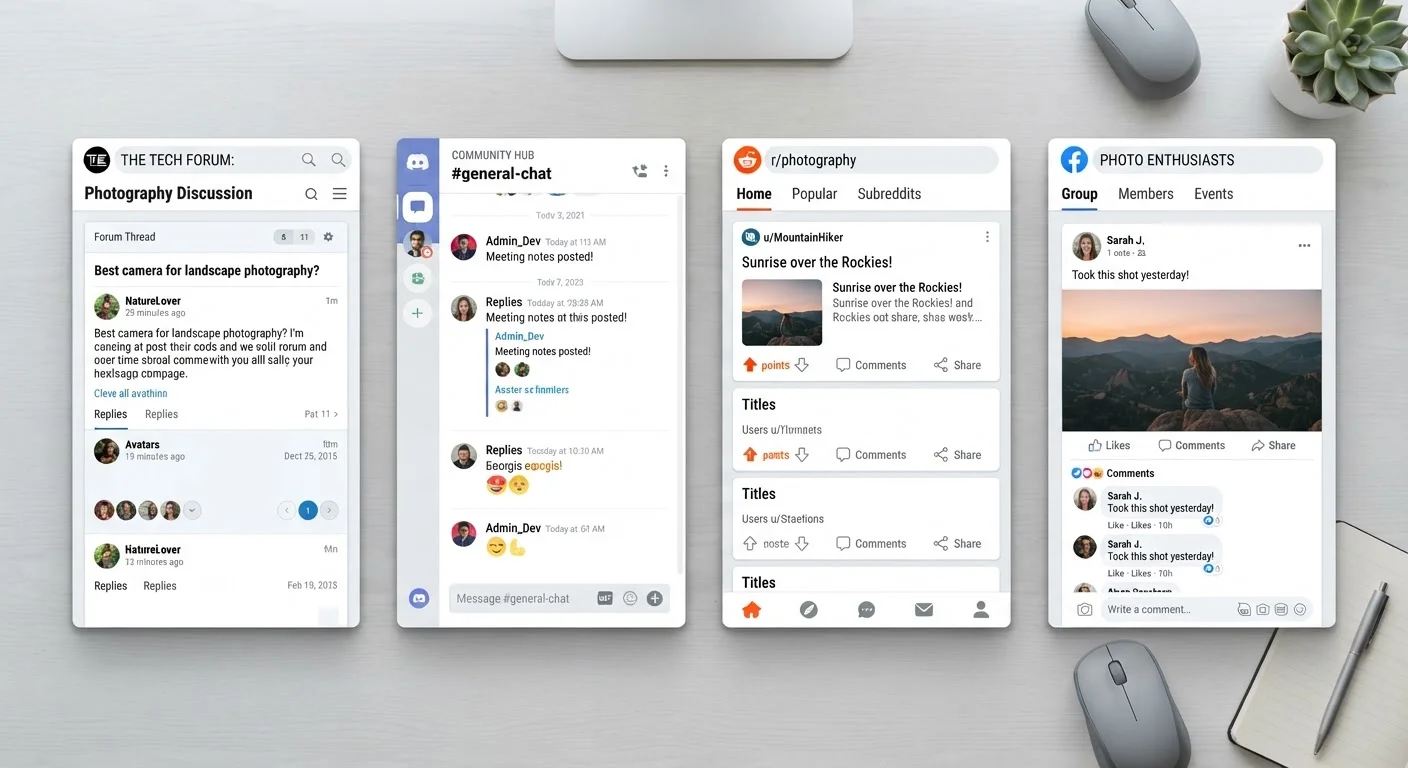
These communities exist across many platforms: Reddit threads, Discord servers, Facebook Groups, dedicated hobby forums, Slack workspaces, and more. The platform shapes the experience, but the underlying dynamic - people showing up repeatedly around a shared interest - is what makes it a community rather than just a crowd.
Lurking
Reading posts and discussions in an online community without actively participating. It's a normal and useful way to learn the culture before contributing.
Moderator
A person responsible for enforcing community rules, removing rule-breaking content, and keeping the space functional. Often a volunteer member.
Community rules (also: subreddit rules, server rules)
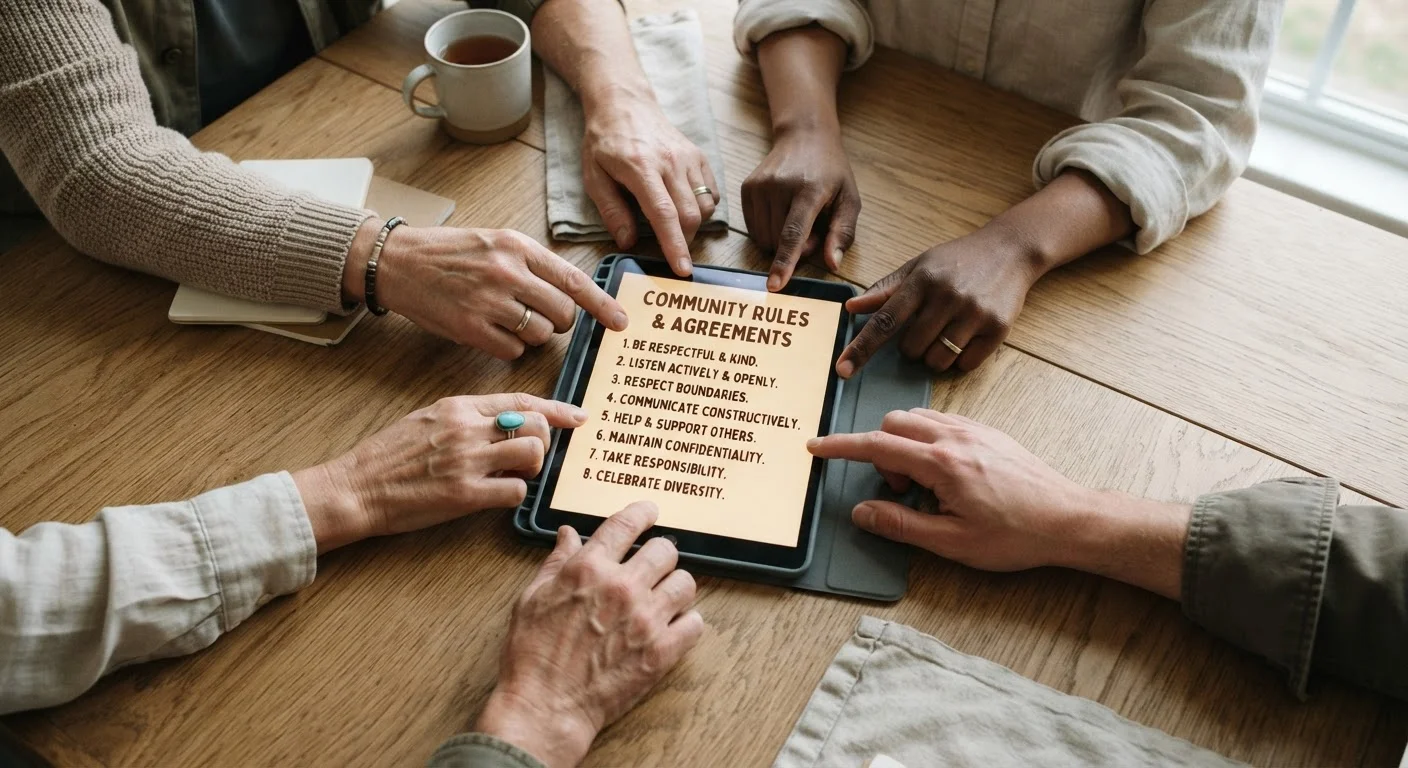
Written guidelines that define what's allowed in a particular community - topics, tone, posting format, and behavior. Usually pinned or linked near the top of the space.
Thread
A chain of connected posts and replies organized around a single topic or question within a forum or community space.
Handle / Username
The name you use to identify yourself in an online community. Most communities use handles rather than real names to protect member privacy.
Finding a Community That Fits You
The easiest starting point is to search for something you already care about. Add words like 'forum,' 'community,' or 'subreddit' to your interest and see what surfaces. If you're into photography, kayaking, science fiction, or sports fandom, there are almost certainly active groups built around those topics.
Once you find a candidate, look for a few signals before committing time to it. Is the community active - meaning posts appear regularly and get responses? Are the rules visible and reasonable? Does the tone in existing discussions feel welcoming or hostile? A community with clear moderation and recent activity is generally healthier for newcomers than one that's either dormant or chaotic.
It's also fine to join more than one and see which feels right. You don't owe any group your loyalty before you've experienced it firsthand.
Learning the Culture Before You Post
Every community develops its own unwritten rules on top of the official ones. Members develop shorthand, inside references, and expectations about tone that aren't spelled out anywhere. The fastest way to learn them is to read quietly for a while before jumping in - a practice sometimes called 'lurking.'
During that time, pay attention to how experienced members phrase questions, how disagreements are handled, and what kinds of posts get positive responses versus silence or pushback. Check whether the community has a pinned FAQ, a welcome post, or a wiki - these often contain exactly the context a newcomer needs.
Give Yourself a Week Before Posting
Spending at least a week reading before your first post gives you a real feel for the community's rhythm and expectations. You'll notice recurring topics, popular members, and the general tone - all of which will make your first contribution land better.
Skipping this step is one of the most common ways new members get off on the wrong foot. See our guide on mistakes newcomers often make in online communities for a fuller picture of what to watch out for.
Making Your First Contribution
When you're ready to post, start small. Responding to someone else's question or adding a relevant thought to an existing thread is lower-stakes than starting a new topic from scratch. It also signals that you've been paying attention - which communities tend to reward.
Keep your first posts honest and helpful rather than trying to impress. Introduce yourself if there's a dedicated space for it, but don't force it elsewhere. Ask questions when you genuinely don't know something - most members appreciate curiosity over overconfidence.
For a broader walkthrough of getting set up and posting for the first time, this complete starting guide for new participants covers the practical side in detail. And when good intentions still lead to friction, understanding participation mistakes that frustrate communities can help you course-correct.
Staying Safe and Setting Limits
A few habits are worth building before you become a regular anywhere online. Use a username rather than your real name. Don't share your location, employer, or other identifying details in public posts. Be skeptical of direct messages from people you don't know, especially if they're asking for personal information or pushing you toward an external link.
Time boundaries matter too. Online communities are designed to be engaging, and it's easy to spend more time than you intended. Deciding in advance how much time you want to give a community helps you stay in control of the experience rather than letting the experience run you.
Not Every Community Will Be the Right Fit
It's normal to try a few communities before finding one where you feel genuinely welcome. If a space consistently feels hostile, cliquish, or off-topic for your needs, it's reasonable to move on. The goal is to find a group that adds something to your experience - not to stick it out somewhere that doesn't serve you.
Communities are most valuable when they complement your offline life rather than compete with it. Going in with realistic expectations - connection takes time, not every exchange will be rewarding - makes the experience more sustainable and enjoyable. You can also learn more about how to engage effectively across online communities as you develop your participation habits.