Three Categories That Often Get Confused
When a story seems too strange - or too perfectly outrageous - to be real, it usually falls into one of three categories: satire, parody, or fabricated news. They look similar on the surface, but they differ fundamentally in intent, audience expectation, and potential for harm.
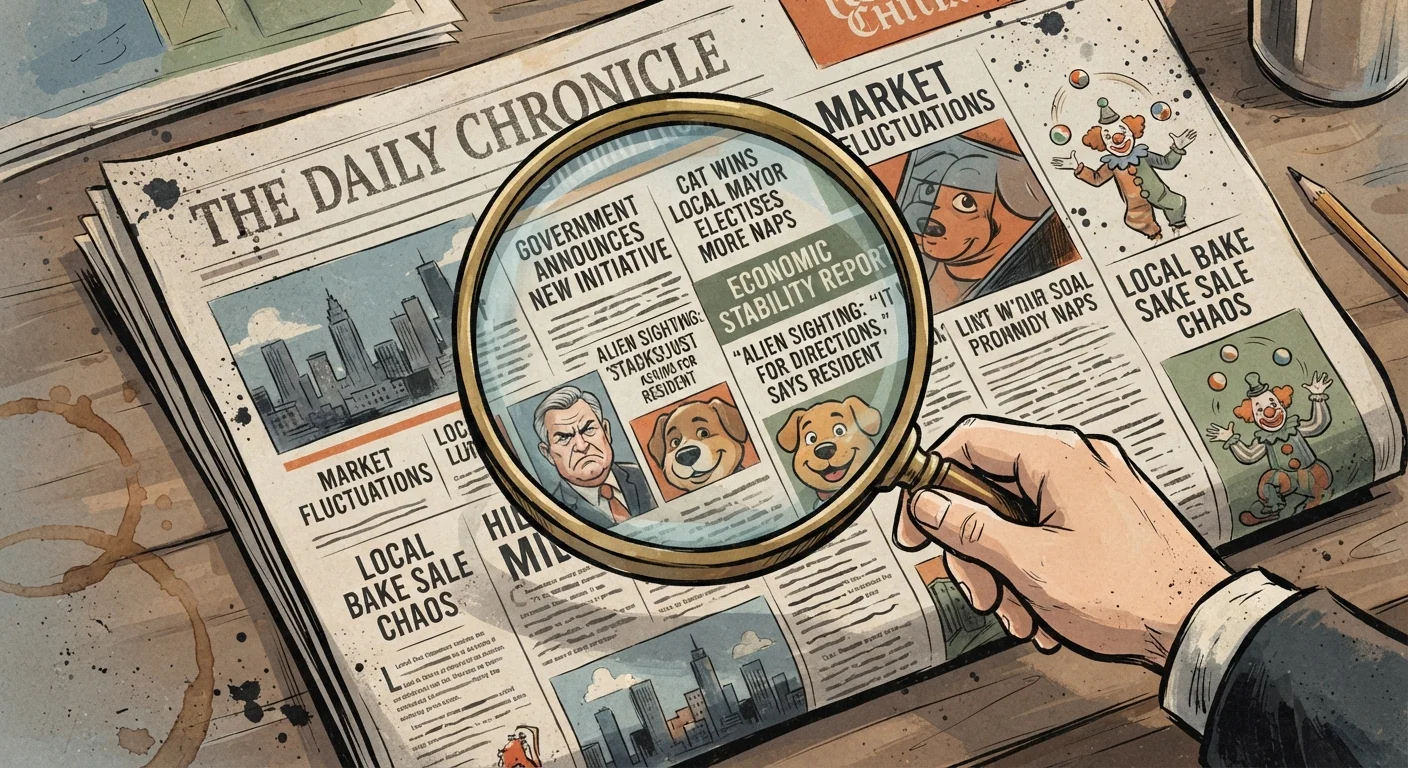
Satire uses fiction to make a point. Publications like The Onion write fake headlines about real politicians or events not to deceive readers, but to highlight absurdity or hypocrisy. The fictional frame is part of the message. Satire has a long history in American journalism - from colonial-era pamphlets to late-night television commentary.
Parody imitates something familiar in an exaggerated way. A Twitter account with a name like "Definitely Real Senator" that mimics a politician's speaking style is parody - the artificiality is a feature, not a bug. Courts in the United States have consistently treated parody as protected speech under the First Amendment.
Fabricated news, by contrast, is built to deceive. These sites adopt the visual design and language of legitimate newsrooms - wire-style headlines, authoritative bylines, plausible-sounding domain names - with no disclosure that the content is fictional. The goal is to make a false story believable, not funny.
For a deeper look at how news formats are distinguished from one another, see what each section of a news site actually does.
Why the Lines Blur - and What to Do About It
The most common way satire becomes misinformation is through context collapse. A satirical article written for an audience familiar with the outlet gets screenshotted, cropped to remove the publication name, and reshared - at which point, the signal that it was a joke disappears entirely.
Fabricated news sites exploit this dynamic deliberately. They mimic the aesthetic of real outlets and occasionally add fine-print disclaimers - but position them where readers are unlikely to look before sharing a headline.
Practical steps for distinguishing the three:
- Check the outlet's full name and domain. Fabricated sites often use names that are one word off from a real publication.
- Find the About page. Legitimate satire outlets typically describe themselves as satire or humor publications there.
- Search the story independently. If a claim is real news, multiple credible outlets will be covering it.
- Notice the tone. Satire often includes absurdist details or escalating implausibility. Fabricated news typically maintains a flat, straight-faced journalistic register throughout.
When following political news specifically, the habits covered in our political news guide apply directly here - especially checking who is reporting a story and whether the evidence is actually shown. And for building broader media evaluation skills, reading the news more critically offers concrete starting points.
Headlines are their own layer of the problem. A satirical headline lifted out of context can read as a factual claim - and misleading headlines distort accurate stories in parallel ways. Understanding both helps readers catch more of what slips through.
This article is for informational purposes only. Media literacy is a skill that develops over time; no single checklist eliminates all risk of encountering false content.