What the Bill of Rights Is and Why It Exists
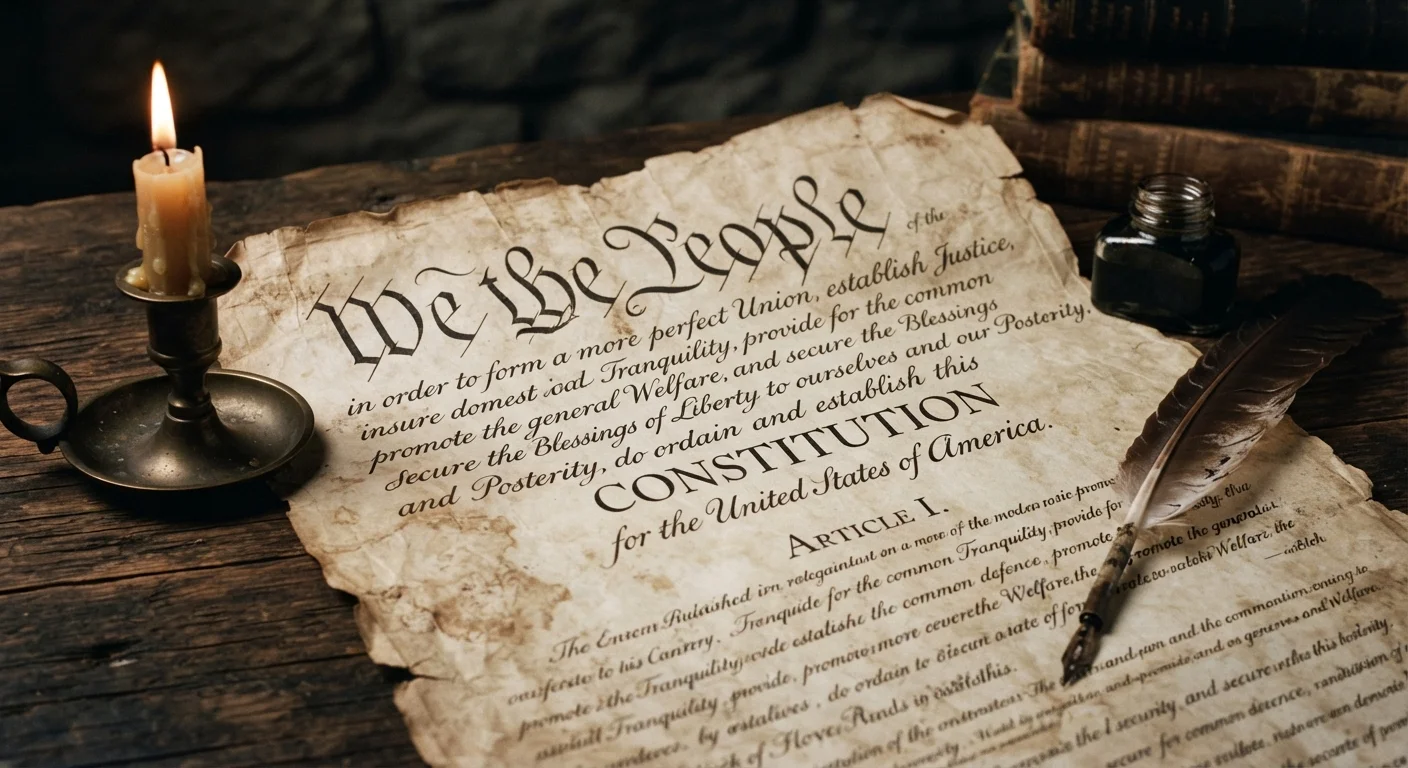
The Bill of Rights refers to the first ten amendments to the United States Constitution, ratified on December 15, 1791. They were added largely in response to concerns from Anti-Federalists who feared a powerful central government could trample individual freedoms. Without these protections, several key states had refused to ratify the original Constitution.
James Madison drafted the amendments drawing on existing state declarations of rights, and Congress approved them for ratification. Together, they establish explicit limits on government power and enumerate specific protections for individuals. Courts - most importantly the US Supreme Court - have spent more than two centuries interpreting exactly how broad or narrow those protections are in practice.
Amendments One Through Five: Core Civil and Legal Protections
The First Amendment protects five distinct freedoms: religion (both free exercise and prohibition on government establishment), speech, press, peaceful assembly, and the right to petition the government. Courts have ruled that these rights are not absolute - obscenity, incitement to imminent lawless action, and defamation fall outside full protection.
The Second Amendment protects the right to keep and bear arms. The Supreme Court's 2008 decision in District of Columbia v. Heller confirmed an individual right to possess firearms for traditionally lawful purposes, while affirming that regulations on who may own firearms and where they may be carried remain constitutionally permissible.
The Third Amendment prohibits the peacetime quartering of soldiers in private homes without consent - a grievance rooted in colonial experience that rarely generates litigation today.
The Fourth Amendment guards against unreasonable searches and seizures and generally requires law enforcement to obtain a warrant supported by probable cause. Exceptions exist for emergencies, border crossings, and certain automobile searches.
The Fifth Amendment covers several protections: the right to a grand jury in federal criminal cases, protection against double jeopardy (being tried twice for the same offense), the privilege against self-incrimination, due process of law, and a requirement that government pay just compensation when it takes private property for public use (eminent domain).
Due Process
The constitutional requirement that the government must respect all legal rights owed to a person before depriving them of life, liberty, or property. Both the Fifth and Fourteenth Amendments contain due process clauses.
Double Jeopardy
The legal protection barring the government from prosecuting a person more than once for the same criminal offense after acquittal or conviction. It is guaranteed by the Fifth Amendment.
Eminent Domain
The power of government to take private property for public use, provided the owner receives just compensation. This power is constrained by the Takings Clause of the Fifth Amendment.
Incorporation Doctrine
The legal principle through which the Supreme Court has applied most Bill of Rights protections to state governments via the Fourteenth Amendment's due process clause, not just the federal government.
Probable Cause
A reasonable basis for believing a crime may have been committed, required before law enforcement can obtain a search or arrest warrant under the Fourth Amendment.
Federalism
The division of governmental power between the national government and individual state governments, a structure the Tenth Amendment explicitly reinforces.
Amendments Six Through Ten: Trial Rights, Privacy, and Reserved Powers
The Sixth Amendment guarantees the accused in criminal prosecutions a speedy and public trial by an impartial jury, the right to be informed of charges, to confront opposing witnesses, and to have the assistance of counsel. The Supreme Court's 1963 ruling in Gideon v. Wainwright extended the right to appointed counsel to state criminal defendants who cannot afford an attorney.
The Seventh Amendment preserves the right to a jury trial in federal civil cases where the value in dispute exceeds twenty dollars - a threshold set in 1791 that has never been adjusted for inflation.
The Eighth Amendment prohibits excessive bail, excessive fines, and cruel and unusual punishment. Courts continue to interpret the evolving standards of decency when evaluating whether particular sentences or execution methods meet this bar.
The Ninth Amendment clarifies that the enumeration of specific rights in the Constitution does not mean other rights retained by the people are denied or disparaged. It has been cited in privacy-related rulings but rarely stands alone as a primary basis for court decisions.
The Tenth Amendment reserves to the states - or to the people - powers not delegated to the federal government by the Constitution. It is a foundational text in debates over federalism and the boundary between state and national authority.
The Bill of Rights and State Governments
When ratified in 1791, the Bill of Rights applied only to the federal government. Through a process called selective incorporation - carried out amendment by amendment through Supreme Court decisions after the Civil War - most of these protections now also constrain state and local governments. A small number of provisions, including the Fifth Amendment's grand jury requirement, have not been incorporated and still apply only at the federal level.