A Nation That Defined - and Redefined - Its Voters
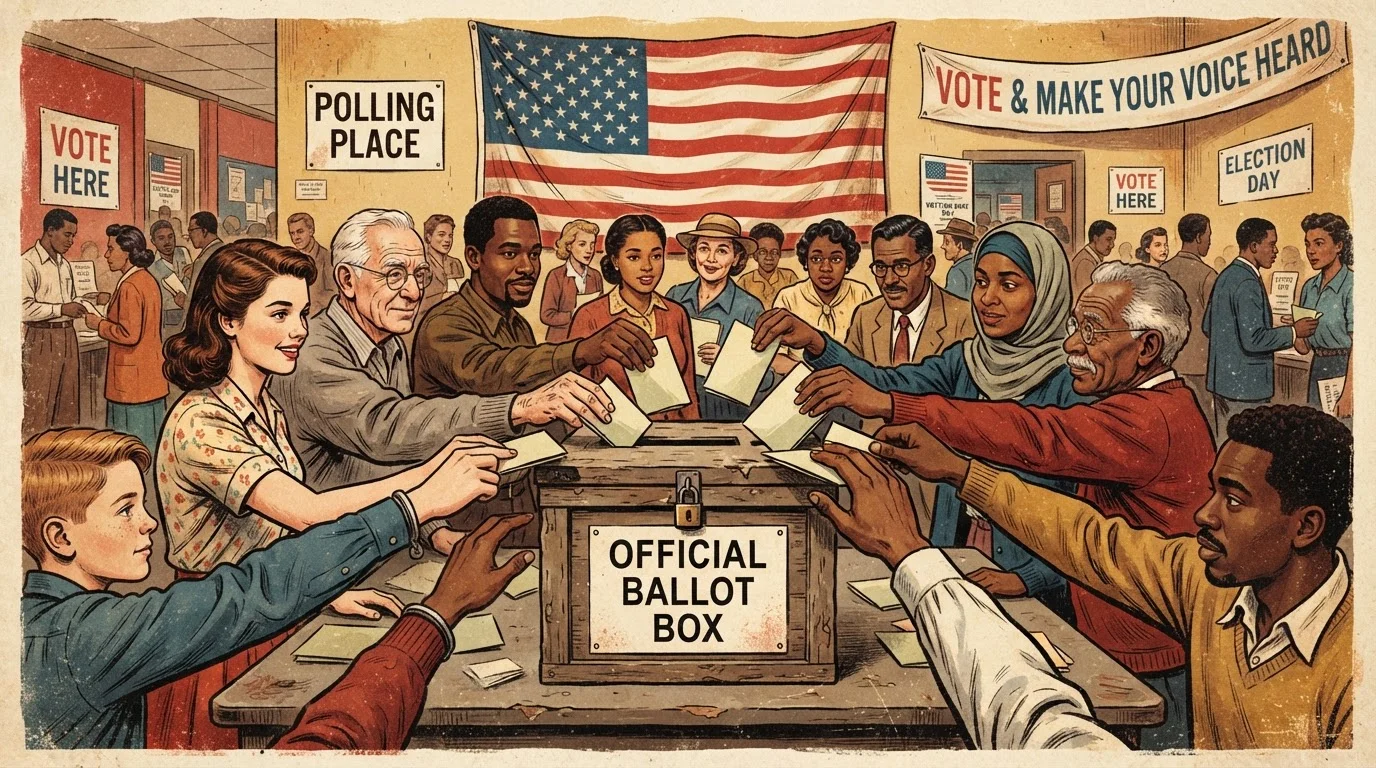
The United States was founded on ideals of democratic self-governance, yet the original electorate was strikingly narrow. In the late 18th century, most states restricted voting to white men who owned property, excluding women, enslaved people, Indigenous Americans, and the poor. Over more than two centuries, constitutional amendments, federal legislation, and court rulings have progressively broadened the franchise - often after sustained political pressure and social conflict.
Understanding this timeline matters not just as history but as civic context. Many of the legal mechanisms that once restricted voting - literacy tests, poll taxes, residency barriers - inform ongoing debates about access and fairness at the ballot box. The milestones below trace how the definition of "eligible voter" changed at each turning point.
A Note on Ongoing Legal Developments
Voting rights law continues to evolve through Congress, the courts, and state legislatures. The Supreme Court's 2013 decision in Shelby County v. Holder struck down a key provision of the Voting Rights Act that determined which jurisdictions required federal preclearance before changing election laws. That ruling - and subsequent state-level legislative changes - remain subjects of active legal and political debate.
Key Milestones in American Voting Rights
Property and Race Requirements (1776-1820s)
When states began drafting their own constitutions after independence, most restricted the vote to white men who met property or tax-paying requirements. New Jersey briefly allowed women and Black residents who met property thresholds to vote - then reversed that allowance in 1807. By the 1820s, most states had dropped property requirements for white men, dramatically expanding white male suffrage while keeping other groups entirely excluded.
Early America granted the vote based on race, sex, and wealth - not citizenship alone.
The 15th Amendment (1870)
Ratified in February 1870, the 15th Amendment prohibited denying the right to vote based on race, color, or previous condition of servitude. It came in the aftermath of the Civil War and Reconstruction, formally extending the franchise to Black men. However, the amendment's protections were systematically undermined for nearly a century through state-level tactics including literacy tests, grandfather clauses, poll taxes, and outright violence and intimidation.
The 15th Amendment was a constitutional promise that took nearly a century to begin enforcing.
The 19th Amendment (1920)
After more than seven decades of organized advocacy - including the 1848 Seneca Falls Convention and the tireless work of suffragists across the country - the 19th Amendment was ratified on August 18, 1920. It prohibited denying the right to vote on the basis of sex, guaranteeing women the constitutional right to participate in federal and state elections. Critically, many women of color continued to face barriers at the state level until later federal protections arrived.
Women's suffrage took 72 years of organized effort from the Seneca Falls Convention to ratification.
The Voting Rights Act of 1965
Signed by President Lyndon B. Johnson on August 6, 1965, the Voting Rights Act (VRA) is widely regarded as one of the most consequential pieces of civil rights legislation in US history. It banned discriminatory voting practices - including literacy tests - and established federal oversight of jurisdictions with histories of voting discrimination. The law's passage followed the violent events of "Bloody Sunday" in Selma, Alabama, where civil rights marchers were attacked while advocating for Black voting rights. Black voter registration rates in the South increased sharply in the years following its enactment.
The Voting Rights Act transformed voting access for millions who held constitutional rights but faced systematic exclusion.
The 24th Amendment and Poll Tax Abolition (1964)
Ratified in January 1964, the 24th Amendment abolished the poll tax - a fee required to vote - in federal elections. Poll taxes had been used primarily in Southern states as a mechanism to disenfranchise Black voters and poor white voters. The Supreme Court extended the ban to state elections in Harper v. Virginia Board of Elections (1966), ruling that conditioning the vote on payment of a fee violated the Equal Protection Clause of the 14th Amendment.
Poll taxes persisted in some states for nearly 90 years before being constitutionally banned.
The 26th Amendment (1971)
In the context of the Vietnam War - during which 18-year-olds were subject to the military draft but could not vote in most states - Congress and the states moved swiftly to ratify the 26th Amendment. Certified in July 1971, it lowered the national voting age from 21 to 18. It remains the fastest-ratified constitutional amendment in US history, taking just 100 days from congressional passage to ratification. The amendment added an estimated 11 million new potential voters.
The 26th Amendment was ratified in just 100 days - the fastest in constitutional history.
Why This History Still Matters
Each expansion of suffrage in American history came after organized advocacy, legal challenges, and - in many cases - documented suppression and violence. The arc of voting rights is not a story of inevitable progress but of contested power, hard-won legal victories, and ongoing disputes over implementation.
Debates over voter ID laws, early voting access, felony disenfranchisement, and federal oversight of state election procedures are direct descendants of these historical conflicts. Informed civic participation begins with understanding how the right to vote was earned - and how its boundaries continue to be negotiated.
Checking Your Voter Registration Status
Eligibility rules and registration deadlines vary by state. Most states offer online tools through their official Secretary of State or election authority websites where residents can verify or update their registration. The nonpartisan website vote.gov, maintained by the US General Services Administration, provides links to official state resources for checking registration, finding polling locations, and learning about ID requirements.