What the Filibuster Actually Is
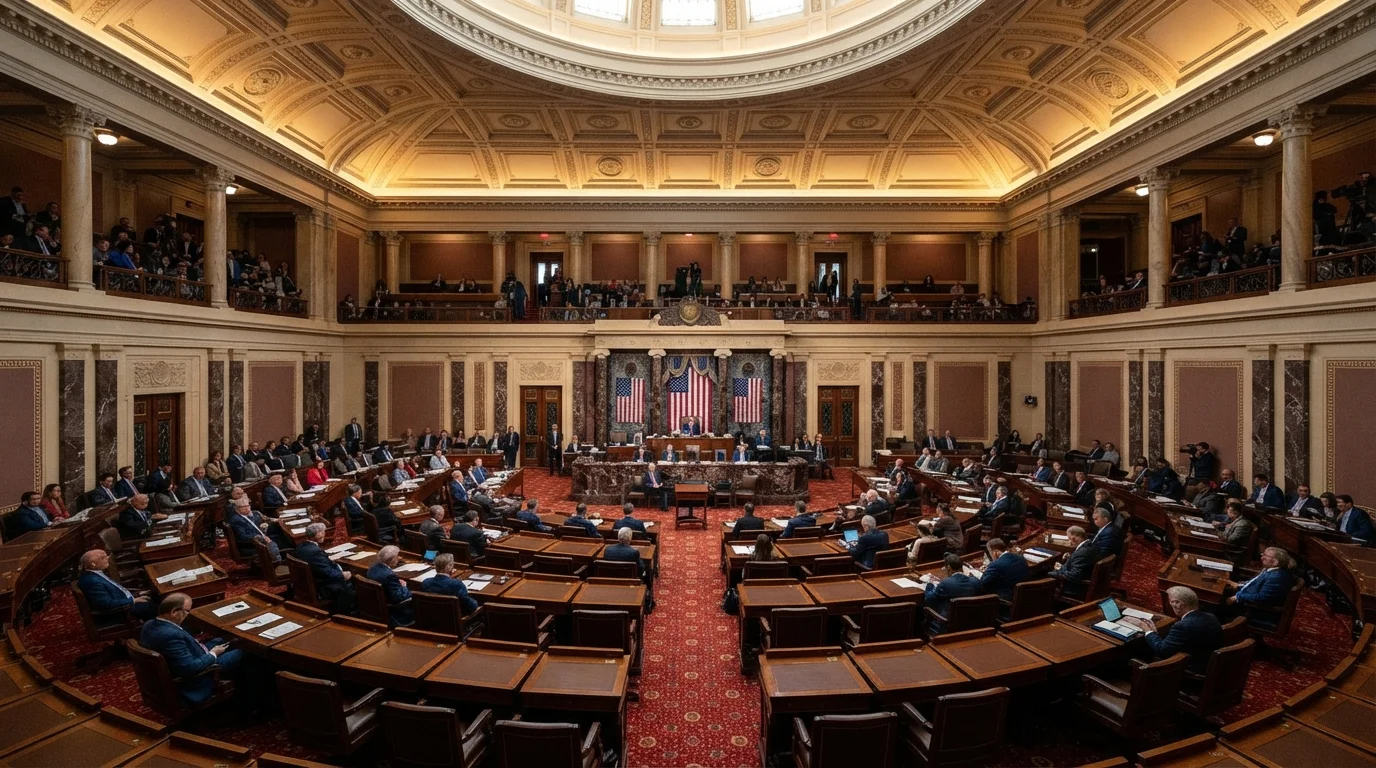
The filibuster is a procedural mechanism in the U.S. Senate that allows any senator - or group of senators - to extend debate on a bill, effectively delaying or preventing a vote. In its most visible form, it has involved senators speaking continuously for hours to hold the floor. Senator Strom Thurmond's 1957 speech against the Civil Rights Act, which lasted more than 24 hours, remains the longest individual filibuster on record.
Today, however, the filibuster rarely involves extended speeches. Under modern practice, a bill's opponents simply signal their intent to filibuster, which triggers a procedural threshold: ending debate requires a cloture vote of at least 60 senators. Because the Senate has 100 members, this means a minority of 41 senators can effectively block most legislation. The Senate currently uses a simple majority (51 votes) for budget reconciliation bills and - following rule changes in 2013 and 2017 - for most executive and judicial nominees.
The 'Nuclear Option' Explained
The term 'nuclear option' refers to a procedural move in which a simple Senate majority votes to change the rules and eliminate the filibuster for a specific category of nominations or legislation. Democrats used it in 2013 for executive and lower-court nominees; Republicans extended it to Supreme Court nominees in 2017. The same approach could theoretically be applied to all legislation, though as of this writing, it has not been.
Arguments for Keeping the Filibuster
Supporters of the filibuster frame it as a structural protection built into a body designed to move deliberately.
Protects minority party from majoritarian steamrolling
The 60-vote threshold forces the majority to negotiate with at least some members of the opposing party, giving the minority a meaningful check on legislation it finds deeply objectionable.
Encourages bipartisan compromise on major bills
Because passing most legislation requires 60 votes, senators often have an incentive to seek broader coalitions, which supporters argue produces more durable and widely accepted policy.
Slows rapid policy reversals between administrations
The supermajority requirement makes it harder for each new governing majority to immediately undo the previous Congress's work, lending some stability to federal policy.
Preserves the Senate's identity as a deliberative body
Defenders argue the Senate was designed to operate differently from the House, where a simple majority governs. The filibuster reflects that institutional character by requiring broader consensus.
Proponents also note that abolishing the filibuster could backfire on whichever party pushes for elimination. A party that removes it when in the majority may find its own agenda stalled - or reversed - when power shifts.
Arguments Against the Filibuster
Critics argue that the modern filibuster has drifted far from its original rationale and now functions primarily as a tool of obstruction.
Enables a minority to block broadly popular legislation
A determined group of 41 senators representing far less than half the U.S. population can block bills that command majority support in both chambers and among the general public.
Contributes to congressional gridlock
The 60-vote requirement has been cited by analysts across the political spectrum as a key driver of legislative stagnation, making it difficult for any administration to advance its agenda through normal channels.
Has historically been used to block civil rights legislation
The filibuster was wielded repeatedly during the mid-20th century to delay or defeat landmark civil rights bills, a history critics argue taints its legacy as a protection for democratic minorities.
Not found in the Constitution
The filibuster is a Senate procedural rule, not a constitutional requirement. Critics argue that treating it as untouchable gives an invented rule unwarranted permanence in the governing process.
Modern 'silent' filibuster reduces accountability
Because senators no longer need to physically hold the floor, the threat of a filibuster is nearly costless, making obstruction far easier than the founders' vision of extended debate.
60
Votes needed to end Senate debate (cloture)
This threshold, established under Senate Rule XXII, means a minority of 41 senators can block most legislation from reaching a final vote.
327
Cloture motions filed in 2019-2020 session
According to Senate records, the volume of cloture filings has risen sharply since the 1970s, reflecting how routinely the filibuster threat is invoked in modern legislating.
Opponents also point out that the filibuster is not in the Constitution - it is a Senate rule that has evolved over time and can be changed by a simple majority vote. The Senate eliminated it for most nominees without triggering the institutional collapse that some predicted.
Where the Debate Stands
The filibuster debate has intensified in recent years as both parties have, at different moments, held slim Senate majorities that were frustrated by the 60-vote threshold. Proposals to reform rather than eliminate it - such as requiring senators to physically hold the floor or lowering the cloture threshold - have attracted interest from those who want a middle path.
Constitutional scholars and political scientists remain divided. Some argue the Senate's unique role as a deliberative body is inseparable from its supermajority requirements. Others contend that democratic accountability demands that a governing majority be able to pass its agenda. For now, the rule remains in place, and the debate over its future is likely to intensify ahead of any closely contested Congress.