Why World News Is Especially Vulnerable to Distortion
When a crisis erupts overseas, most American readers depend on a narrow chain of intermediaries - correspondents, wire services, editors, and translators - before a story reaches their screen. Each handoff introduces potential for error, omission, or framing choices that can reshape meaning. Unlike domestic news, where readers often have baseline familiarity with institutions and geography, world news arrives with fewer internal checks on interpretation.
Political motivations compound the problem. Governments, advocacy groups, and partisan outlets all compete to define how international events are understood. A conflict in one country may be framed as a humanitarian crisis by one outlet and a security operation by another - both using the same underlying facts. That's not necessarily dishonest, but it requires readers to actively seek out multiple perspectives rather than passively absorbing one.
For a deeper look at how language itself can skew coverage, see how translation errors distort international stories.
Framing Is Not the Same as Fabrication
Bias in world news most often takes the form of selective emphasis - which facts are foregrounded, which voices are quoted, and which context is omitted - rather than outright false reporting. Two entirely accurate articles about the same event can leave readers with very different impressions. Recognizing this distinction helps you evaluate coverage more precisely without dismissing all mainstream journalism as unreliable.
Core Practices for Evaluating International Stories
The habits below are drawn from media literacy research and professional journalism standards. They apply whether you're reading about an election abroad, a natural disaster, or a diplomatic dispute.
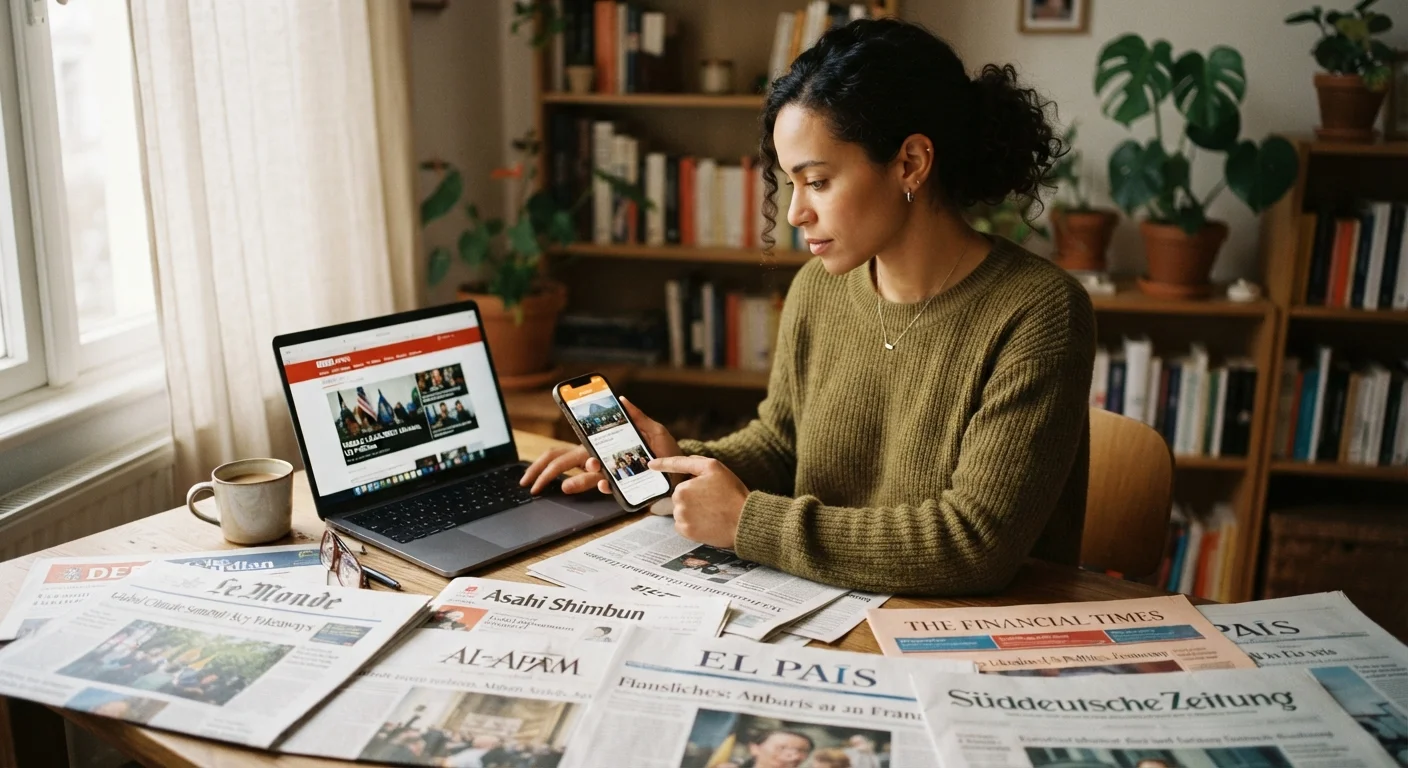
Always compare at least two geographically distinct news sources on the same story.
A single outlet's framing - even from a reputable organization - reflects editorial choices about what to emphasize. Comparing sources from different countries or editorial traditions surfaces omissions and reveals where accounts diverge. This is especially important for conflicts or politically charged events where national interests shape coverage.
Distinguish wire service reports from analysis and opinion pieces.
Wire services - organizations like the Associated Press, Reuters, and Agence France-Presse - typically prioritize factual reporting with named sources and a high standard for verification. Analysis and opinion pieces serve a different purpose and should be read as interpretation, not baseline fact. Mixing the two is one of the most common sources of reader confusion.
Check the publication date and the event date separately.
Old stories routinely recirculate online, sometimes stripped of their original timestamps, creating false impressions that past events are current. This is particularly common with images and social media posts tied to international crises. A story that was accurate two years ago may now describe a situation that has changed significantly.
Research a region's media environment before trusting its local outlets uncritically.
Press freedom varies dramatically by country. State-controlled or heavily censored media may present official narratives as fact, while independent outlets in the same country may face legal or financial pressure that affects coverage. Resources like Reporters Without Borders' annual Press Freedom Index provide a starting reference point.
Cross-check dramatic claims against fact-checking organizations before accepting or sharing them.
Extraordinary claims circulate fastest during breaking international events, precisely when verification infrastructure is weakest. Established fact-checking outlets - including those with international reach, like AFP Fact Check and BBC Reality Check - specifically track high-circulation false claims tied to global events. Checking takes minutes and significantly reduces the chance of spreading misinformation.
Quick Steps You Can Take Right Now
You don't need to overhaul your entire news routine overnight. A few targeted actions can make a measurable difference in how accurately you're understanding world events.
Once these habits become automatic, consider building them into a broader routine. The guide to making media literacy a lifelong habit offers a practical framework for sustainable critical reading over time.
Putting It All Together
Reading world news critically doesn't mean treating every report with suspicion or refusing to form judgments. It means building the habit of asking straightforward questions: Who is reporting this? What sources did they use? What might be missing? Those questions take seconds and pay significant dividends in accuracy.
If you regularly follow developing international stories, the step-by-step guide to following breaking international news addresses how to stay grounded when events move faster than verified facts. And before passing any story along, the checklist for sharing international news responsibly provides a quick framework that takes less than two minutes to run through.
World events matter. The information shaping your understanding of them should be held to a high standard - and the practical tools to do that are well within reach of any reader.