How the Security Council Works
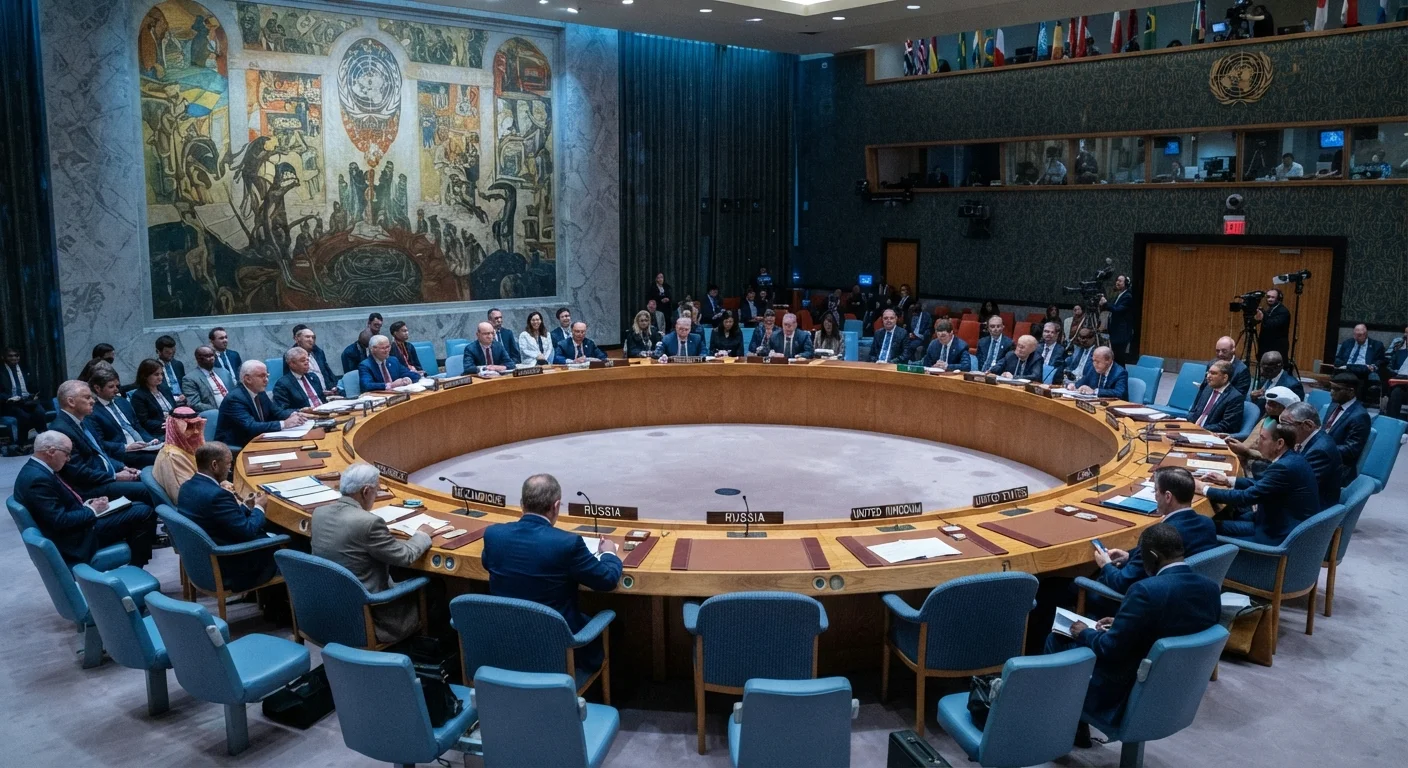
The United Nations Security Council is composed of 15 nations: five permanent members (known as the P5) and ten non-permanent members elected by the General Assembly to serve two-year terms. The P5 - the United States, United Kingdom, France, Russia, and China - reflect the post-World War II balance of power when the UN was founded in 1945.
The Council meets year-round and can convene on short notice during crises. Each member holds the rotating presidency for one month at a time. When a resolution is proposed, Council members negotiate language behind closed doors before a public vote is called. This diplomatic back-and-forth often determines whether a resolution survives - or whether it is never formally introduced because a veto is certain.
2,700+
Resolutions passed since 1946
The UN Security Council has adopted over 2,700 resolutions since its first meeting, covering conflicts, sanctions, peacekeeping, and international law.
15
Total Council members
Five permanent members hold veto power; the remaining ten seats rotate among UN member states on two-year terms elected by the General Assembly.
100+
Active UN peacekeeping operations authorized
The Security Council authorizes UN peacekeeping missions, which have been deployed across dozens of countries since the program began in 1948.
What Gives a Resolution Its Power - or Limits It
Not all resolutions carry the same legal weight. The UN Charter distinguishes between two key frameworks. Chapter VI resolutions call on parties to settle disputes peacefully through negotiation or mediation. They are advisory in nature and carry no binding legal obligation.
Chapter VII resolutions are fundamentally different. Invoked when the Council determines a situation constitutes a threat to international peace and security, they authorize coercive action - from targeted sanctions and arms embargoes to the use of military force. Member states are legally obligated under the UN Charter to comply. The authorization for the 1991 Gulf War coalition and the establishment of international war crimes tribunals for the former Yugoslavia both relied on Chapter VII authority.
The veto is the Council's most significant structural feature - and its most criticized. A single "no" vote from any P5 member kills a resolution entirely, regardless of how many other members support it. This has repeatedly prevented Council action during major crises when P5 interests conflict.
How to Read News About Resolutions
When news reports mention a "UN resolution," check whether it specifies Chapter VII authority - that distinction tells you whether it is legally binding or largely symbolic. Also note which members voted against or abstained, as P5 abstentions are not vetoes and resolutions can still pass.
Real-World Impact: What Resolutions Can and Cannot Do
When the Council acts with consensus or near-consensus, its resolutions can mobilize significant international response. Resolution 1373, passed unanimously after the September 11, 2001 attacks, required all member states to criminalize terrorist financing, strengthen border controls, and share intelligence - reshaping counterterrorism law globally.
But the Council's record also illustrates its limits. Conflicts in Syria, for example, saw repeated draft resolutions vetoed by Russia and China, leaving the Council unable to authorize a unified international response despite widespread civilian casualties. In those situations, individual nations or regional coalitions sometimes act outside the UN framework - raising contested questions about the legality of such interventions under international law.
Following Iraq's invasion of Kuwait in 1990, the Security Council passed Resolution 678, authorizing a US-led coalition to use military force to restore Kuwaiti sovereignty.
During the Syrian civil war, multiple draft resolutions calling for humanitarian corridors and ceasefires were vetoed by Russia and China.
Resolution 1540, passed in 2004, required all UN member states to adopt measures preventing non-state actors from acquiring weapons of mass destruction.
Understanding this tension - between the Council's formal authority and the political realities that constrain it - is essential context for anyone following international news coverage of global conflicts and diplomacy.