What Smart Home Devices Actually Collect
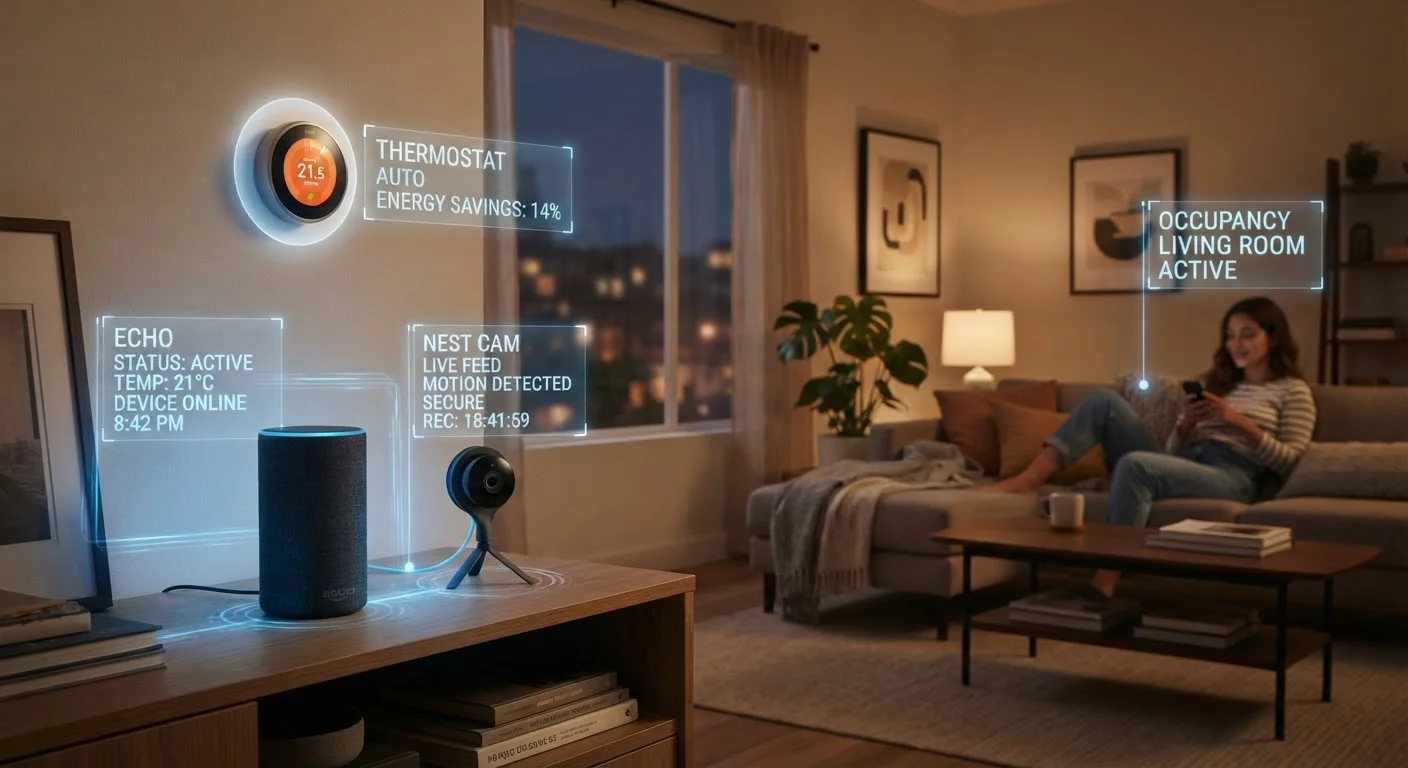
Smart home devices - including voice-activated speakers, connected thermostats, doorbell cameras, and smart TVs - are designed to learn from your behavior. To function well, they gather data: voice recordings, movement patterns, temperature preferences, viewing habits, and sometimes video or audio from inside your home.
This data isn't always limited to improving your own experience. According to research by the nonprofit Mozilla Foundation, many smart home products share data with advertising networks, analytics firms, and parent companies. Privacy policies for these devices can run thousands of words and are rarely read in full. If you're new to these concepts, the basics of digital privacy are worth reviewing before setting up any connected device.
What 'Always Listening' Actually Means
Most smart speakers process audio locally on the device, only sending data to the cloud after detecting a wake word - they are not streaming everything you say to a server at all times. However, false activations do occur, and when they do, that audio snippet is typically transmitted and may be stored. Understanding this distinction helps clarify the actual (not hypothetical) risk. Reviewing your device's voice history in its companion app lets you see and delete stored recordings.
The Real Advantages of Smart Home Technology
The appeal of smart home devices isn't manufactured - these tools solve real problems for real people. Voice assistants help people with mobility limitations control their environment hands-free. Smart thermostats can reduce energy consumption by learning heating and cooling patterns. Doorbell cameras provide documented records of package deliveries and unusual activity at entry points.
Beyond safety and efficiency, there's the straightforward value of convenience: dimming lights, checking whether you locked the door, or receiving an alert when a family member arrives home. For many households, especially those with young children or older adults, these features carry genuine practical weight.
Hands-free control benefits people with mobility limitations
Voice-activated devices allow people with physical disabilities or limited dexterity to operate lights, locks, thermostats, and appliances independently, improving quality of life.
Smart thermostats can reduce energy consumption
Devices like learning thermostats adjust heating and cooling based on your schedule and preferences, which studies suggest can lead to measurable reductions in home energy use over time.
Home security monitoring provides documented records
Doorbell cameras and indoor cameras create time-stamped footage that can be useful for documenting package theft, verifying arrivals, or providing evidence in the event of a break-in.
Automation reduces daily cognitive load
Scheduled routines - lights that adjust at sunset, doors that lock automatically - eliminate small but cumulative decisions and reduce the chance of forgetting routine tasks.
Remote monitoring adds peace of mind for caregivers
Parents of young children and adult children caring for aging relatives often cite the ability to check in remotely as a meaningful safety benefit of connected home devices.
The Privacy Costs You Should Understand
The trade-offs are significant and worth naming clearly. Smart speakers with always-on microphones have been documented - by Amazon, Google, and independent researchers alike - to occasionally activate and record conversations unintentionally. These recordings are sometimes reviewed by human contractors to improve voice recognition accuracy, a practice that several companies confirmed publicly after news investigations.
Connected cameras create persistent records of activity inside and around your home. Some manufacturers retain this footage on their own servers, and law enforcement in the United States has in documented cases requested access to that data. Smart TVs routinely use a technology called Automatic Content Recognition (ACR) to track what you watch, even on connected streaming apps. This data is typically sold to advertisers.
Always-on microphones can capture unintended conversations
Smart speakers are designed to listen continuously for a wake word, and both manufacturers and independent researchers have confirmed that accidental activations do occur, resulting in recordings of private conversations.
Data is routinely shared with third parties by default
Most smart home device manufacturers share user data with advertising partners, analytics companies, and affiliated services - often enabled by default and disclosed only in lengthy privacy policies.
Camera footage may be accessible to law enforcement
In the United States, smart camera manufacturers have received and responded to law enforcement requests for footage, sometimes without notifying the device owner, depending on applicable law.
Smart TVs track viewing habits through ACR technology
Automatic Content Recognition (ACR) software embedded in many smart TVs identifies what you watch and transmits that information to advertisers, typically by default and regardless of which app or input you use.
Security vulnerabilities create hacking risks
Connected devices with weak default passwords or infrequent software updates can be exploited by malicious actors, potentially giving outsiders access to cameras, microphones, or your home network.
Data retention policies are often vague or permissive
Many manufacturers retain collected data - including voice recordings and usage patterns - for extended periods, and privacy policies often reserve the right to use that data in ways beyond the device's original function.
79%
Smart home device users unaware of data sharing
A 2023 survey by Consumers International found that roughly 79% of smart device users were unaware of how much data their devices shared with third parties.
1 in 5
Smart home apps with unnecessary microphone access
Research by Carnegie Mellon University's CyLab found that a significant proportion of smart home companion apps request microphone permissions beyond what the device's core function requires.
Steps to Reduce Your Exposure
You don't have to choose between using smart home devices and protecting your privacy entirely. Several practical measures can meaningfully reduce your exposure without eliminating functionality.
- Review default settings immediately after setup. Most devices share more data by default than they need to function. Disable features like personalized advertising and optional data sharing in each device's app.
- Use the physical mute switch on smart speakers when you don't need voice activation - particularly during private conversations.
- Audit app permissions regularly. Many companion apps request access to your location, contacts, or microphone beyond what the core device needs.
- Check your router settings to see what devices are connected and consider placing smart home devices on a separate guest network.
For a structured way to review all your connected devices, the room-by-room privacy audit checklist walks through exactly this process. You can also explore everyday privacy habits that security researchers consistently recommend.