
Why These Myths Persist - and Why They Matter
Misconceptions about adult hobbies are not random. They tend to cluster around three anxieties: that you lack the ability, that you lack the resources, or that you lack the right to spend time on something purely enjoyable. These beliefs feel reasonable because they borrow from genuine pressures - busy schedules, tight budgets, cultural messages about productivity. But when examined carefully, most of them fall apart.
The cost of staying stuck in these myths is real. Adults who avoid hobbies out of unfounded concern miss out on documented benefits to mental health, social connection, and cognitive engagement. Before committing to a new pursuit, it helps to take stock of your actual situation - a practical self-assessment can help you evaluate time, space, and motivation honestly, without the myths getting in the way.
~26%
U.S. adults reporting no leisure-time physical activity
According to the CDC's National Health Interview Survey, roughly a quarter of American adults report no leisure-time physical activity, suggesting significant room for hobby engagement to grow.
2-3×
Greater wellbeing reported by regular hobby participants
A 2023 study published in Nature Medicine found that people who regularly engaged in hobbies reported substantially higher happiness and life satisfaction than those who did not.
Any age
When adults can begin a new hobby effectively
Cognitive scientists broadly agree that neuroplasticity - the brain's capacity to form new connections - continues throughout adulthood, supporting skill acquisition at any life stage.
The Misconceptions, Set Straight
The following myth-and-fact pairs address the beliefs most likely to stop an adult from ever starting. Each one is grounded in how hobbies actually work - not how they appear from the outside.
Myth
You need natural talent to pick up a new hobby as an adult.
Fact
Skill in almost any hobby is built through consistent practice, not innate ability.
The idea that some people are simply "born" musicians, artists, or athletes keeps many adults from ever trying. Research in skill acquisition consistently shows that deliberate, regular practice matters far more than any starting advantage. Talent, where it exists, provides a modest early edge - it does not determine long-term capability or, more importantly, enjoyment. For a closer look at how this plays out in creative pursuits specifically, see what the evidence says about artistic talent.
Myth
Hobbies are expensive, and you need a lot of gear before you can really start.
Fact
Most hobbies have accessible entry points requiring little or no upfront spending.
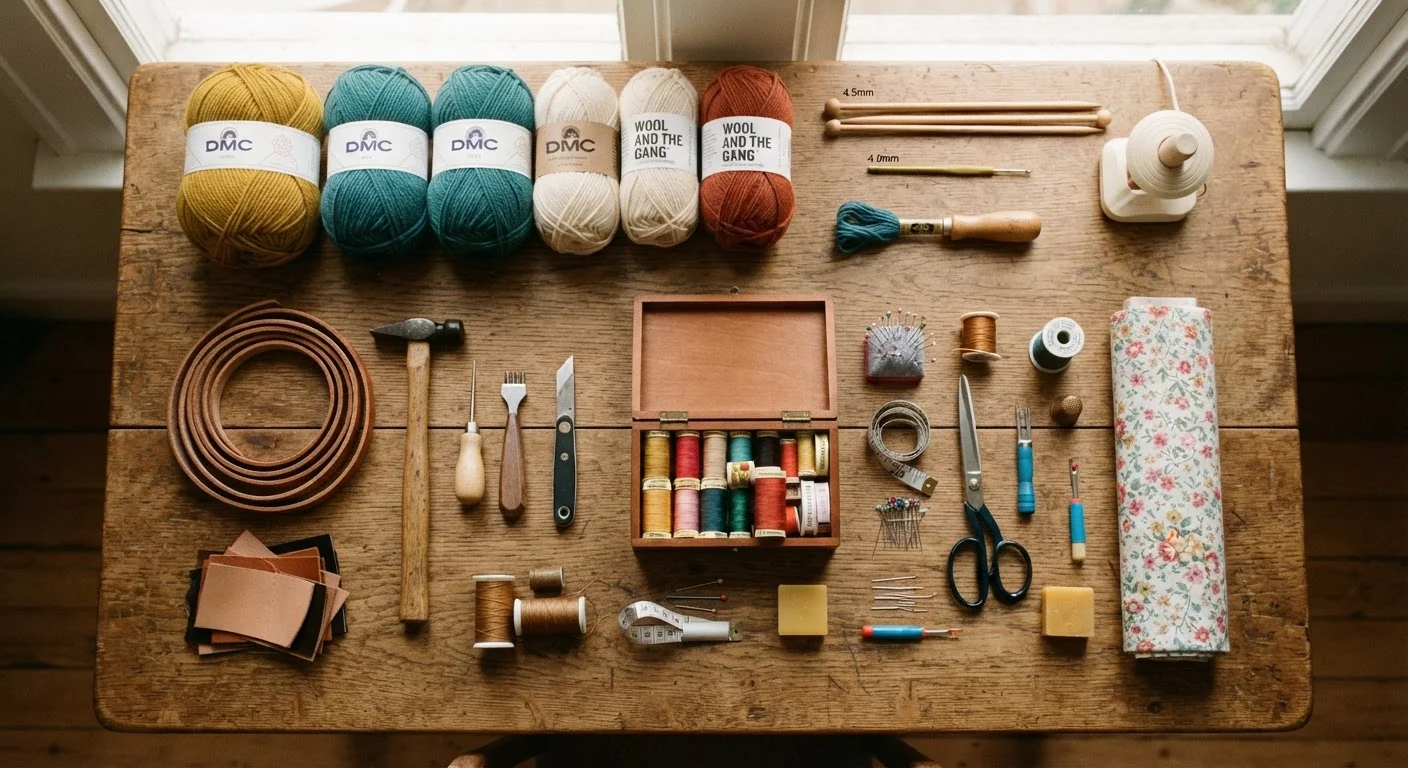
It is easy to look at seasoned hobbyists and assume their full setup is the baseline. In reality, beginners rarely need more than basic materials. Libraries lend tools and instruments; community centers offer classes at low cost; many outdoor pursuits require nothing beyond what you already own. Overspending before you know whether a hobby fits you is a real risk - this guide on starting a creative hobby without wasting money walks through how to evaluate commitment before investing.
Myth
Adults can't learn new skills the way younger people can.
Fact
Adult brains retain meaningful neuroplasticity, and mature learners bring real advantages.
While some forms of rapid language or motor acquisition are easier in childhood, adult learning is far from a closed door. Adults typically bring stronger motivation, better self-directed study habits, and a clearer sense of what interests them - all of which support skill development. Starting a hobby after 40 addresses what genuinely changes with age and what stays the same.
Myth
If you don't have large blocks of free time, a hobby isn't worth pursuing.
Fact
Even short, consistent sessions can build real skill and provide genuine enjoyment.
Many adults dismiss hobbies because they picture hours of uninterrupted practice. In practice, 20 to 30 minutes several times a week is enough to make meaningful progress in most activities. The key is consistency over volume. Building that consistency into a routine is its own skill - one that building a hobby habit that sticks covers in detail.
Myth
A hobby has to produce something useful or shareable to be worthwhile.
Fact
Leisure activities have well-documented benefits regardless of any output or audience.
Social media has made it tempting to judge a hobby by how photogenic the results are or whether it could generate income. But research consistently links leisure activities - including collecting, sports, and creative arts - to reduced stress, improved mood, and greater life satisfaction. None of those benefits require an audience or a product. If you are curious about why people pursue hobbies for their own sake, the psychology behind collecting as a hobby offers an illuminating example.
Myth
You need to be competitive or highly skilled to join group hobby activities.
Fact
Most adult group activities are designed explicitly for mixed skill levels and social participation.
Fear of judgment stops many adults from joining clubs, classes, or recreational leagues. In reality, beginner-friendly groups exist in almost every hobby category, and recreational programs actively recruit people at all levels. What to realistically expect from an adult rec league sets honest expectations about skill, social dynamics, and how welcoming these environments typically are.
Watch Out for the 'All-or-Nothing' Trap
One of the most common ways adults self-sabotage a new hobby is by setting unrealistic early expectations - then quitting when they don't meet them. Progress in most hobbies is nonlinear; plateaus are normal. Judging a hobby by your first few weeks of results, or comparing your beginner work to an expert's polished output, sets up a false standard that has nothing to do with whether the activity is right for you.
Taking the First Step Without Overthinking It
The practical takeaway from all of the above is straightforward: most of the barriers people imagine are either much smaller than assumed or not real at all. The one barrier that is real - inertia - is best addressed by starting small and starting now rather than waiting for ideal conditions.
Pick one activity that has ever appealed to you. Spend 20 minutes with it this week using whatever you already have on hand. Reassess from there. That modest entry point sidesteps nearly every myth covered here and gives you actual data - your own experience - instead of assumptions.