Why Systematic Fact-Checking Matters
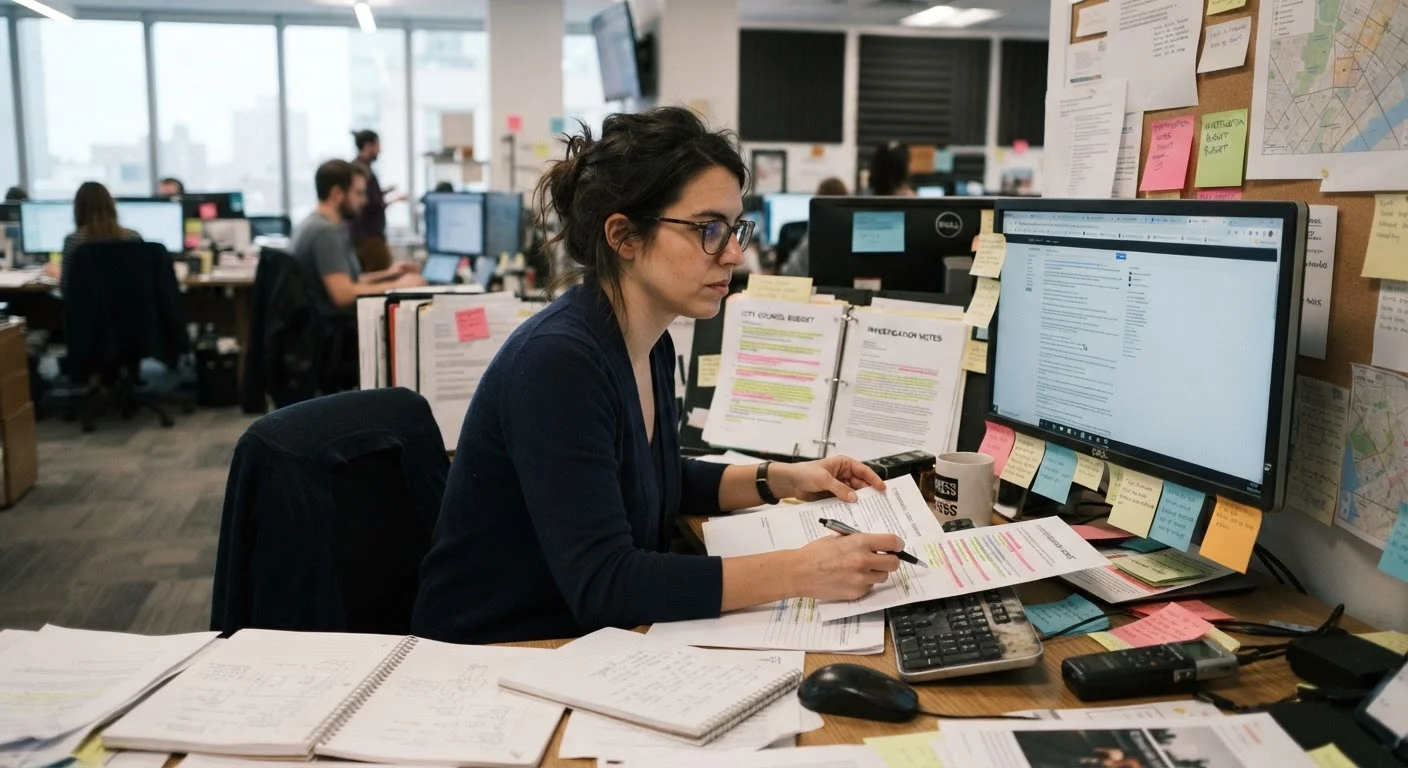
When a claim enters the news cycle - a politician's statistic, a viral video, a reported casualty figure - the instinct of a trained journalist is not to repeat it but to interrogate it. Professional fact-checking is not a single act; it is a discipline with defined steps, institutional standards, and traceable documentation.
The stakes are real. A single unverified figure published under a credible masthead can spread across social media within hours, shaping public opinion before any correction can follow. Understanding how newsrooms guard against this helps readers become more discerning consumers of information. For a broader look at navigating today's media environment, see our practical guide to reading news critically.
Trace every claim back to its primary source.
Secondary and tertiary reporting introduces opportunities for distortion, omission, or mischaracterization at each step. Verifying a claim means locating the original document, statement, study, or official record - not another journalist's description of it. This discipline catches the common error of statistics being cited out of context or selectively.
Require at least two independent, credible sources for any significant claim.
A single source - even a seemingly authoritative one - may be mistaken, biased, or operating from incomplete information. Corroboration from sources that obtained their information independently provides meaningful confidence. This is especially important for sensitive claims that could harm individuals or mislead the public.
Consult subject-matter experts and disclose their relevant affiliations.
Journalists are generalists; experts provide depth. But an expert's institutional funding, organizational memberships, or prior public positions can affect their perspective. Disclosing affiliations lets readers assess potential bias while still benefiting from specialized knowledge.
Check the full context surrounding any quoted statement or statistic.
Selective quotation and decontextualized statistics are among the most common sources of technically-true-but-misleading claims. Professional fact-checkers read full transcripts, complete studies, and surrounding paragraphs to determine whether a reported excerpt accurately represents the speaker's or author's meaning.
Document the verification process, not just the conclusion.
Transparency about methodology allows editors, readers, and other journalists to audit the reasoning behind a fact-check. Outlets affiliated with the IFCN are required to publish their sourcing and methodology alongside their verdicts. This accountability also discourages corner-cutting under deadline pressure.
Apply consistent standards regardless of the claim's political or ideological valence.
Selective fact-checking - scrutinizing claims from one side of an issue more rigorously than another - undermines credibility and reinforces partisan distrust of media. Reputable newsrooms document their methodology precisely so that consistency can be verified over time.
Core Methods Professional Fact-Checkers Use
The following practices reflect approaches documented by organizations such as the International Fact-Checking Network (IFCN), which accredits fact-checking outlets around the world based on adherence to a published code of principles. While individual newsrooms vary in their procedures, these methods represent a widely recognized professional baseline.
How Readers Can Apply the Same Standards
Media literacy experts increasingly argue that readers shouldn't wait for newsrooms to fact-check on their behalf. Applying even a simplified version of these methods - tracing a claim to its origin, checking whether a cited study says what an article claims, or searching for independent corroboration - can significantly reduce exposure to misinformation.
“The goal of fact-checking is not to declare winners and losers. It's to give the public the information they need to hold power accountable - and that requires the same rigorous standard applied to every claim, every time.”
— Bill Adair, Founder of PolitiFact and Knight Professor of the Practice of Journalism and Public Policy at Duke University
If you regularly follow breaking international stories, our guide on reading world news without getting misled walks through habits specifically suited to fast-moving global coverage. Before resharing any story, the checklist of questions to ask before sharing offers a quick verification framework. And for US political news specifically, reading political news without getting misled addresses the framing and sourcing issues most common to domestic coverage.
This article is for informational and media literacy purposes only. Fact-checking standards may vary by outlet, region, and editorial context.