Shared Duties vs. Exclusive Powers
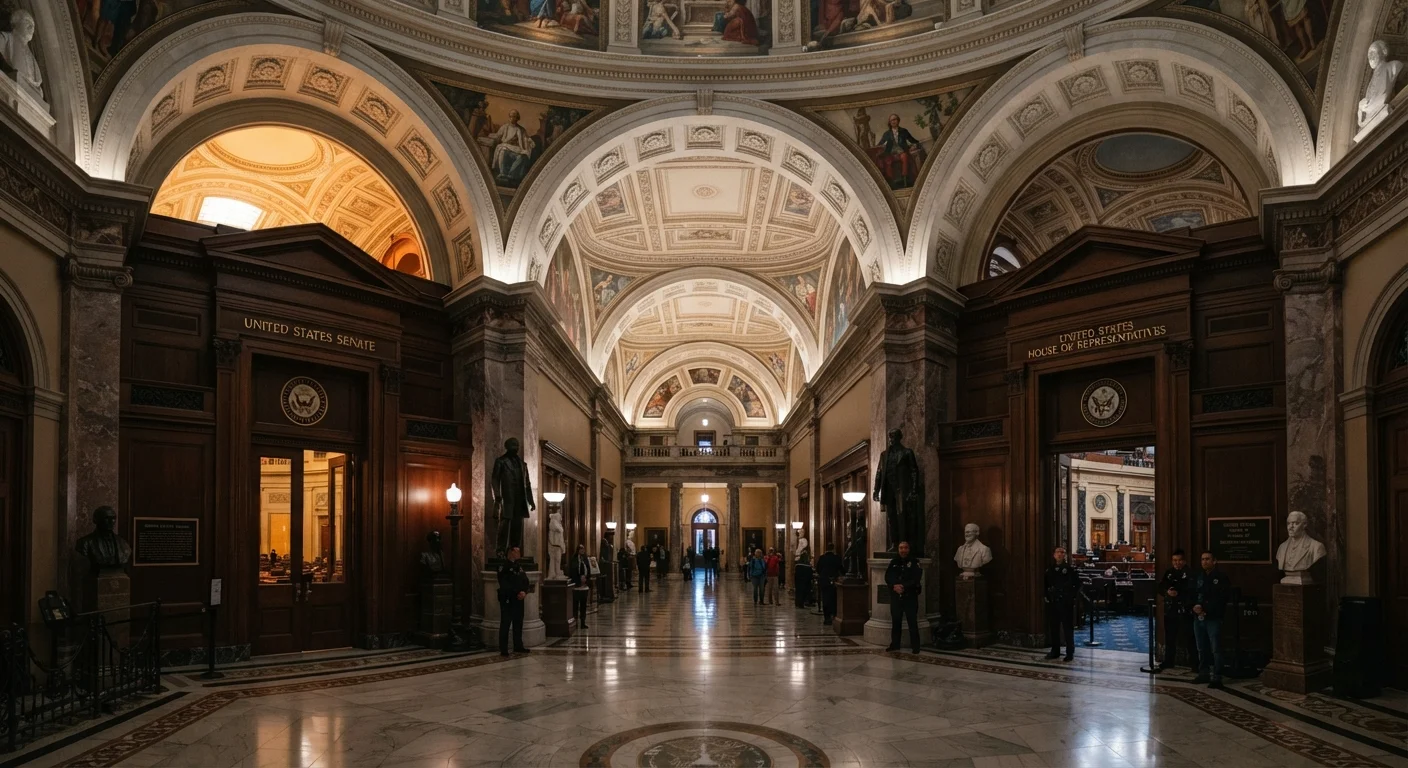
Both chambers of Congress must pass identical versions of any legislation before it can be sent to the president - that much most Americans learn in school. But the Constitution reserves a set of consequential powers for each chamber alone, and those distinctions shape how government actually functions day to day.
The framers deliberately split these responsibilities. They feared concentrating too much authority in a single body. The result is a bicameral legislature where the two halves are genuine rivals in design, not just procedural mirrors of each other. To understand the full lawmaking process, see how a bill actually becomes a law.
| Criterion | U.S. Senate | House of Representatives |
|---|---|---|
| Total members | 100 (2 per state) | 435 (population-based) |
| Term length | 6 years | 2 years |
| Confirms presidential nominees | Yes - exclusive power | No |
| Ratifies treaties | Yes - 2/3 majority required | No |
| Conducts impeachment trials | Yes - exclusive power | No |
| Initiates impeachment | No | Yes - exclusive power |
| Originates revenue bills | No | Yes - constitutionally required |
| Filibuster available | Yes | No |
What Only the Senate Can Do
The Senate's exclusive powers fall into three broad categories: confirmation, ratification, and trial.
Confirming Presidential Nominees
Under Article II of the Constitution, the president nominates individuals to fill key government roles - Supreme Court justices, federal judges, Cabinet members, and ambassadors - but those appointments require Senate confirmation. The Senate Judiciary Committee, for example, holds public hearings on Supreme Court nominees before the full Senate votes. The Senate can and does reject nominees, and the threat of rejection shapes which candidates presidents put forward in the first place.
Ratifying Treaties
Any international treaty negotiated by the executive branch must receive the approval of two-thirds of the Senate to take effect as binding law. This threshold is intentionally high. The United States has rejected notable treaties over the years, including the Treaty of Versailles after World War I, demonstrating that this power is not merely ceremonial.
Conducting Impeachment Trials
When the House votes to impeach a federal official - including the president - the Senate becomes the courtroom. Senators act as jurors, the Chief Justice of the Supreme Court presides over presidential impeachment trials, and a two-thirds vote is required to convict and remove someone from office. Three presidents have faced Senate impeachment trials: Andrew Johnson, Bill Clinton, and Donald Trump (twice). None were convicted.
67
Senate votes needed to convict in impeachment trial
A two-thirds supermajority of the 100-member Senate is required to remove an official from office following impeachment by the House.
3
Presidents impeached by the House
Andrew Johnson (1868), Bill Clinton (1998), and Donald Trump (2021) were impeached by the House; none were convicted by the Senate.
2/3
Senate majority required to ratify a treaty
Under Article II, Section 2 of the Constitution, the Senate must approve any international treaty by a two-thirds supermajority vote.
What Only the House Can Do
The House of Representatives also holds exclusive constitutional authorities, though they differ in character from the Senate's.
Originating Revenue Bills
The Constitution's Origination Clause (Article I, Section 7) requires that all bills raising revenue begin in the House. This reflects the founders' belief that taxation should be most directly accountable to voters, since House members face reelection every two years. In practice, major tax legislation - such as changes to income tax rates - must clear the House before the Senate can act on it.
Initiating Impeachment
While the Senate tries impeachment cases, only the House can bring the charges. A simple majority vote in the House is sufficient to impeach an official, which then triggers the Senate trial process.
These interlocking responsibilities mean neither chamber can complete consequential governmental acts alone. The design intentionally forces collaboration and creates friction - friction the founders viewed as a safeguard. For a broader view of how these dynamics fit into American governance, see why the three branches were designed to clash.
Structural Differences That Reinforce the Divide
Beyond enumerated powers, structural features make the two chambers behave differently even when legislating together.
The Senate's filibuster - the procedural tool that allows senators to extend debate indefinitely - has no equivalent in the House. It means Senate majorities often need 60 votes (not just 51) to advance legislation, slowing the chamber considerably and requiring broader consensus. The House operates under stricter time rules, enabling faster action.
Senate terms of six years (staggered so only one-third of seats are up for election at a time) insulate senators from short-term political pressure. House members, elected every two years, must respond more quickly to shifts in constituent sentiment. This structural difference was intentional: the Senate was conceived as a stabilizing force against what James Madison called the "fickleness and passion" of popular majorities.
When Neither Chamber Acts Alone
Most of the powers described here involve the two chambers working in sequence rather than in total isolation. The House impeaches; the Senate tries. The president nominates; the Senate confirms. This chain structure means that a breakdown in one chamber ripples into the other's ability to act. It is a deliberate constitutional feature, not a bug - designed to prevent any single institution from accumulating unchecked authority.