Defining the Two Approaches
At its core, the difference is one of participants. Bilateral diplomacy describes direct engagement between exactly two states - think of the annual talks between the United States and China on trade, or the Abraham Accords that normalized relations between Israel and several Arab nations individually. Multilateral diplomacy, by contrast, occurs when three or more countries - often dozens - engage together through a shared forum, treaty negotiation, or international organization.
Both approaches have existed for centuries, but the modern era has expanded multilateral institutions dramatically. The United Nations, the World Trade Organization, NATO, and the Paris Agreement on climate are all products of multilateral processes. Understanding which format is in play helps readers decode why some negotiations produce swift bilateral deals while others drag through years of summit meetings. For a broader primer on diplomatic vocabulary, see key terms in international news coverage.
| Criterion | Bilateral Diplomacy | Multilateral Diplomacy |
|---|---|---|
| Number of parties | Exactly two countries | Three or more countries |
| Speed of negotiation | Generally faster | Generally slower |
| Agreement specificity | Highly tailored to both parties | Broader, often more general language |
| Reach of outcome | Applies only to two signatories | Can set global or regional norms |
| Transparency | Often more confidential | More public and observable |
| Examples | US-China trade talks, Abraham Accords | Paris Agreement, UN Security Council |
How Each Format Actually Works
In bilateral diplomacy, two governments negotiate through their diplomatic missions - embassies, foreign ministries, or designated envoys - often in private. The narrow scope makes it easier to tailor language precisely to each party's needs, keep sensitive concessions confidential, and move to ratification without waiting for unrelated third parties. A trade deal between the US and South Korea, for example, can address the specific economic relationship between those two countries rather than averaging across a 50-nation bloc.
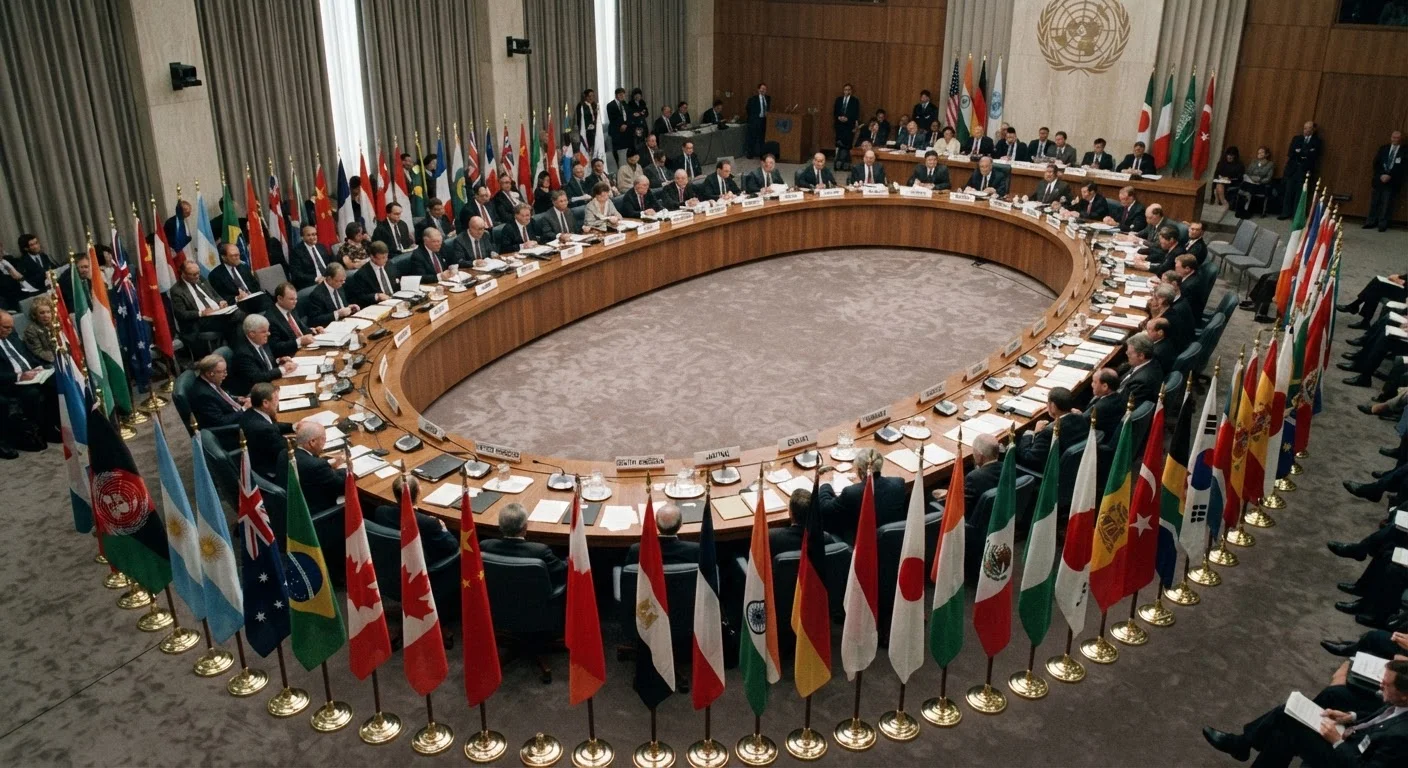
Multilateral diplomacy works differently. Countries gather under an umbrella - a United Nations summit, a G20 meeting, or a treaty conference - and attempt to craft language acceptable to all participants. Procedural rules vary: some forums require unanimous consensus, others allow votes weighted by population or economic contribution. The process is slower and politically noisier, but it produces agreements with legitimacy across a wide range of actors.
193
UN member states engaged in multilateral diplomacy
The United Nations currently includes 193 member states, making it the largest multilateral diplomatic forum in history.
3,000+
Active bilateral investment treaties worldwide
According to UNCTAD's investment policy database, thousands of bilateral investment treaties remain in force globally, illustrating the scale of country-to-country diplomacy.
Many real-world diplomatic efforts blend the two. Leaders at a G7 summit routinely hold bilateral pull-asides on the sidelines - discrete one-on-one meetings that run parallel to the multilateral agenda. The same dynamic applies to other tools countries use in global conflicts, where bilateral pressure and multilateral coalitions frequently operate simultaneously.
Trade-offs and Real-World Implications
Each format carries structural advantages and liabilities. Bilateral agreements are faster and more enforceable between the parties, but they can fragment international norms - two countries striking a private deal may undercut the broader multilateral system that others depend on. Preferential trade agreements, for instance, are sometimes criticized for eroding the universality of WTO rules.
Multilateral agreements carry broader legitimacy and can establish binding global standards, but the consensus requirement is a genuine constraint. The more parties at the table, the greater the likelihood that any final document will reflect the lowest common denominator - acceptable to all, but deeply satisfying to few. When major powers disagree, multilateral institutions can become paralyzed, as seen with UN Security Council vetoes blocking action on certain conflicts.
When Bilateral Talks Happen Inside Multilateral Summits
It is common practice for heads of state to schedule one-on-one meetings - called pull-asides or bilaterals - during large multilateral gatherings like the G20 or UN General Assembly. These side conversations allow leaders to address sensitive issues privately while still participating in the broader forum. The two formats are not mutually exclusive; they frequently reinforce each other within a single diplomatic event.
Neither format is inherently superior. Diplomats and foreign-policy analysts tend to match the format to the problem: a territorial dispute between two neighbors calls for bilateral negotiation; a global pandemic response demands multilateral coordination. Following international news with this framework in mind reveals a great deal about why certain negotiations stall and others close quickly.