Why Nations Reach for Different Tools
When a country faces an international crisis - whether a neighbor's aggression, a humanitarian catastrophe, or a threat to trade - its government must choose how to respond. The options available fall broadly into three categories: diplomacy, economic sanctions, and military force. These are sometimes called the instruments of statecraft, and understanding them is essential to following world news intelligently.
In practice, governments rarely pick just one. A common pattern is to begin with diplomacy, escalate to sanctions if talks stall, and reserve military options as a last resort - or a background threat. But the sequence and combination depend heavily on the stakes, the relationships involved, and what international partners are willing to support. For a foundational look at how nations interact, see this guide to geopolitics for news readers.
Diplomacy: Negotiation as the First Line of Response
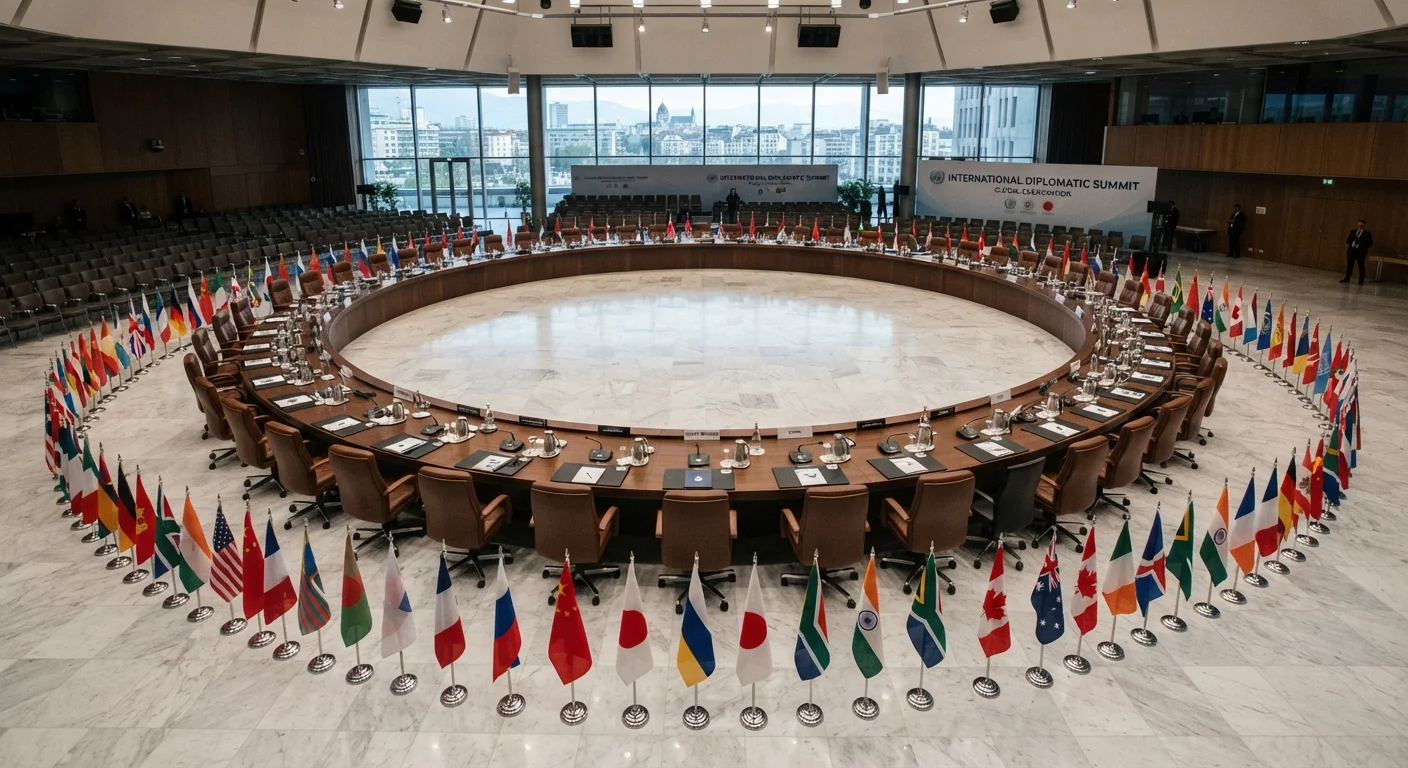
Diplomacy encompasses the full range of formal and informal negotiations between governments. It includes bilateral talks between two countries, multilateral summits involving many nations, and mediation through international institutions such as the United Nations. Diplomats can quietly negotiate behind closed doors or stage public summits designed to signal intentions as much as to reach agreements.
The primary advantage of diplomacy is that it preserves relationships and avoids harm. When it works, agreements can be durable because all parties have ownership over the outcome. The core weakness is that diplomacy requires willing participants - a government determined to act by force or unwilling to compromise can simply walk away from the table.
The format of diplomacy also shapes its results. Two countries negotiating directly produces very different dynamics than a 50-nation summit. Bilateral versus multilateral diplomacy examines why those distinctions matter in practice.
Watch for Diplomatic Signals in the News
When following a developing international crisis, pay close attention to which officials are meeting, at what level, and whether talks are described as bilateral or multilateral. These details signal how seriously parties are engaging and how much international backing a negotiation carries. A foreign minister's meeting carries different weight than a head-of-state summit.
Sanctions: Economic Pressure as a Policy Lever
Economic sanctions are restrictions that one country - or a coalition of countries - imposes on another to alter its behavior. They can target an entire national economy through broad trade embargoes, or they can be narrowly focused on specific individuals, companies, or sectors through what are called targeted or smart sanctions. Asset freezes and travel bans on key officials are common examples of targeted measures.
Sanctions occupy a middle ground between diplomacy and war: they inflict real costs without direct violence. They are relatively easy to impose and can be adjusted or lifted as a carrot-and-stick negotiating tool. However, their effectiveness is disputed among researchers and policymakers. Governments under sanctions sometimes absorb economic pain without changing policy, especially when they can find alternative trading partners or when domestic political costs of conceding appear higher than economic losses.
Humanitarian consequences are a serious concern - broad economic sanctions can harm ordinary citizens more than the leaders they are designed to pressure. How international sanctions actually work provides a detailed look at the mechanics and real-world record.
| Diplomacy | Sanctions | Military Force | |
|---|---|---|---|
| Speed of impact | Slow - requires negotiation | Moderate - weeks to months | Fast - immediate on-the-ground effect |
| Human cost | Minimal, if successful | Can harm civilian populations | High - casualties and displacement |
| Legal constraints | Few; broadly encouraged | Varies by jurisdiction and target | Strictly regulated under international law |
| Reversibility | Easily paused or restarted | Can be lifted as incentive | Difficult - damage is often lasting |
| Effectiveness record | High when parties willing | Mixed; depends on target's alternatives | Uneven; occupation risks are significant |
| International legitimacy | Broadly accepted | Greater when multilateral | Requires UN mandate or clear self-defense |
Military Force: The Highest-Stakes Option
Military force ranges from limited strikes and naval blockades to full-scale armed intervention or war. It is typically considered a last resort under international law, with the United Nations Charter generally prohibiting the use of force except in self-defense or when authorized by the UN Security Council.
The potential advantages are speed and decisiveness - military action can change facts on the ground rapidly in ways diplomacy and sanctions cannot. But the costs are severe and often unpredictable. Armed interventions risk civilian casualties, regional destabilization, and prolonged conflicts that outlast their original rationale. The historical record on military interventions producing stable, lasting political outcomes is uneven at best. A balanced examination of that record is available in the pros and cons of international military interventions.
International institutions play a critical role in legitimizing - or delegitimizing - military action. Coalitions acting with UN authorization carry more legal and political weight than unilateral operations, influencing how the global community responds. To understand the institutions that shape these decisions, see this guide to global governance institutions.
How These Tools Are Used Together
Real-world foreign policy rarely relies on a single lever in isolation. The response to Russia's 2022 invasion of Ukraine illustrates how tools combine: Western governments pursued diplomatic condemnation through the UN, imposed sweeping economic sanctions targeting Russian banks and officials, and provided military equipment and intelligence to Ukraine without direct armed engagement. Each layer served a different purpose and audience.
The sequencing and weight given to each tool reflect the goals a government is trying to achieve, its appetite for risk, its domestic political constraints, and the cohesion of its international partners. Regional alliances also shape what is feasible - a country acting alone has far less leverage than one backed by a large coalition. The world's major regional alliances explains how those blocs function and influence conflict responses.
Understanding these tools helps readers evaluate what governments are actually doing when they respond to a crisis - and what trade-offs they are implicitly accepting. For a reference on key terms that appear throughout international news coverage, this geopolitical glossary is a useful companion.