What the Digital Divide Actually Means
The phrase "digital divide" captures a straightforward but consequential inequality: some Americans can log on quickly and affordably, while others cannot - or can only do so with significant difficulty. Understanding the internet's role in daily life, from job applications and telehealth to remote schooling and government services, helps clarify why this gap matters so much.
For a fuller picture of how Americans connect - from dial-up to fiber - see this plain-language overview of US internet access. The divide is not simply a rural-versus-urban story, though geography is one of its biggest drivers. Income, age, disability status, and race all shape who gets left behind.
~24M
Americans lacking fixed broadband access
The FCC's 2022 Broadband Deployment Report estimated approximately 24 million Americans lacked access to broadband at the 25/3 Mbps threshold, though independent analysts argue the true number is higher.
35%
Rural residents without broadband access
The FCC has reported that rural Americans are disproportionately unserved, with roughly a third of rural residents lacking access compared to fewer than 2% of urban residents.
$65B
Federal broadband investment from 2021 Infrastructure Act
The Infrastructure Investment and Jobs Act of 2021 allocated $65 billion specifically toward broadband expansion, the largest federal broadband investment in US history.
Geographic and Infrastructure Barriers
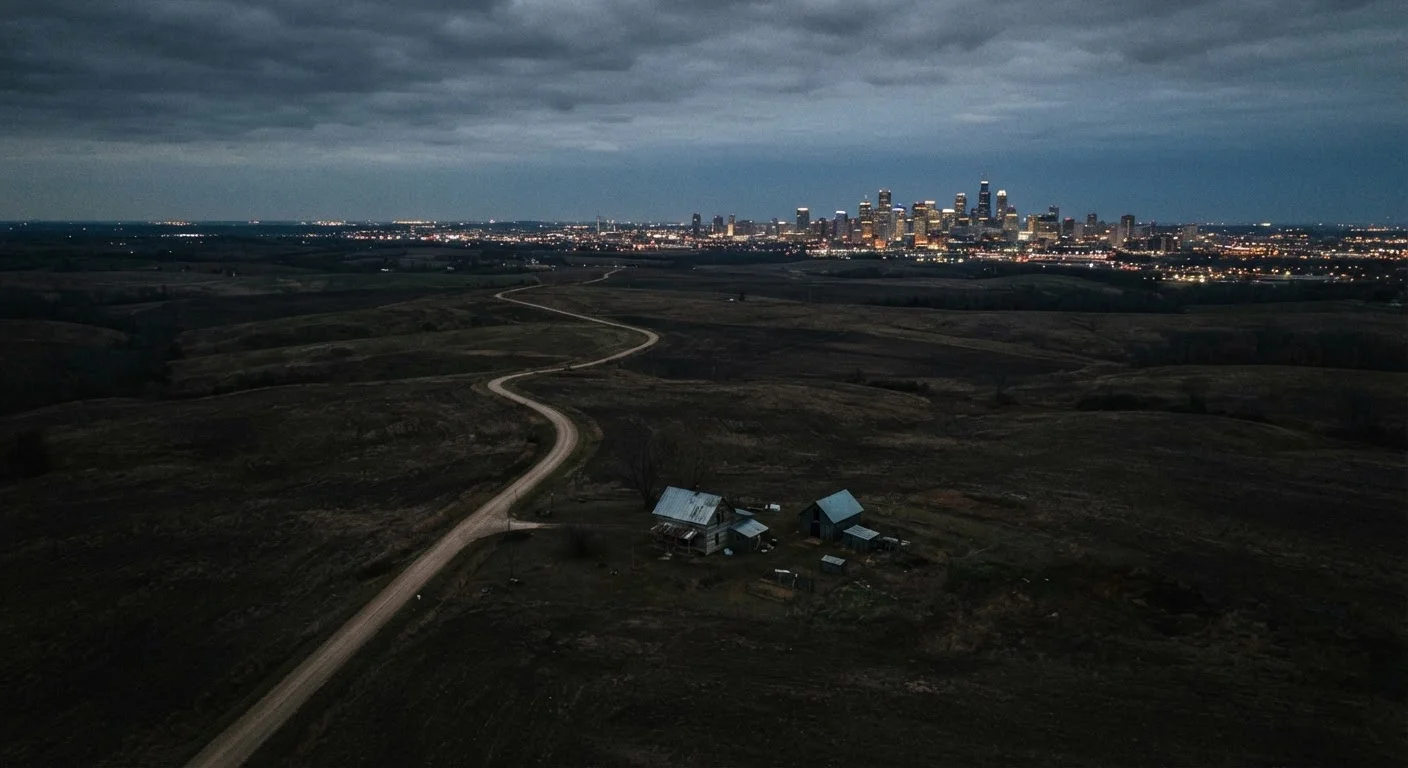
Building broadband infrastructure - fiber lines, cable networks, or cell towers - costs money proportional to distance and inversely proportional to customer density. In a dense city block, one fiber line can serve hundreds of households. On a rural road, a provider might spend the same amount to reach five. That math discourages private investment in low-population areas.
Tribal lands face compounded challenges. Many reservations are in remote terrain with limited existing infrastructure, and historical underinvestment has left connectivity rates far below the national average. According to the FCC's own data, a significant share of tribal land residents lack access to broadband at the federal benchmark speed.
Satellite internet reaches areas no cable can, but it carries trade-offs. Understanding the differences between DSL, cable, fiber, and satellite clarifies why no single technology solves access for everyone equally.
The Affordability Layer
Even where broadband infrastructure exists, cost can be an insurmountable barrier. A household earning below the federal poverty level may have a cable line running past their door and still be unable to subscribe. Research from the Pew Research Center has consistently found that cost - not availability - is among the top reasons low-income Americans go without home broadband.
A family in a rural Appalachian county earns a modest income and lives two miles from the nearest cable infrastructure. Even with a federal subsidy program, no provider has extended service to their road.
A single parent in an urban neighborhood has broadband available from multiple providers but cannot afford the lowest-tier plan on a minimum-wage income.
Federal programs attempt to address this. The FCC's Lifeline program offers a monthly discount on broadband or phone service for qualifying low-income subscribers. The now-concluded Affordable Connectivity Program (ACP), which provided larger monthly subsidies, served millions of households before its funding ran out - illustrating how quickly demand outpaces program capacity.
The Downstream Consequences
Lack of reliable internet is rarely just an inconvenience. Children without home broadband face homework gaps when schools assign online tasks - a problem that became acutely visible during the COVID-19 pandemic. Adults without connectivity struggle to access remote job listings, complete online applications, or participate in telehealth appointments that have become a primary care channel for many providers.
The divide also shapes how people engage online when they do connect. Limited access often means mobile-only connections, which restrict what tasks users can realistically complete. Being aware of how participation in digital spaces works - and its misconceptions - matters too; see common digital citizenship myths for context on what being online actually involves.
Bridging the divide requires more than laying cable. It demands sustained investment in affordability programs, digital literacy, and policy accountability to ensure that mapping data accurately reflects where gaps truly exist - not just where providers claim to offer service.