What We Mean by Anonymous vs. Real-Name Posting
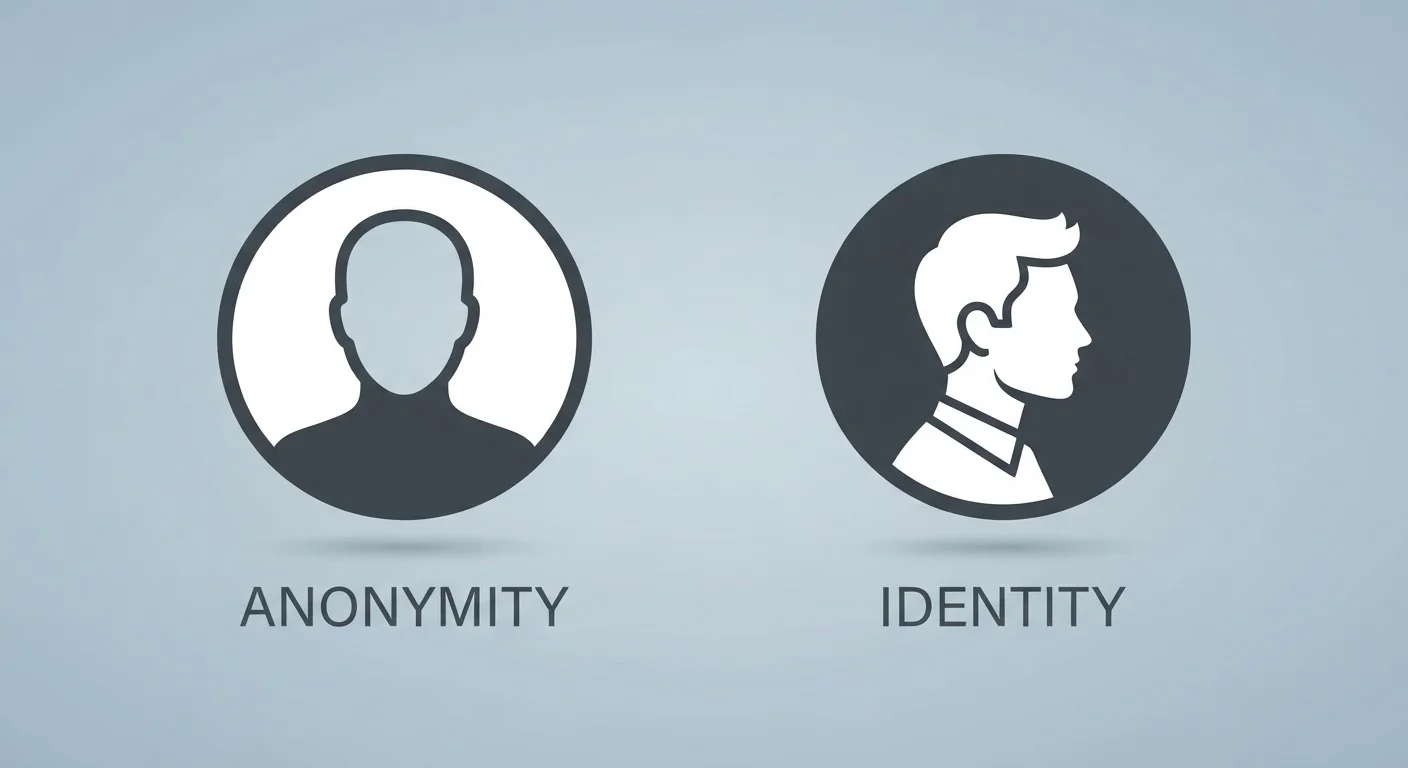
When people talk about posting anonymously, they usually mean participating under a username, handle, or pseudonym that isn't linked to their legal identity. That might be a throwaway account on a forum, a pseudonym on a blogging platform, or simply a username that reveals nothing personal. Real-name posting, by contrast, means attaching your actual identity - or a consistent, publicly known online identity - to what you say.
It's worth noting that anonymity comes in degrees. A username alone doesn't guarantee anonymity; your writing style, location references, or account history can still make you identifiable to a determined person. For a deeper look at how these distinctions work technically, see how anonymization differs from encryption.
Pseudonymity Is Not the Same as Full Anonymity
A consistent username - one you use across platforms or over time - is better described as a pseudonym than true anonymity. Pseudonymous accounts can still build reputations and be traced through account history or metadata. True anonymity requires deliberate technical steps beyond simply choosing a creative username. Understanding this distinction helps you make a more realistic assessment of your actual privacy. For more on the topic, visit our Digital Privacy hub.
The Case for Posting Anonymously
Anonymity gives people breathing room to participate in conversations they might otherwise avoid entirely. Someone exploring a sensitive health question, navigating a difficult family situation, or holding an unpopular opinion at work may only feel safe speaking up if they aren't required to attach their name to it.
Protects personal safety on sensitive topics
Anonymity allows people to discuss health conditions, political views, or personal struggles without fear of real-world backlash or retaliation.
Reduces self-censorship
When people don't fear judgment tied to their identity, they're more likely to ask honest questions or share unpopular perspectives that can enrich a conversation.
Useful for vulnerable or marginalized voices
People in high-risk situations - such as those facing domestic abuse or political repression - may only be able to participate safely under a pseudonym.
Separates personal life from online activity
A username keeps your professional or social reputation from being tied to every comment you make, which matters when exploring ideas informally.
Research on online communities consistently shows that pseudonymous participation can produce more candid, exploratory conversations - particularly on topics where social stigma or professional consequences are a real concern. Whistleblower communities, support forums, and political discussion boards all rely on this dynamic. For a fuller look at how anonymity shapes platform behavior, see our breakdown of anonymity trade-offs on online platforms.
The Downsides of Staying Anonymous
Anonymity doesn't only protect vulnerable people - it also removes friction for bad actors. When there's no reputational cost to harmful behavior, some users take advantage of that gap. Harassment, misinformation, and bad-faith arguments tend to cluster in spaces where no one is accountable for what they say.
Lowers accountability for harmful behavior
Without a real-world identity at stake, some users are more likely to harass, troll, or spread false information, since there's little personal cost to doing so.
Reduces perceived credibility
Contributions from anonymous accounts are often treated with more skepticism, even when the information is accurate and well-reasoned.
Can create echo chambers and bad-faith dynamics
Spaces dominated by anonymous posting sometimes drift toward extremes, since there's no social incentive to engage constructively with opposing views.
Anonymity is often less complete than users assume
Metadata, writing patterns, and cross-platform activity can make pseudonymous accounts more traceable than they appear, particularly to platforms or determined individuals.
There's also a trust deficit. Readers and community members often weigh anonymous contributions differently. Advice from an unnamed account may be dismissed even when it's accurate, simply because there's no way to evaluate the source.
The Case for Using Your Real Name
Posting under your real name creates a different kind of participation - more considered, often more constructive. When your name is attached to your words, you have a direct stake in how those words reflect on you. That accountability tends to raise the quality of contributions and makes communities more reliable overall.
53%
Adults who have personally experienced online harassment
According to Pew Research Center data, more than half of American adults report having experienced some form of online harassment, often in anonymous or low-accountability environments.
3 in 4
People who self-censor online at least sometimes
Pew Research Center surveys have found that a large majority of Americans hold back opinions online due to concerns about professional or social consequences tied to their identity.
Real-name participation also builds a public track record. For professionals contributing to industry discussions, journalists, researchers, or advocates, attaching your identity to your work makes it attributable and credible. Before posting under your real identity anywhere new, it's worth reviewing privacy steps to take before joining a new platform.
How to Think About the Choice for Yourself
The most practical question isn't "which is better?" but "which fits this situation?" A few things worth considering:
- Topic sensitivity: If the subject touches on health, politics, personal relationships, or professional life, anonymous participation reduces personal risk.
- Platform norms: Some communities - LinkedIn, academic forums, local neighborhood platforms - are built around real identities. Others, like Reddit or many interest-based forums, are built around usernames. Matching the norm usually leads to better reception.
- Your goals: If you want to build a professional reputation or establish expertise, real-name posting serves that goal. If you want to ask questions candidly or participate in support communities, a pseudonym may serve you better.
- Persistence: Anonymous accounts can accumulate history too. Whether you lurk or actively participate, your posting patterns can become recognizable over time even without a name attached.
Whatever you decide, it helps to think before you post. A practical self-check before contributing - on tone, accuracy, and fit - applies equally whether your name is attached or not. See our self-check guide for thoughtful community participation.