
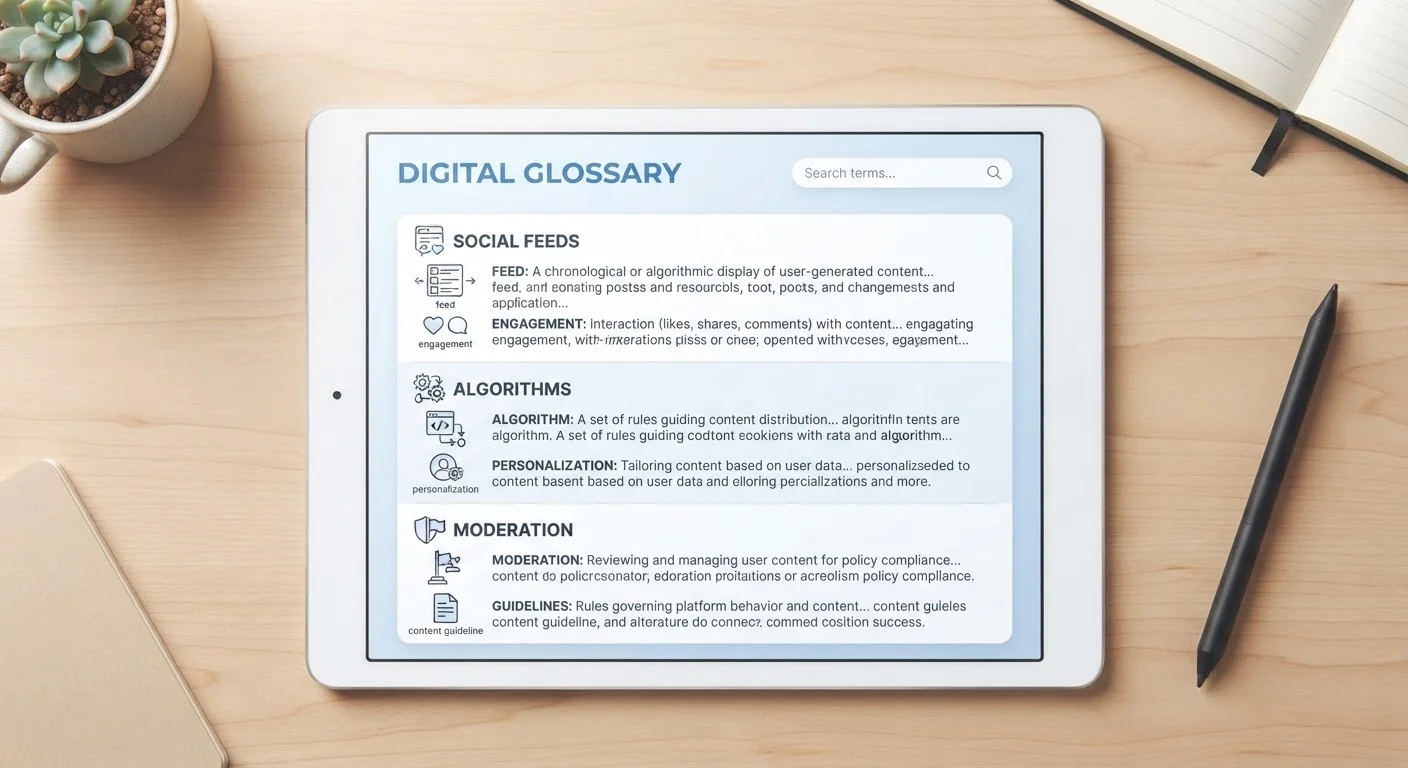
Why Platform Vocabulary Matters
Every major online platform - from social networks to discussion forums - comes with its own layer of terminology. Some of it is technical, some is borrowed from legal or media industries, and some was invented by platform designers themselves. When you don't know what a term means, it's harder to understand how a platform shapes what you see, what gets removed, and how your data is used.
This glossary covers the core vocabulary you're most likely to encounter. It pairs well with our overview of online community types if you want broader context on how different platforms are structured.
| Number of terms in this glossary | 12 core definitions |
| Primary focus | Platform mechanics and moderation vocabulary |
| Complementary reference | Digital Privacy Terms Guide |
| Audience | General online users, no technical background required |
Core Platform Terms Defined
The terms below cover the mechanics of how platforms operate - from what surfaces content to how rule-breaking is handled.
Algorithm
A set of rules a platform uses to decide which posts, videos, or accounts to show you - and in what order. Algorithms typically factor in your past behavior, engagement signals (likes, shares, watch time), and content recency.
Feed
The scrollable stream of posts, updates, or content on a platform's home screen. Feeds can be chronological (newest first) or ranked by an algorithm.
Content Moderation
The process platforms use to review, filter, or remove content that violates their rules. This is done by automated systems, human reviewers, or a combination of both.
Terms of Service (ToS)
The legal agreement between a platform and its users outlining acceptable use, data practices, and what the platform can do with your content. Often called Community Guidelines when focused on behavior.
Shadowban
A restriction applied to an account that limits how visible its content is to others - without notifying the account holder. The user can still post, but their reach is quietly reduced.
Engagement
Any measurable interaction with a piece of content - likes, comments, shares, clicks, or watch time. Platforms use engagement signals to rank content and measure reach.
Monetization
The ways a platform or its creators generate revenue - through advertising, subscriptions, paid features, or creator programs that share ad revenue with content producers.
API (Application Programming Interface)
A technical gateway that lets outside developers or researchers access a platform's data or features in a structured way. Platforms often restrict or charge for API access.
Moderation Queue
A holding area where flagged content waits for human review before a final decision (removal, approval, or appeal) is made.
Reach
The total number of unique accounts or users who see a given post or piece of content, distinct from impressions (which count repeated views by the same person).
De-platforming
The permanent removal of an account or user from a platform, usually for repeated or severe violations of the platform's policies.
Interoperability
The ability of different platforms or apps to communicate and share data with each other. Limited interoperability is one reason switching between social networks is difficult.
For a deeper look at how removal decisions are made, see our article on how content moderation works across major platforms.
If you're also curious about privacy-specific vocabulary - cookies, data brokers, encryption - our digital privacy terms guide covers that ground separately.
Platform Policies Change Often
The rules governing content, accounts, and data on major platforms are updated regularly - sometimes with little public notice. When in doubt, go directly to a platform's Help Center or Community Guidelines page for the most current version of their policies. Third-party summaries, including this one, reflect general principles rather than any specific platform's current rules.