Why the Platform You're On Matters
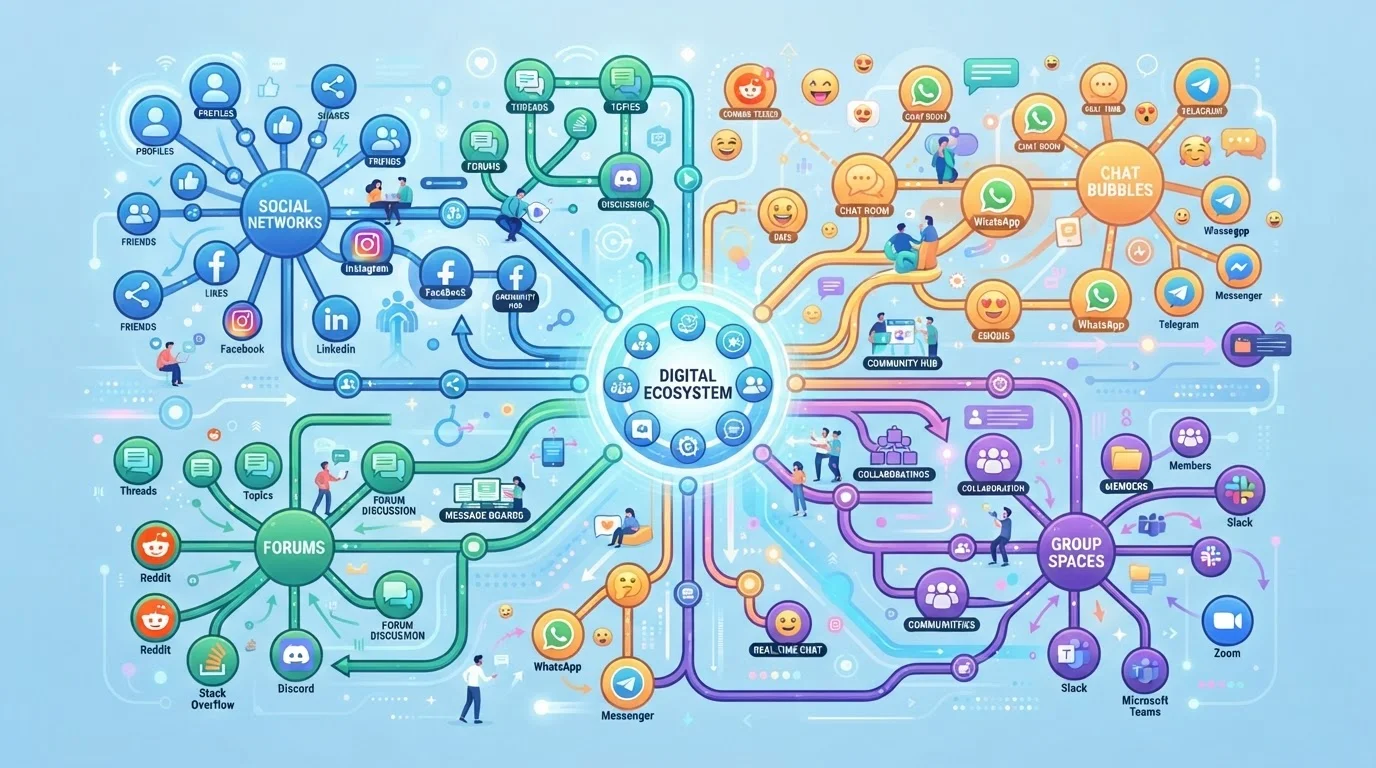
When people talk about "going online to find community," they often mean very different things. Someone might scroll a Facebook Group for parenting advice, post on a specialty forum about home brewing, or jump into a Discord server to follow their favorite podcast. These are all online communities - but they work in fundamentally different ways.
Understanding those differences helps you find communities where you'll actually thrive, and it explains why the same conversation can feel so different depending on where it happens. The platform shapes the culture just as much as the people do. For a deeper look at what actually defines a community online, see what makes a group of people an online community.
5B+
Global social media users
Statista estimated that more than 5 billion people worldwide used social media platforms as of 2024.
19M+
Active subreddits on Reddit
Reddit reported over 19 million active communities (subreddits) as of its public filings in 2024.
563M
Discord registered users
Discord cited approximately 563 million registered users in its publicly available figures as of 2023.
Forums: Organized, Searchable, Persistent
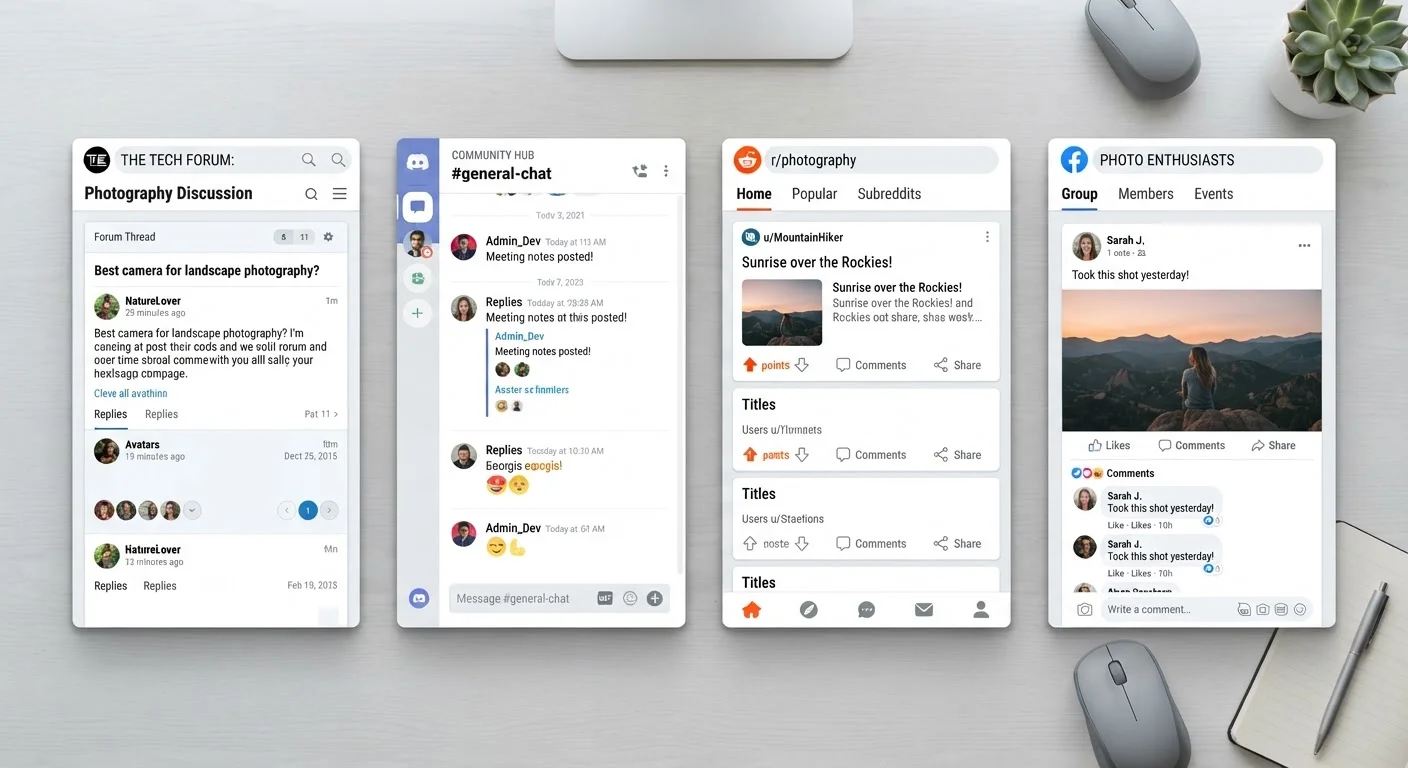
Forums are among the oldest forms of online community. They organize conversations into threads - a question or topic posted by one user, followed by replies from others. Threads are grouped into categories, making it easy to browse by subject. Because threads stay visible indefinitely, forums often become reference libraries over time: a question asked years ago might still surface in a search engine today.
Classic forum software like phpBB or vBulletin powered much of early internet culture. Today, Reddit carries on many forum traditions in a more modern package, organizing communities into subreddits built around specific topics. Forums tend to reward patience - the pace is slower, but the depth of conversation is often greater.
See how forums compare to Discord servers and other community types for a side-by-side breakdown.
Social Networks: Feeds, Followers, and Fast-Moving Content
Social networks like Facebook, X (formerly Twitter), and Instagram shifted the emphasis from topic-based threads to people-based feeds. Instead of browsing a category, you follow accounts and see their posts in a stream. The result is faster, more personal - but also more fleeting. Content that doesn't get engagement quickly tends to disappear from view.
Facebook Groups blend some forum qualities into the social network model, letting users create shared spaces organized around a topic rather than a person. This hybrid approach has made Groups one of the most widely used community formats online. Still, the underlying feed logic means discussions can be harder to search or revisit compared to a traditional forum.
“The architecture of an online platform is never neutral. The way a space is designed - how posts are sorted, who can see what, what gets amplified - shapes the conversations that happen inside it.”
— Ethan Zuckerman, Associate professor of public policy, communications, and information at UMass Amherst; author and internet researcher
Real-Time Platforms: Chat, Servers, and Live Spaces
Platforms like Discord and Slack are built around synchronous communication - meaning conversations happen in real time, similar to a group text message. Discord, originally built for gamers, now hosts communities around nearly every imaginable topic. Servers are divided into channels, each dedicated to a specific subject or type of content.
The real-time nature creates a different social texture: conversations feel more like hanging out than filing a report. But it also means that if you miss a few hours, you may miss the conversation entirely - there's no clean thread to catch up on. For communities that value active, ongoing engagement, this trade-off is often worth it.
Matching the right platform to your community's purpose is a practical next step if you're weighing your options.
Niche and Specialized Platforms
Beyond the major names, hundreds of smaller platforms serve specific interests, professions, or values. Goodreads connects readers. Strava links athletes. Letterboxd brings together film fans. These platforms are purpose-built, which means the community features are often better suited to the activity at hand.
There's also a growing category of open-source or decentralized platforms - like Mastodon - where communities run their own servers rather than relying on a single company. This model gives communities more control but also requires more technical setup and self-governance.
For a tour of notable platforms beyond the mainstream, see niche platforms worth knowing. If you want to understand the vocabulary used across all these spaces, the glossary of online community terms is a useful reference.
Explore Before You Commit
Most online communities allow you to read without posting - a practice called lurking. Spend time observing a forum, server, or group before you participate. You'll get a feel for the norms, tone, and expectations without putting yourself out there before you're ready.