Why Algorithm Myths Are So Sticky
Social media algorithms are genuinely opaque. Platforms don't publish their full ranking logic, which leaves a vacuum that rumors and oversimplifications rush to fill. When your post flops or your feed looks strange, it's natural to reach for an explanation - and a conspiracy is more satisfying than "the system predicted low engagement."
The result is a sprawling set of myths that shape how people post, what they avoid saying, and how much they trust what they see online. Many of these beliefs aren't completely made up - they often contain a kernel of truth stretched beyond what the evidence supports. Getting the details right matters, because bad assumptions lead to real decisions: what to share, who to follow, and how much to trust your feed.
Myth
Algorithms are deliberately suppressing my content because the platform disagrees with my views.
Fact
Algorithms rank content based on predicted engagement - clicks, watch time, shares - not editorial opinions about what you believe.
This is one of the most persistent ideas about social feeds, and it's easy to see why. When a post underperforms, it feels personal. But recommendation systems are built to maximize user engagement with the platform, not to police viewpoints. Content that gets low interaction early on is shown to fewer people - not because of what it says, but because the system predicts it won't hold attention. That said, platforms do apply separate content moderation rules, which are human-reviewed policies distinct from the ranking algorithm itself.
Myth
Posting at exactly the right time of day is the key to algorithmic success.
Fact
Timing is a minor factor. How your audience responds - and how quickly - matters far more than the clock.
Timing advice is everywhere online, but it overstates a small variable. Algorithms do consider recency, but they weight response velocity (how fast people interact after a post goes live) much more heavily. A post with strong early engagement at an 'off' hour will often outperform a mediocre post shared during peak traffic. Consistent posting matters more for audience habits than for algorithmic preference.
Myth
The algorithm sees and distributes everything I post equally.
Fact
Most platforms use a sampling approach - your content is shown to a small slice of followers first, then expanded based on response.
Organic reach has declined significantly across major platforms over the past decade. Researchers and platform transparency reports confirm that only a fraction of your followers see any given post initially. The system uses that initial sample as a test: strong engagement signals broader distribution; weak signals mean the content stays narrow. This is why two posts from the same account can perform very differently - it's not random, but it is competitive.
Myth
If I hide like counts or use workarounds, I can trick the algorithm into treating my content differently.
Fact
Hiding public like counts is a display feature, not a data feature - platforms still collect and use all engagement signals internally.
Some users assume that removing visible social proof changes how the algorithm scores content. It doesn't. The platform's back-end systems record every interaction - how long someone paused on a post, whether they tapped through, whether they shared it privately. What you see on screen and what the algorithm sees are two different things. Understanding your digital privacy can help clarify the gap between visible controls and actual data collection.
Myth
Algorithms create filter bubbles that are entirely the platform's fault.
Fact
Filter bubbles emerge from a mix of algorithmic choices and the user's own behavior - both play a role.
Recommendation systems do tend to serve content similar to what you've already engaged with, which can narrow your information diet over time. But research on this topic is nuanced. Studies suggest that people's pre-existing habits - who they follow, what they click - contribute at least as much to information narrowing as algorithmic ranking does. Algorithmic news feeds and filter bubbles explores this dynamic in more depth. The takeaway: you have more influence over your feed than the myth implies.
What Algorithms Actually Optimize For
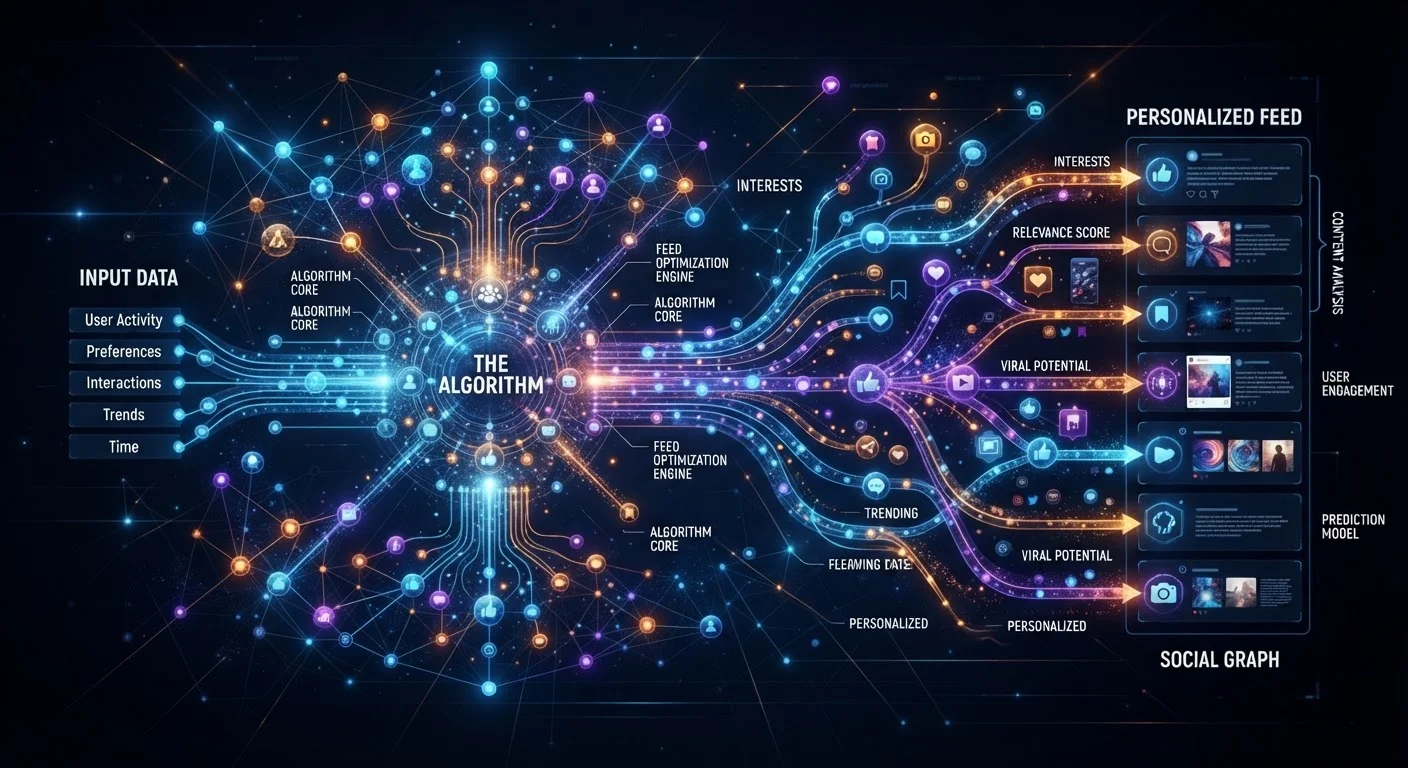
At their core, recommendation algorithms are prediction engines. They try to answer one question: "What content will keep this particular user on the platform longer?" To answer it, they look at signals like watch time, reshares, comment depth, and how often users return after seeing a type of content.
This design has real consequences worth understanding. Because engagement drives distribution, emotionally charged content - outrage, surprise, controversy - often travels farther than calm, informative posts. That's not a deliberate choice to inflame users; it's an unintended byproduct of optimizing for attention. Understanding this helps explain patterns in your feed without requiring a theory about platform bias.
~5-10%
Typical organic reach on major platforms
Industry analyses and platform transparency reports consistently suggest only a small fraction of followers see any given organic post without paid promotion.
64%
Users who feel algorithms misrepresent reality
A Pew Research Center survey found that roughly six in ten U.S. adults believe social media companies' algorithms distort what people see in significant ways.
Your own behavior shapes the algorithm as much as anything. The accounts you linger on, the topics you search, the posts you share privately - all of it feeds the system. Your digital habits play a bigger role in what you see than most people realize. And if you want to understand what data underlies those choices, social media privacy settings worth reviewing is a practical place to start.
Taking a More Grounded Approach to Your Feed
Once you let go of the idea that algorithms are working against you, you can start working with what they actually are: engagement-prediction systems with known tendencies and known blind spots. That shift in perspective is more useful than any posting hack.
A few practical things follow from the actual research. Authentic interaction - real conversations, genuine responses - tends to perform better over time than manufactured engagement. Diversifying what you engage with can gradually reshape your recommendations. And being skeptical of "algorithm tips" that promise specific results is warranted; platform systems change frequently, and no outsider has full visibility into how they work.
For a broader look at misconceptions that affect how people participate online, see digital citizenship myths many Americans still believe. Algorithms are just one piece of a larger picture of how online participation actually works.