Why Ethical Wildlife Photography Matters
Wildlife photography can be a deeply rewarding outdoor pursuit, but it comes with a responsibility that not every beginner anticipates. Every time a photographer enters a natural setting, their presence has a potential impact - on individual animals, on breeding or feeding cycles, and on the broader habitat. Done carelessly, photography can stress animals, disrupt nesting, trample vegetation, and even contribute to the habituation of wildlife to humans, which often ends badly for the animal.
The good news is that ethical practices are not complicated. They mostly come down to patience, preparation, and a genuine commitment to putting the animal's welfare ahead of the shot. Whether you're photographing shorebirds on a coastal marsh or deer in a national park, the same core principles apply. If you're new to photography in general, building a solid technical foundation first will help - see our beginner's guide to photography concepts for a practical starting point.
Core Practices Every Wildlife Photographer Should Follow
The practices below reflect widely held guidelines from conservation organizations, wildlife agencies, and experienced naturalist photographers. They are not legal requirements in most cases, but they represent the professional and ethical standard of the field.
Use the longest focal length available to keep your physical distance from subjects.
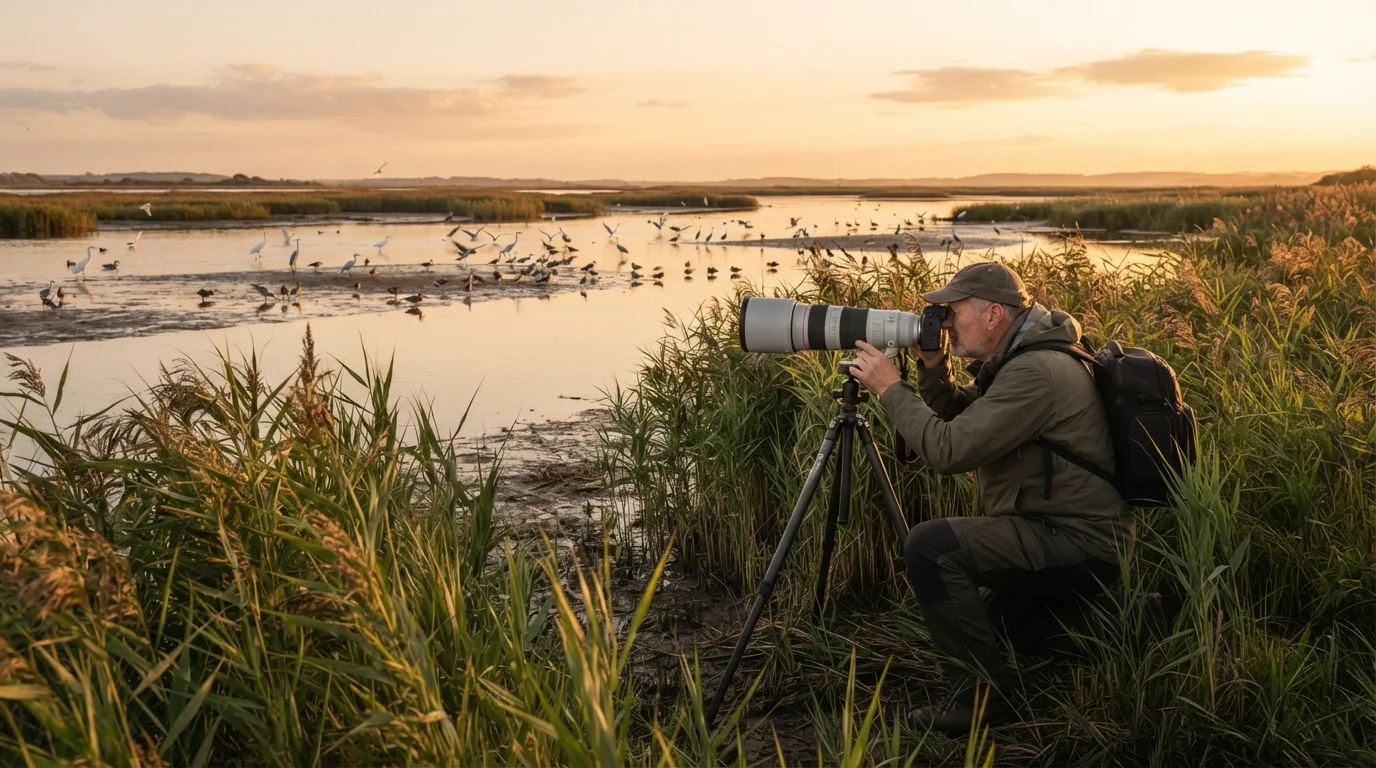
Proximity is the primary source of stress for wild animals. A telephoto lens - typically 300mm or longer - allows close-seeming images without encroaching on an animal's comfort zone or flight distance. This protects the animal and often produces calmer, more natural-looking behavior in your photos.
Never bait, feed, call, or use playback sounds to attract or manipulate wildlife.
Artificially attracting animals conditions them to associate humans with food, which increases dangerous human-wildlife conflicts. Broadcast calls during breeding season can disrupt territory establishment and waste energy that animals need for reproduction. Many national parks and refuges explicitly prohibit these practices.
Research your subject species before entering the field.
Each species has different flight distances, seasonal sensitivities, and habitat needs. Knowing when a bird is nesting or when a mammal is raising young allows photographers to choose timing and approach that avoids the most vulnerable periods. This knowledge makes you a better photographer and a more responsible one.
Move slowly, stay low, and approach from downwind when possible.
Sudden movements and upright human silhouettes trigger alarm responses in most wildlife. Slow, low approaches reduce the perceived threat and allow animals to habituate naturally to your presence. Approaching from downwind prevents scent detection by mammals with strong olfactory senses.
Observe posted regulations and seasonal closures in protected areas.
Wildlife refuges, national parks, and state lands often implement time-based or area-based closures to protect nesting colonies, denning sites, or migration staging areas. These rules exist because wildlife managers have identified real harm from human intrusion during those periods. Ignoring closures puts both wildlife and the photographer at legal risk.
Reading Animal Behavior Before You Shoot
One of the most valuable skills a wildlife photographer can develop is the ability to read behavioral cues. An animal that freezes, stares directly at you, shifts its weight, or repeatedly looks away from a food source is likely stressed by your presence. These are signals to back off - not to move closer for a better angle.
Stress responses, even brief ones, have real costs for wildlife. Animals that are repeatedly flushed from a resting spot or feeding area expend energy they cannot always replace. During nesting season, repeated disturbance can cause parents to abandon eggs or chicks. Understanding how encounters typically unfold in the field makes it far easier to stay within appropriate limits - our article on how wildlife encounters on the trail actually unfold covers animal behavior patterns in practical detail.
“The best wildlife photographers are also the best naturalists. They know their subjects so well that the camera becomes almost secondary to the act of observation.”
— A professional nature photography educator, Instructor, wildlife and nature photography workshops
Protecting Habitat While You Work
The animal in front of your lens is only part of the picture. The habitat surrounding it - grasses, shrubs, lichen-covered rocks, wetland edges - is equally worth protecting. Trampling vegetation to reach a better vantage point can destroy microhabitats and remove cover that wildlife depends on for shelter and nesting.
Staying on established trails and viewing areas is one of the simplest and most impactful things a photographer can do. When trails don't exist, treading lightly and avoiding sensitive areas like streambanks, nesting zones, and burrow entrances matters. These habits align directly with the broader Leave No Trace framework - a set of principles any outdoor enthusiast benefits from knowing. Learn more in our overview of Leave No Trace principles for outdoor recreation.