
Why Wildlife Encounters Feel Scarier Than They Usually Are
Trail wildlife encounters are far more common than serious incidents, yet the fear of meeting a bear or mountain lion keeps many hikers anxious throughout their outings. Understanding the gap between perception and reality helps you respond effectively rather than reactively.
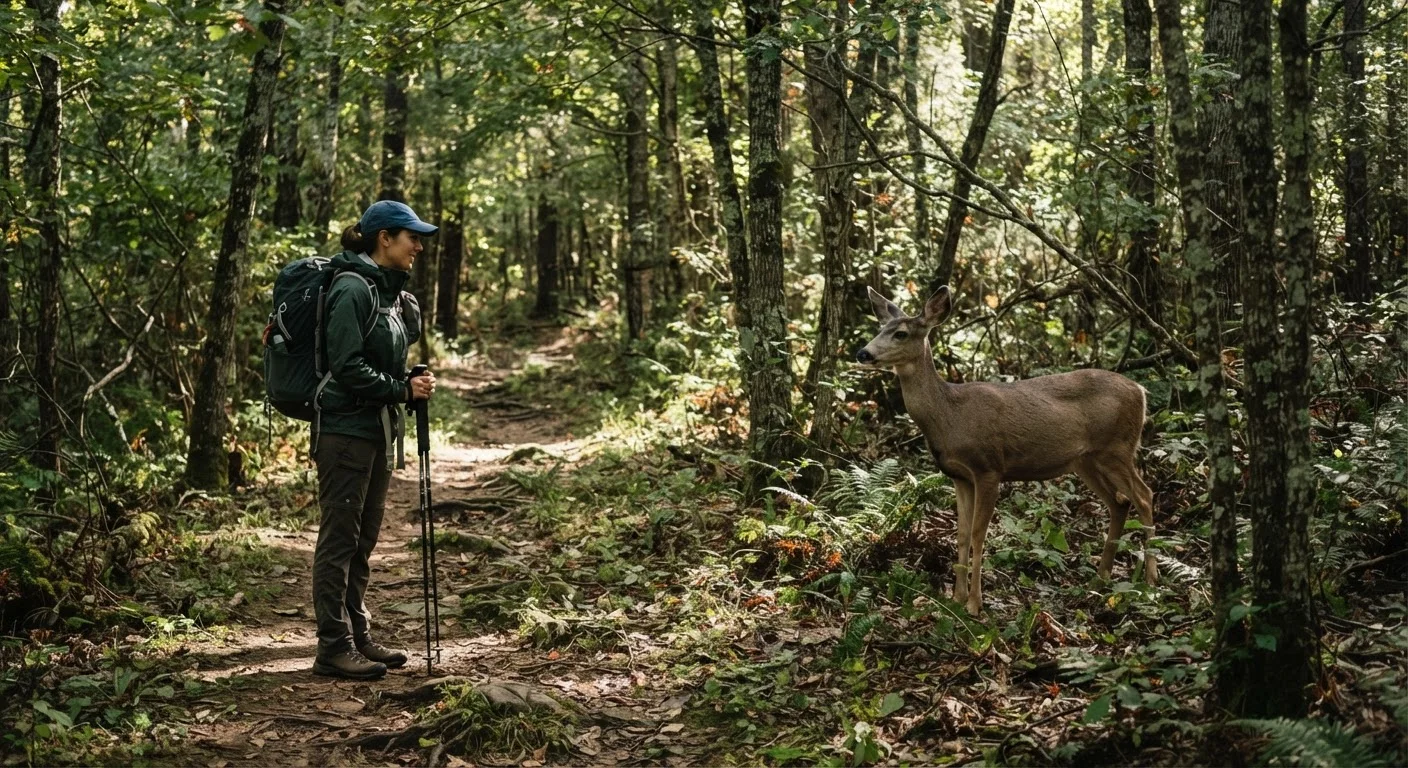
The vast majority of encounters involve animals that want nothing to do with you. Deer, elk, foxes, and most other species will move off long before you realize they were nearby - especially if you are making normal walking noise. What hikers describe as a "close call" is typically an animal that was startled and acted defensively for a moment before retreating.
That said, knowing the difference between a bluff charge and a predatory charge, or recognizing when a moose is genuinely agitated rather than simply curious, is practical knowledge that can matter when it counts. See our guide to solo hiking safety for additional context on reading your environment when you're on the trail alone.
Make Noise Before an Encounter Happens
Talking, clapping occasionally, or using a bear bell on densely vegetated trails reduces surprise encounters dramatically. Most animals will move off the trail well before you arrive if they hear you coming. This is especially valuable near streams or in windy conditions where animals cannot detect your approach by sound alone.
Before You Hit the Trail: Preparation That Prevents Encounters
The most effective wildlife safety strategy happens before you lace up your boots. Research the specific animals present in your destination region - behavior, seasonal patterns, and any recent agency alerts. A bear acting erratically near a trailhead is different from a bear encountered deep in the backcountry, and local rangers can tell you what's normal for the area.
What you will need
Food storage is one of the most overlooked prevention steps. Use bear canisters or hang food properly when camping, and never leave snacks in outer pockets where scent disperses freely. The Leave No Trace principles include specific guidance on wildlife interaction and waste disposal that directly reduces encounter risk. For a full gear rundown before any outing, our day hike checklist covers what to bring, including safety items.
Habituated Wildlife Is Dangerous Wildlife
Animals that have learned to associate humans with food lose their natural wariness and become genuinely hazardous. Never feed wildlife - not directly and not by leaving food scraps accessible. Habituated animals are frequently euthanized by wildlife agencies because they cannot safely remain near human-use areas.
Step-by-Step: How to Respond When You Meet Wildlife
The following steps apply broadly to most trail encounters with large or potentially dangerous wildlife. Specific species - such as black bears versus grizzly bears, or rattlesnakes versus harmless snakes - may require adjusted responses, which local wildlife agencies publish for their regions. Use these steps as a foundation, not a rigid script.
Identify the Animal and Assess Its Behavior
The moment you spot an animal, pause and observe without reacting physically. Note the species, its distance from you, and what it is doing. A grazing deer and an alert moose blocking the trail present completely different risk profiles. Watch for posture cues: a stiff-legged stance, raised hackles, direct eye contact, or vocalizations like huffing or tooth-popping signal stress or threat. A relaxed animal simply moving away poses little danger.
Stop Moving and Lower Your Threat Profile
Once you've spotted an animal at close range, stop walking immediately. Avoid sudden movements, loud vocalizations, or direct prolonged eye contact, which many animals read as a challenge. Stand upright and face the animal calmly. If you are in a group, cluster together - groups appear larger and are less likely to be approached than solitary individuals.
Give the Animal a Clear Escape Route
Most wildlife aggression is defensive - an animal feels cornered or threatened. Step to the side of the trail and create an unobstructed path for the animal to move away from you. Do not block its direction of travel. In most cases, the animal will choose to leave once it determines you are not a threat and an exit is available.
Back Away Slowly if the Animal Holds Its Ground
If the animal remains stationary and appears agitated, begin backing away slowly while keeping it in your field of view. Speak in a calm, low, steady voice - this signals that you are human and not prey. Continue until you have created substantial distance, then reassess. Do not turn your back until you are well separated from the animal.
Deploy Bear Spray Only as a Last Resort
If a bear charges and has closed within roughly 30-60 feet, deploy bear spray in a broad side-to-side arc aimed slightly downward toward the approaching animal. Bear spray is most effective at close range during an actual charge - it is not a repellent and should not be applied to gear or tents. Familiarize yourself with your canister's safety clip and trigger mechanism before your hike, not during an emergency.
Report the Encounter After Leaving the Area
Once you are safely clear, report significant encounters - particularly involving bears, mountain lions, or injured animals - to the relevant land management agency (such as a national park visitor center or state wildlife agency). Reports help rangers monitor animal behavior patterns and issue alerts that protect other hikers on the same trails.
Never Run From a Large Predator
Running triggers a chase instinct in predators like mountain lions and bears. Even if every instinct tells you to flee, hold your ground and back away slowly. Running can transform a curious or defensive animal into an actively pursuing one. This rule applies even when you are frightened - movement discipline is essential.
If your interest extends to observing wildlife intentionally - including photography - the ethical principles involved deserve their own attention. Our article on responsible wildlife photography explains how to observe animals without disturbing them or their habitats.