Why Regional Alliances Matter
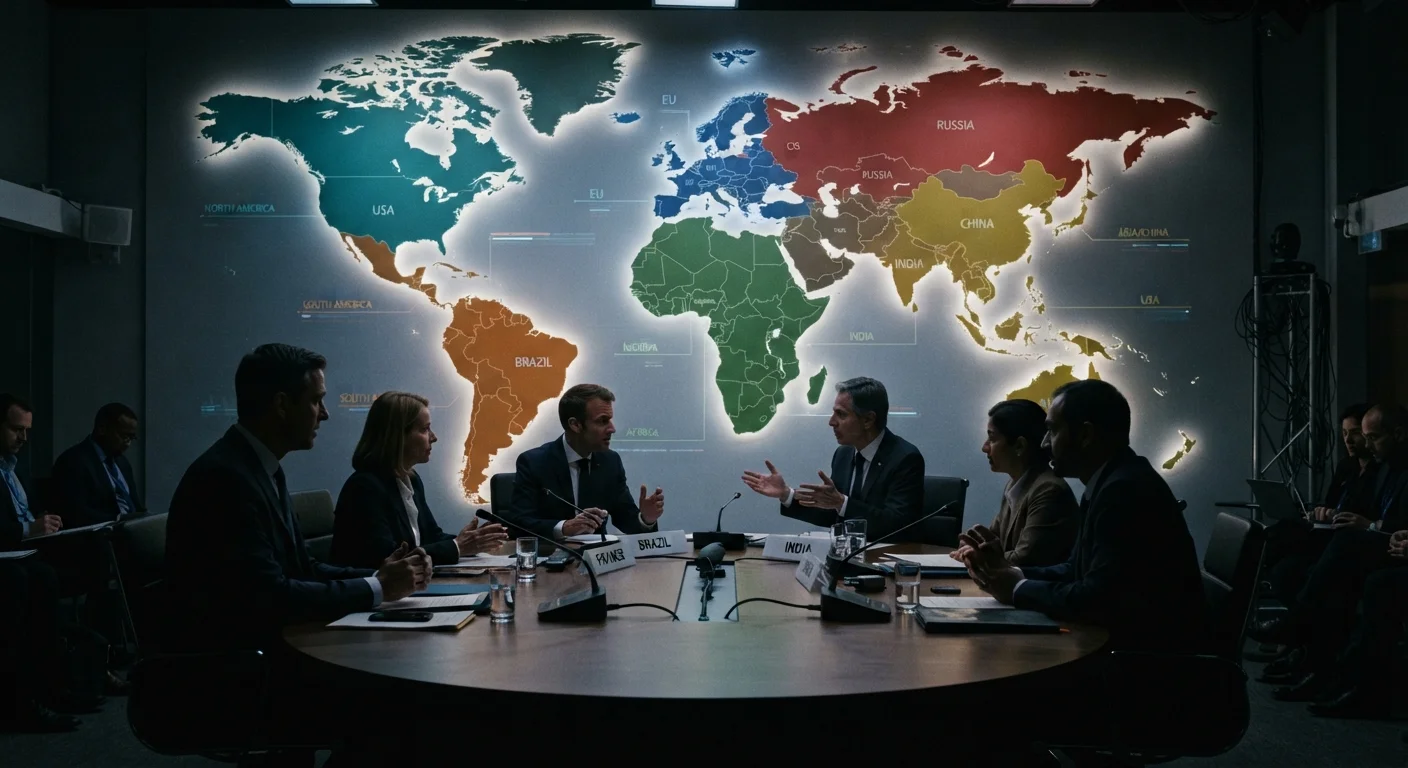
When international crises make headlines - a border dispute, an economic embargo, a humanitarian emergency - regional alliances are frequently at the center of the response. These blocs are formal groupings of neighboring or ideologically aligned countries that coordinate on shared goals, whether military, economic, or political.
For readers following world news, recognizing which alliance is involved and what it stands for can clarify why certain countries act together, why others stay neutral, and how international pressure is applied. As our guide to geopolitics for news readers explains, nations rarely act in isolation - they operate within webs of obligations and shared interests that alliances formalize.
The following overview covers the major regional alliances active today, what each one does, and why it matters to understand them.
NATO - North Atlantic Treaty Organization
Founded in 1949, NATO is a military alliance of 32 member states spanning North America and Europe. Its core commitment, enshrined in Article 5 of its founding treaty, holds that an attack on one member is considered an attack on all. This collective defense principle has been invoked once - following the September 11, 2001 attacks on the United States.
NATO coordinates joint military exercises, maintains a command structure, and sets defense spending guidelines for members. It remains the most powerful military alliance in the world by combined defense capability.
Article 5's collective defense pledge has been invoked just once in NATO's history - after September 11, 2001.
The European Union - Political and Economic Integration
The European Union (EU) is not a traditional military alliance, but it is one of the world's most ambitious political and economic blocs, comprising 27 member states. The EU operates a single market, a common currency used by most members (the euro), and shared regulatory standards across areas from food safety to data privacy.
Member states coordinate foreign policy through the EU's institutions, though individual countries retain significant autonomy. The EU also has a growing defense dimension through its Common Security and Defence Policy.
The EU's single market allows goods, services, capital, and people to move freely across 27 member countries.
ASEAN - Association of Southeast Asian Nations
Formed in 1967, ASEAN brings together ten Southeast Asian nations including Indonesia, Vietnam, Thailand, and the Philippines. The bloc emphasizes non-interference in members' internal affairs and consensus-based decision-making - principles that have shaped its cautious responses to regional conflicts.
ASEAN functions as a forum for economic cooperation, regional stability discussions, and collective engagement with major powers including the United States and China. Its annual summits frequently address trade, maritime disputes, and humanitarian concerns.
ASEAN's non-interference principle means the bloc rarely takes strong positions on members' internal affairs.
The African Union - Continental Governance and Peace
The African Union (AU), established in 2002 as a successor to the Organisation of African Unity, comprises 55 member states - every recognized country on the African continent. It focuses on promoting political stability, democratic governance, and economic development across Africa.
The AU has the authority to suspend members following unconstitutional changes in government and has deployed peacekeeping missions to conflict zones. It has suspended several countries, including Mali, Guinea, and Sudan, following military coups in recent years.
The African Union can suspend members following military coups, a power it has exercised multiple times in recent years.
The Arab League - Arab World Coordination
Founded in 1945, the Arab League comprises 22 member states across the Middle East and North Africa. Its primary purpose is to coordinate political, cultural, economic, and social policy among Arab-majority nations.
The league's influence has varied considerably over the decades. It suspended Syria in 2011 following the outbreak of civil war and restored its membership in 2023 - a decision that drew mixed reactions internationally. The Arab League provides a forum for regional dialogue but decisions are generally non-binding on individual member states.
Arab League decisions are typically non-binding, giving individual member states considerable room to act independently.
MERCOSUR - South American Economic Bloc
MERCOSUR is a South American trade bloc founded in 1991, with full members including Brazil, Argentina, Uruguay, and Paraguay. It established a customs union and common external tariff among members, facilitating the free movement of goods and people across borders.
Venezuela was suspended from MERCOSUR in 2016 following concerns about democratic governance. The bloc has pursued - with mixed results - a trade agreement with the European Union that has been under negotiation for decades.
MERCOSUR facilitates free movement of goods and people among South American members through a shared customs union.
Reading Alliance News in Context
Alliances are not static. They expand, contract, and evolve as the geopolitical landscape shifts. NATO's addition of Finland and Sweden in 2023 and 2024 marked its most significant enlargement in decades. ASEAN has wrestled internally over how to respond to the situation in Myanmar. The African Union has suspended member states over military coups. These shifts are consequential and worth tracking.
Track Changes in Alliance Membership
Alliance membership is not permanent. Countries join, leave, or are suspended based on political shifts and governance standards. When following international news, checking the current membership status of a bloc - rather than assuming it is static - gives a more accurate picture of the diplomatic landscape.
It also helps to distinguish regional alliances from broader global institutions. The United Nations, World Trade Organization, and International Monetary Fund operate at a global level, while the blocs described here focus on a specific region's interests. Our guide to global governance institutions covers those larger bodies in detail.
When countries within an alliance disagree, or when an outside power pressures a bloc, the resulting tension is often what generates major international news. The tools nations use in global conflicts - sanctions, diplomacy, and military force - are frequently deployed through or in response to these alliance structures. If any of the terminology in coverage feels unfamiliar, a glossary of key international news terms can serve as a quick reference.