Why Global Governance Matters to Everyday Readers
The phrase "global governance" can sound remote, but the institutions behind it touch daily life in concrete ways - from the price of imported goods to the availability of emergency loans during a national financial crisis. When you see a headline about trade tariffs, a UN Security Council vote, or an IMF bailout, you're watching these systems in action.
This guide offers a plain-language overview of the major international institutions: what each one does, how it is structured, and what its real-world limits are. If you're newer to following world news, the geopolitics starter guide provides useful background on how nations interact before diving into specific institutions.
When reading a news story about a UN resolution, always check whether it originated in the General Assembly or the Security Council - only the latter carries potential enforcement weight.
Readers frequently overestimate the impact of General Assembly votes, which are non-binding political statements rather than actionable mandates.
Pay attention to which countries abstained, not just who voted yes or no - abstentions in Security Council votes often signal diplomatic ambiguity rather than neutrality.
Abstentions are a deliberate diplomatic tool that can shift outcomes without triggering a veto, and they carry significant geopolitical meaning.
The United Nations: Scope, Structure, and Limits
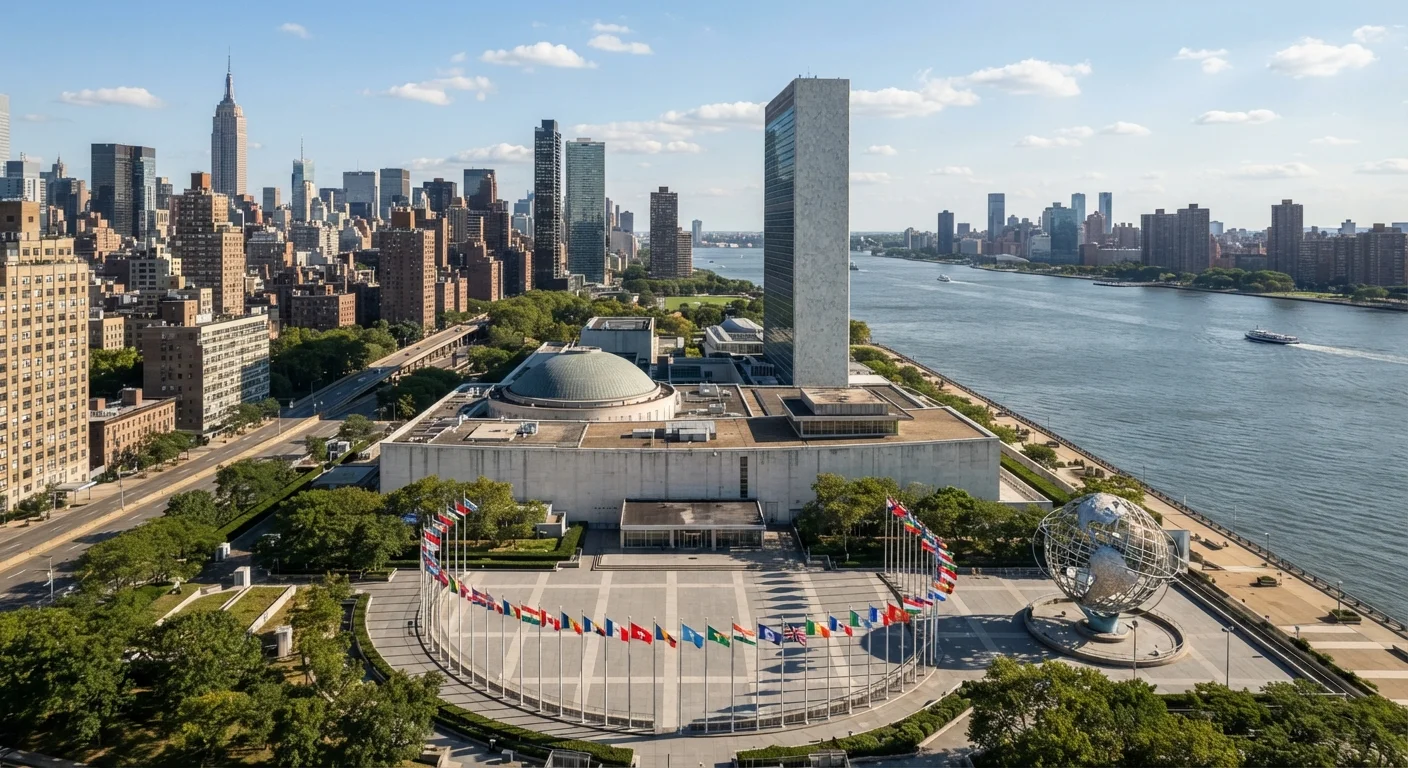
Founded in 1945, the United Nations (UN) is the closest thing the world has to a universal forum. Its 193 member states send representatives to the General Assembly, where each country holds one vote on resolutions. However, the General Assembly's resolutions are largely non-binding - they carry political weight but not legal force.
Real enforcement power sits with the Security Council, which has 15 members. Five of them - the United States, United Kingdom, France, Russia, and China - are permanent members with veto power, meaning any one of them can block a resolution regardless of how many others support it. This structure reflects the post-WWII balance of power and is a frequent source of criticism.
Beyond the Security Council, the UN system includes specialized agencies such as the WHO, UNESCO, and UNICEF. Each operates semi-independently, funded through a mix of member assessments and voluntary contributions. The UN cannot compel sovereign nations to comply with its decisions - enforcement depends on member states' willingness to act.
The WTO: Rules for International Trade
The World Trade Organization (WTO), established in 1995 as the successor to the General Agreement on Tariffs and Trade (GATT), administers the legal framework for international commerce. Its 164 member governments have agreed to a common set of rules governing tariffs, import restrictions, and trade disputes.
When one country believes another is violating trade agreements - for example, by subsidizing domestic industries in a way that undercuts foreign competitors - it can file a complaint through the WTO's Dispute Settlement Body. This quasi-judicial process can authorize retaliatory tariffs against the offending country, giving the WTO a degree of enforcement power that the UN largely lacks in practice.
The WTO operates by consensus, meaning any member can block new agreements. This makes it effective at maintaining existing rules but slow to adapt to new economic realities, such as digital trade or state-owned enterprises. For a deeper look at the trade tools countries use in conflicts, see the explainer on diplomacy and economic pressure.
The IMF and World Bank: Money, Debt, and Development
The International Monetary Fund (IMF) and the World Bank were both created at the 1944 Bretton Woods Conference, but they serve distinct purposes that are often confused.
The IMF focuses on short-term financial stability. When a country faces a currency crisis or cannot meet debt obligations, the IMF provides emergency lending - typically paired with conditions requiring fiscal reforms such as spending cuts or interest rate adjustments. These conditions are often politically contentious in the borrowing country.
The World Bank, by contrast, funds long-term development projects: infrastructure, education, healthcare systems, and poverty reduction programs, primarily in lower-income countries. Voting power in both institutions is weighted by financial contribution, giving wealthier nations - particularly the United States - outsized influence over their agendas, a persistent point of debate among developing nations.
193
UN Member States
As of the most recent UN membership count, 193 countries hold seats in the General Assembly.
164
WTO Member Governments
The WTO's 164 members account for the vast majority of global trade volume.
1944
Year Bretton Woods Institutions Founded
The IMF and World Bank were both established at the Bretton Woods Conference following World War II.
Other Key Institutions Worth Knowing
Several other bodies appear regularly in international news coverage:
- NATO (North Atlantic Treaty Organization): A military alliance of 32 member states committed to collective defense. Unlike the UN, NATO has its own command structure and can act without Security Council approval.
- G7 / G20: Informal forums where leaders of the world's largest economies coordinate on economic policy, climate, and security. They issue communiqués but have no binding authority.
- ICC (International Criminal Court): Based in The Hague, the ICC prosecutes individuals for war crimes, crimes against humanity, and genocide. Its jurisdiction only applies to member states or cases referred by the UN Security Council.
- WTO, WHO, IAEA: Specialized agencies addressing trade, health, and nuclear oversight respectively, each with its own governance structure and member agreements.
For a broader look at regional groupings like the African Union or ASEAN, see the guide to major regional alliances.
How These Institutions Work Together - and Where They Conflict
Global institutions are not a unified system. They operate in parallel, sometimes with overlapping mandates and occasionally in tension. The UN Security Council might authorize sanctions that the WTO's trade rules technically complicate. The IMF's austerity conditions can conflict with a government's obligations under UN social-rights frameworks.
Coordination mechanisms exist - such as the UN System Chief Executives Board - but they are advisory, not directive. In practice, powerful member states shape outcomes by leveraging influence across multiple institutions simultaneously.
Understanding how sanctions operate is one practical example of seeing these overlaps in action: sanctions involve the UN, the WTO, and national governments all at once. For readers building their vocabulary around these interactions, the international news glossary is a useful companion reference.
None of these institutions is omnipotent. Each reflects the political compromises of its founding era and the ongoing tensions between national sovereignty and collective action - the central challenge of international relations today.