The Shared Road Beneath Your Connection
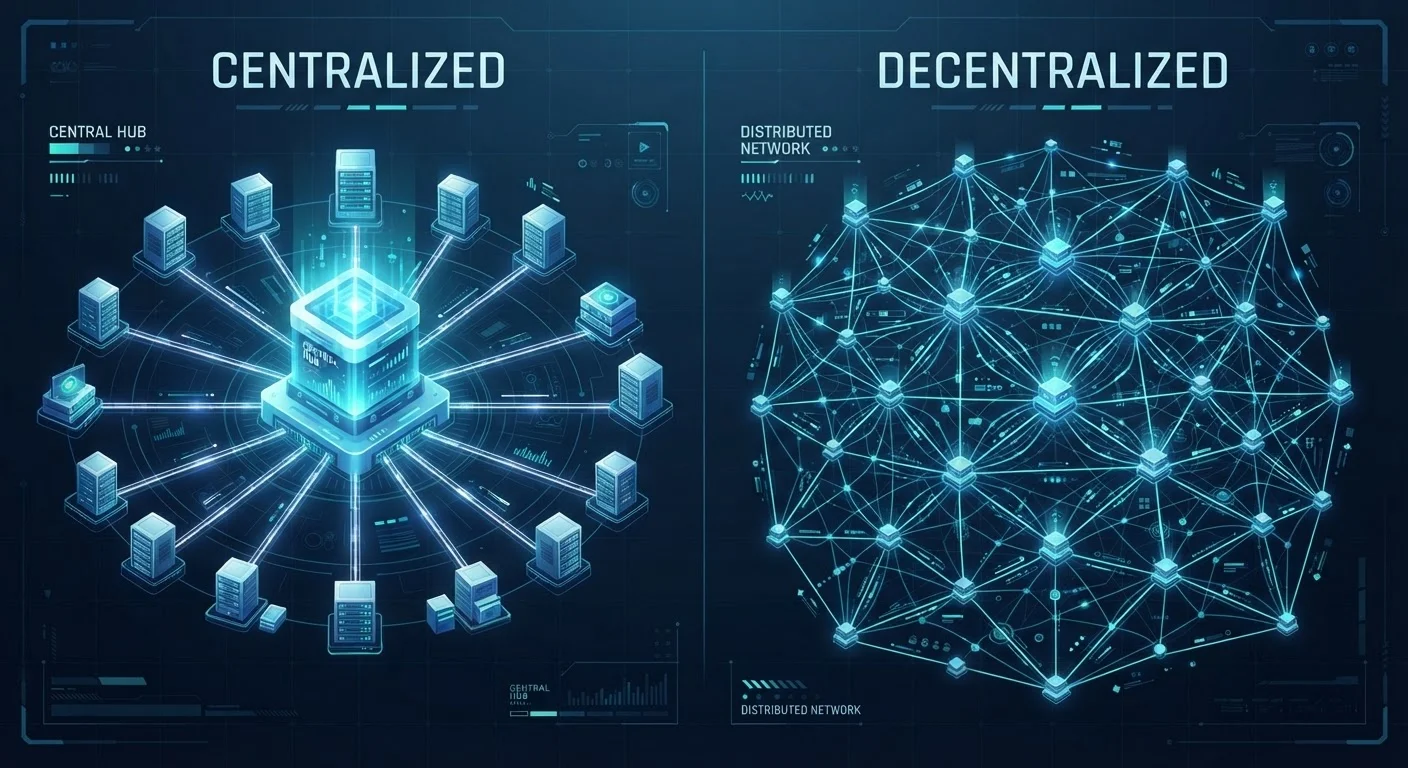
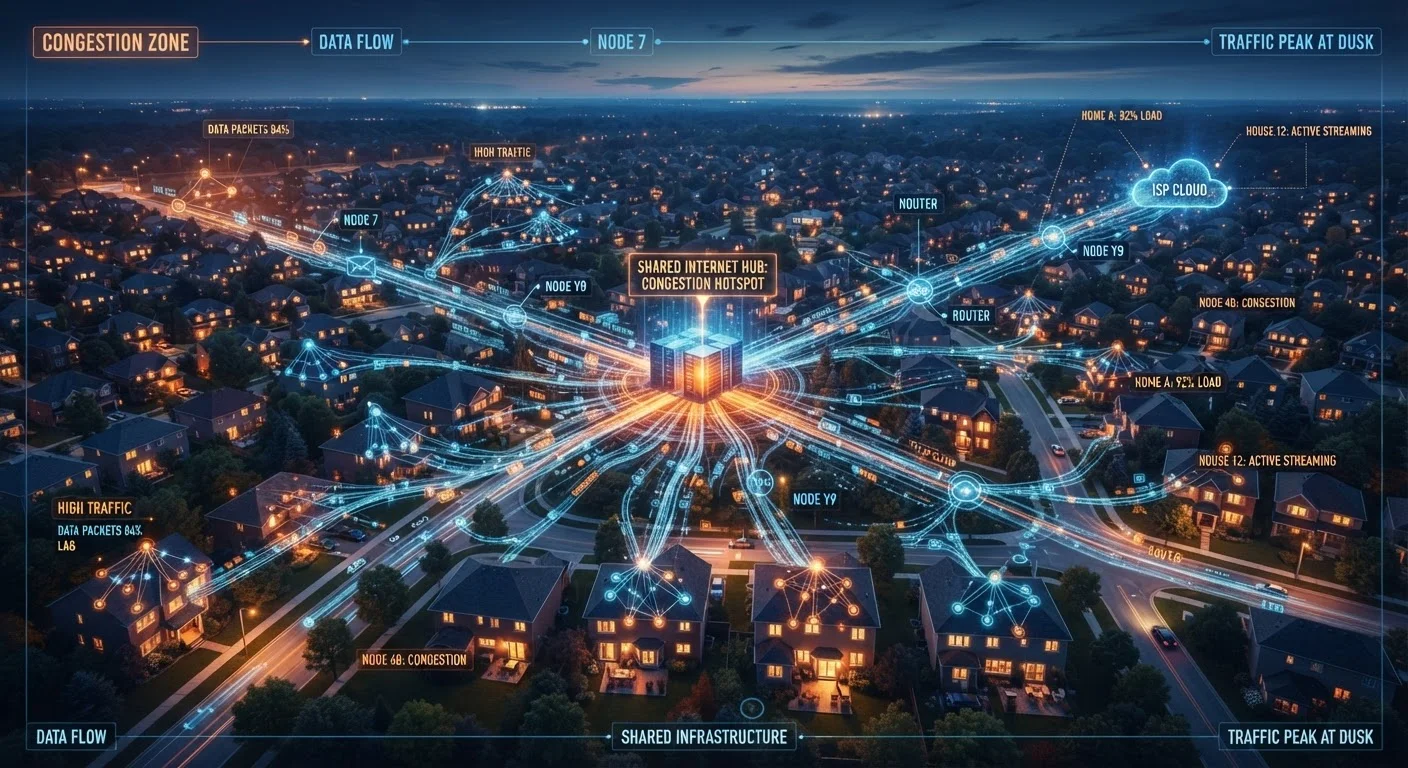
When your internet slows to a crawl at 8 p.m. on a weeknight, the instinct is to blame your router or your plan. In most cases, neither is the real culprit. The core issue is that residential internet connections are built on shared infrastructure - physical cables and network nodes that serve an entire neighborhood simultaneously.
In cable and many fiber networks, the segment running from a neighborhood node back to a regional hub is shared among dozens or even hundreds of households. Technically, this shared segment is called the access network or last-mile infrastructure. When one household streams video in 4K while another runs a video call and a third downloads a large file, all of that traffic competes for the same finite capacity on that shared segment.
Understanding this architecture is the first step toward making sense of why congestion happens - and why it happens predictably at the same times each day. For background on how capacity is measured and allocated, see what internet bandwidth really means.
7-11 p.m.
Typical peak internet usage window
Network researchers and regulators, including the FCC, have consistently documented this evening window as the period of heaviest residential internet demand in the United States.
~70%
Share of peak traffic from streaming video
Sandvine's annual Global Internet Phenomena reports have found that video streaming consistently accounts for the majority of downstream traffic during peak hours in North America.
20-50x
Typical oversubscription ratios on cable networks
Industry analyses suggest cable providers commonly sell aggregate capacity that is 20 to 50 times the physical throughput available on shared neighborhood segments, relying on uneven usage patterns.
Why Peak Hours Look the Same Everywhere
Traffic patterns on residential networks follow human schedules with remarkable consistency. In the United States, internet usage spikes sharply in the evening - typically between 7 and 11 p.m. - when people return home from work and school. Streaming services, online gaming, video calls, and social media all generate sustained data demand during these hours.
This isn't unique to any one neighborhood or provider. The Federal Communications Commission and network researchers have documented these patterns broadly. The result is that every shared node in a residential area faces its heaviest load at roughly the same time, night after night.
“The internet is not a single pipe - it's a series of shared resources, and performance at any moment reflects how many people are competing for the same slice of capacity.”
— Barbara van Schewick, Professor of Law and Director of the Center for Internet and Society, Stanford Law School
Congestion doesn't mean the network is broken. It means the network's design - built around the assumption that not everyone uses it at full capacity simultaneously - is being tested by real-world behavior. This assumption is known as oversubscription: ISPs sell aggregate plan capacity that exceeds what the shared infrastructure can deliver to all subscribers at once, banking on the reality that usage is staggered throughout the day.
What ISPs Control - and What They Don't
ISPs have significant influence over how much congestion subscribers experience. The capacity of neighborhood nodes, the frequency of infrastructure upgrades, and the ratio of subscribers to available bandwidth are all decisions made at the provider level. When an ISP underinvests in a particular area, congestion worsens - and subscribers have limited visibility into those decisions.
At the same time, some factors are outside any single provider's control. Traffic that originates from major content platforms travels across multiple network segments and through interconnection points called peering exchanges before it reaches your home. Congestion at those upstream points can affect performance even when your local infrastructure is uncongested.
It's also worth distinguishing network congestion from issues inside your own home. A slow wired connection during peak hours points to external congestion; a strong wired connection but weak wireless signal points to a home Wi-Fi issue. Our guide to internet speed myths separates these two categories in detail. And if you're considering changing providers based on congestion patterns, verify what to check before switching so you don't trade one problem for another.
What You Can Do With This Knowledge
Recognizing congestion for what it is - a shared infrastructure problem - changes how you respond to it. A few practical considerations follow from this understanding:
- Time-shifting heavy downloads to late night or early morning can meaningfully improve speeds, since demand on shared nodes drops sharply outside peak hours.
- Running a speed test at different times of day - once during peak hours and once at off-peak hours - reveals whether you're experiencing true congestion or a different issue. A large gap between the two readings is a reliable signal of congestion.
- Contacting your provider with documented speed-test data gives you a factual basis for a service complaint, which is more actionable than a general report of slow speeds.
Upgrading to a higher-speed plan is sometimes framed as the fix for slow performance, but as our speed tiers explainer notes, advertised speeds represent a ceiling - one that congestion on shared infrastructure can prevent you from reaching. Similarly, how ISPs structure their pricing and data policies affects the practical value of any plan you're considering.
Understanding the architecture of your connection doesn't give you direct control over a shared network, but it does give you a clearer picture of where the problem actually lives - and that's where informed decisions start.