Why Online Community Vocabulary Matters
Whether you're joining a Reddit thread for the first time, participating in a Discord server, or following a conversation on a Facebook group, you'll quickly notice that online communities have their own language. Terms like AMA, lurker, and threadjacking can leave newcomers confused - and confusion can make participation feel unwelcoming.
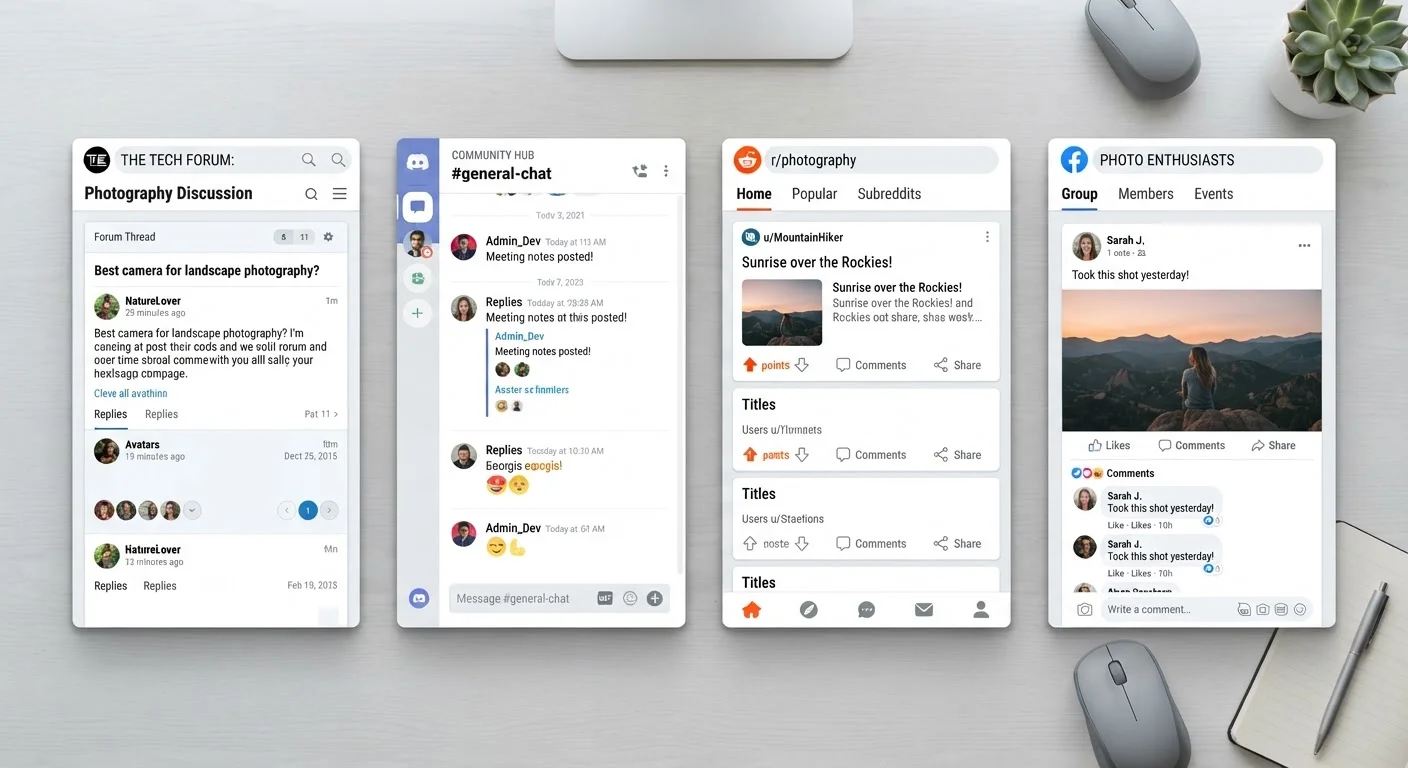
This reference guide defines the core vocabulary you're most likely to encounter. Understanding these terms helps you follow conversations, engage confidently, and recognize when community norms are being respected or broken. For a broader look at how different platforms are structured, see our overview of online community types. If you're also curious about platform-specific jargon like algorithms and moderation queues, a plain-language glossary of online platform terms covers that territory well.
Lurker
A person who reads or observes an online community without actively posting or commenting. Lurking is a normal entry point for new members.
AMA
Short for 'Ask Me Anything.' An open Q&A format where a participant invites the community to submit questions, often hosted by someone with a specific background or experience.
Threadjacking
Steering a conversation thread off-topic, usually by introducing unrelated content. It disrupts the flow of discussion and is generally discouraged.
Dogpiling
When many users simultaneously target one person with criticism or attacks. It can quickly become a form of harassment.
Shadowban
A moderation technique where a user's content is hidden from others without any notification to the user themselves.
Necroposting
Replying to a thread that has been dormant for a long period. Its acceptability varies by community and context.
Flair
A customizable tag or badge attached to a username or post, used to signal topic category, expertise, or community role.
Sealioning
A bad-faith tactic where someone feigns genuine inquiry to exhaust or harass another person through persistent, disingenuous questioning.
Moderator (Mod)
A person - often a volunteer - who enforces the rules of an online community by reviewing content and managing disruptive behavior.
Pinned Post
A post that moderators fix to the top of a community feed or thread so that all visitors see it prominently, usually containing rules or announcements.
Community Behavior and Participation Terms
These terms describe how people act within online spaces - both the norms that keep communities healthy and the behaviors that disrupt them.
| What 'AMA' stands for | Ask Me Anything |
| Who enforces community rules | Moderators (Mods) |
| Term for silent observers | Lurkers |
| Redirecting threads off-topic | Threadjacking |
| Hidden moderation action | Shadowban |
| Replying to old, dormant threads | Necroposting |
- Lurker
- Someone who reads posts and follows discussions without contributing their own comments. Lurking is common and generally accepted - many people prefer to observe before participating.
- AMA (Ask Me Anything)
- A format where a person - often someone with a notable experience or expertise - invites the community to ask them questions in an open session. Common on Reddit.
- Threadjacking
- When someone redirects a conversation thread toward an unrelated topic, pulling focus away from the original discussion. Most community guidelines discourage it.
- Necroposting
- Replying to a thread that has been inactive for a long time - sometimes months or years. Whether it's acceptable depends on the platform and context.
- Dogpiling
- When a large number of users pile on to criticize or attack a single person, often in rapid succession. This can cross into harassment and is addressed in many community rules.
- Sealioning
- A form of bad-faith engagement where someone repeatedly asks for evidence or clarification in a way that appears civil but is actually meant to exhaust or harass the other person.
Recognizing these patterns can help you navigate discussions more clearly. For the broader vocabulary shaping how people talk about online behavior, the digital habits glossary is a useful companion reference.
Moderation and Community Structure Terms
Online communities are shaped by rules and the people who enforce them. These terms help you understand who's in charge and how order is maintained.
- Moderator (Mod)
- A volunteer or staff member responsible for enforcing community rules - removing posts, banning users, or resolving disputes.
- Ban
- Removal of a user's ability to participate in a community, either temporarily or permanently.
- Shadowban
- A moderation action where a user's posts become invisible to others without the user being notified. The person continues posting, unaware their content isn't being seen.
- Pinned Post
- A post that moderators have fixed to the top of a feed or thread so all members see it first - typically used for announcements or rules.
- Flair
- A label or tag attached to a user's name or a post to indicate topic category, expertise level, or community role. Common on Reddit.
Understanding moderation helps you know your rights and responsibilities as a participant. Privacy is also a key concern in these spaces - our digital privacy hub explains how to protect yourself as you engage online. And for foundational context on how communities function, the community fundamentals hub is a solid starting point.