The Hidden Structure of Online Blowups
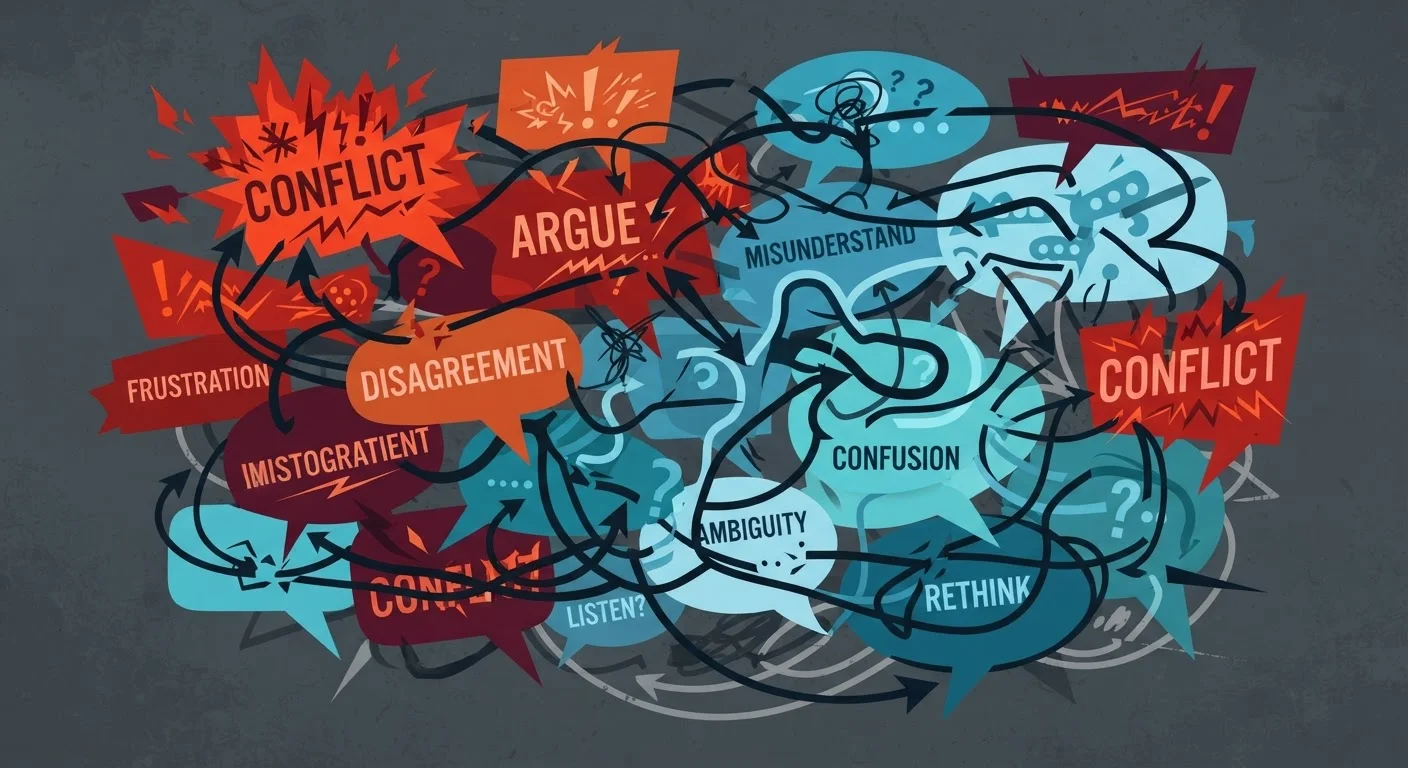
Spend enough time in comment sections, forums, or group chats and a pattern emerges: conversations that started on reasonable ground somehow end in name-calling, mass pile-ons, or people rage-quitting the thread entirely. It rarely feels random in the moment - and that's because it mostly isn't.
Online discussions break down in ways that researchers and seasoned community members alike have catalogued. The causes aren't mysterious. They're structural. Understanding them doesn't make you immune to conflict, but it does give you a much clearer view of what's happening - and sometimes, a window to step back before things get worse.
See how the structure of a platform influences community behavior for an important layer of context beyond individual choices.
38%
Americans who've been harassed online
A Pew Research Center survey found that 38% of U.S. adults have personally experienced online harassment, with more severe forms concentrated among younger adults and women.
~70%
Meaning carried by nonverbal cues in face-to-face talk
Communication researchers broadly estimate that a large majority of interpersonal meaning in in-person conversation comes from tone, expression, and body language - none of which transfer to text.
4x
More likely to misread neutral text as negative
Studies in computer-mediated communication have found that people reading emotionally neutral text online frequently interpret it as more negative in tone than the writer intended.
When Words Lose Their Tone
The single most underestimated force in online miscommunication is the complete absence of nonverbal cues. In a face-to-face conversation, roughly 70% of meaning is carried by tone of voice, facial expression, and body language - none of which survive the trip into a text box.
A comment like "Oh, that's a great point" reads entirely differently depending on context the reader has to guess at. Is it sincere? Sarcastic? Passive-aggressive? Without hearing it spoken, readers fill the gap with whatever their current emotional state or prior assumptions suggest. And when the topic is already charged, those guesses tend toward the negative.
This gap is also why sarcasm is one of the most reliable accelerants in online conflict. Writers who are confident their irony is obvious often have no idea it landed as a sincere insult - or vice versa.
Re-read Before You Reply
Before responding to a message that irritated you, try reading it in the most charitable possible tone - out loud if it helps. Ask whether the message could simply be clumsy or poorly worded rather than intentionally hostile. This small pause disrupts the automatic escalation reflex and often reveals that a response isn't necessary at all.
Anonymity, Audience, and the Performance of Conflict
Anonymity removes social accountability. People say things under a username they would never say attached to their real name and face. That's not a moral judgment - it's a documented effect of reduced accountability, sometimes called the online disinhibition effect. The upside is candor on sensitive topics. The downside is that it makes hostile behavior feel lower-stakes to the person doing it.
But there's a second force at work: audience. Online arguments aren't private. They're performed in front of observers who can react, amplify, or join in. When a comment gets traction - especially negative traction - others pile on without reading the full thread. The original context gets lost, and the conversation becomes about the performance of outrage rather than the original topic.
This is the mechanics of a pile-on: a comment, often mildly objectionable or simply misread, catches a wave of visibility at the wrong moment. Newcomers to the thread see a target that's already being criticized and add their weight without independent evaluation.
A user posts a deadpan joke in a political subreddit. Three people interpret it as a sincere position and respond with lengthy rebuttals. Within an hour, the thread has 80 replies debating a view the original poster never actually held.
A newcomer posts a question in a hobbyist forum that the community considers extremely basic. Senior members respond with curt, dismissive replies. Others, seeing those responses, follow suit without reading the original post carefully.
A heated sports debate on a fan message board shifts from player statistics to personal insults after one user says a rival team's fans "clearly don't understand the game."
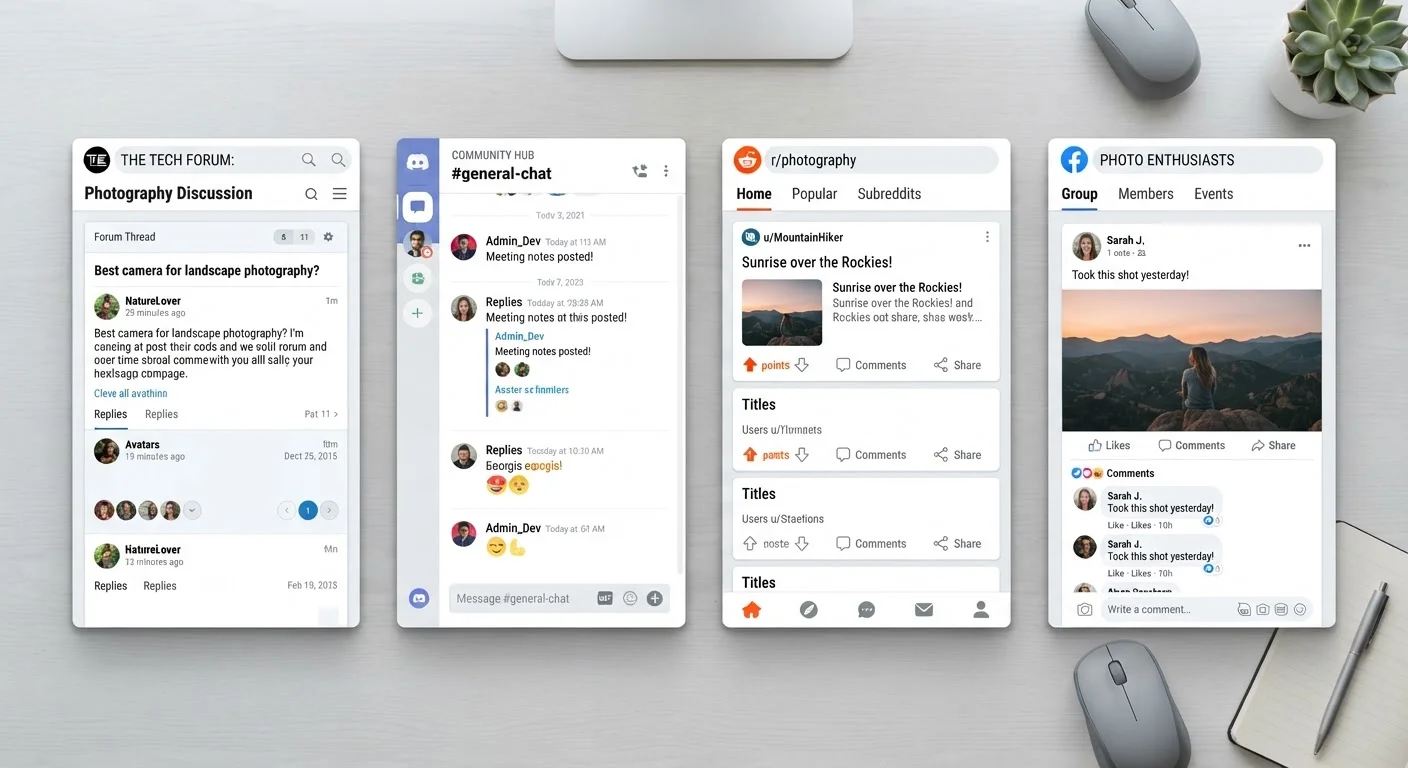
A comment in a Facebook group gets shared to a larger group with the caption "look at this." Within minutes, people with no prior context are replying angrily to a comment they've seen out of context.
How to Recognize the Patterns Before They Escalate
Most online derailments are visible before they fully ignite, if you know what to look for. A few reliable early signals:
- Topic drift into personal attacks: When replies shift from critiquing an argument to questioning the person's intelligence, motives, or character, the conversation has left productive territory.
- Absolute language: Words like "always," "never," "everyone knows," and "obviously" signal that someone has stopped engaging with nuance and moved into defensive posturing.
- Short dismissive replies: A thread where responses shrink to one-liners and eye-roll reactions is usually past the point of productive exchange.
- Coordinated arrivals: When many new accounts or off-topic users suddenly appear in a thread, it often means the conversation was shared somewhere else as a target - bringing an audience primed for conflict.
These patterns appear across platforms, topics, and communities. Once you recognize them, you gain a useful choice: disengage, de-escalate, or at least stop adding fuel.
If you want to build the habit of constructive pushback instead, the case for disagreeing constructively lays out specific approaches that work.
And if you're newer to online communities, understanding common mistakes new members make can help you avoid inadvertently sparking one of these patterns yourself.