The Interface Is Never Just the Interface
When you open a social platform, you're not looking at a neutral canvas. Every button, ranking algorithm, and reply format has been deliberately chosen - and those choices shape what you post, how you respond, and what you even bother to read. This is the core insight behind thinking about platform design as a force in community life.
Consider two basic design differences: a platform that shows posts in chronological order versus one that ranks them by engagement. In a chronological feed, early risers dominate; in an engagement-ranked feed, emotionally charged content tends to rise. Neither approach is wrong, but each creates a different conversational environment. Users respond to what they see - and what they see is filtered by design.
Community norms don't spring up in a vacuum. They're partly a product of what the platform makes easy, visible, and rewarding.
70%
Of online content exposure driven by algorithmic ranking
Researchers studying major social platforms have consistently found that algorithmic curation, rather than user choice, determines the large majority of what people encounter in their feeds.
2x
Higher engagement for emotionally charged posts
Multiple platform studies have found that posts triggering strong emotional reactions - particularly outrage - tend to receive significantly more interactions than neutral informational content.
280
Character limit that reshaped a platform's culture
When Twitter doubled its character limit from 140 to 280 characters, researchers observed measurable changes in average post length and conversational tone across the platform.
Specific Design Features and Their Effects
A few structural features are especially powerful in shaping community behavior:
- Voting systems: Upvotes and downvotes create social signals about what the community approves of. This rewards conformity and popular takes. As detailed in our look at karma and reputation systems, these mechanisms influence not just what gets seen but how people frame their posts in the first place.
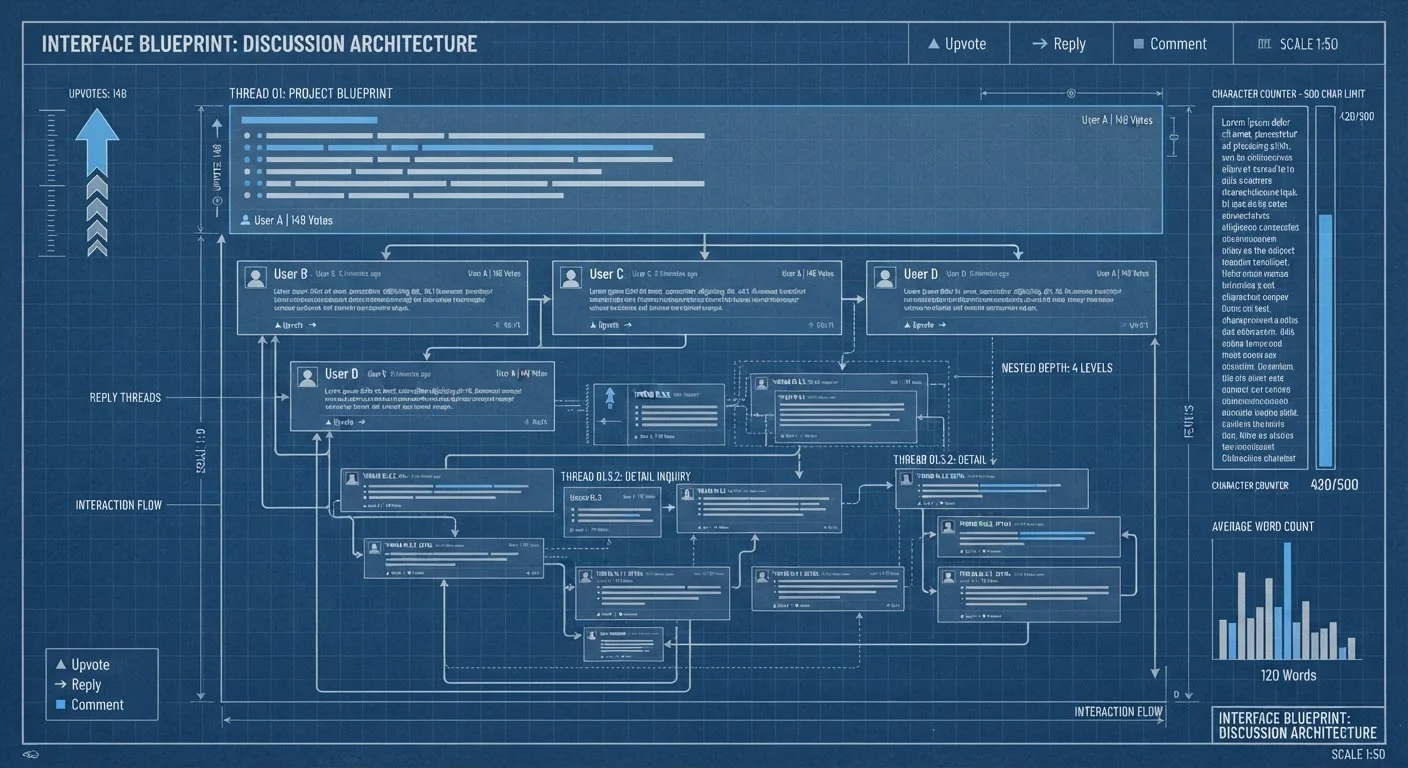
- Threading and reply structure: Flat comment sections encourage pile-ons; threaded replies allow for parallel, more focused conversations. The same argument can unfold very differently depending on whether replies are nested or linear.
- Anonymity settings: Platforms that allow pseudonymity or full anonymity tend to see bolder, sometimes more honest expression - and also more harassment. Real-name systems shift behavior in the other direction.
- Character limits: Short limits compress thought and encourage reaction over reflection. Longer limits make space for nuance but don't guarantee it.
- Notification design: Alerts that ping users every time someone reacts to their post pull people back into emotional investment in how their content performed - a dynamic explored more in how app design shapes time spent online.
A user posts a thoughtful but unpopular opinion on a voting-based forum. Within hours it has negative points and is collapsed by default.
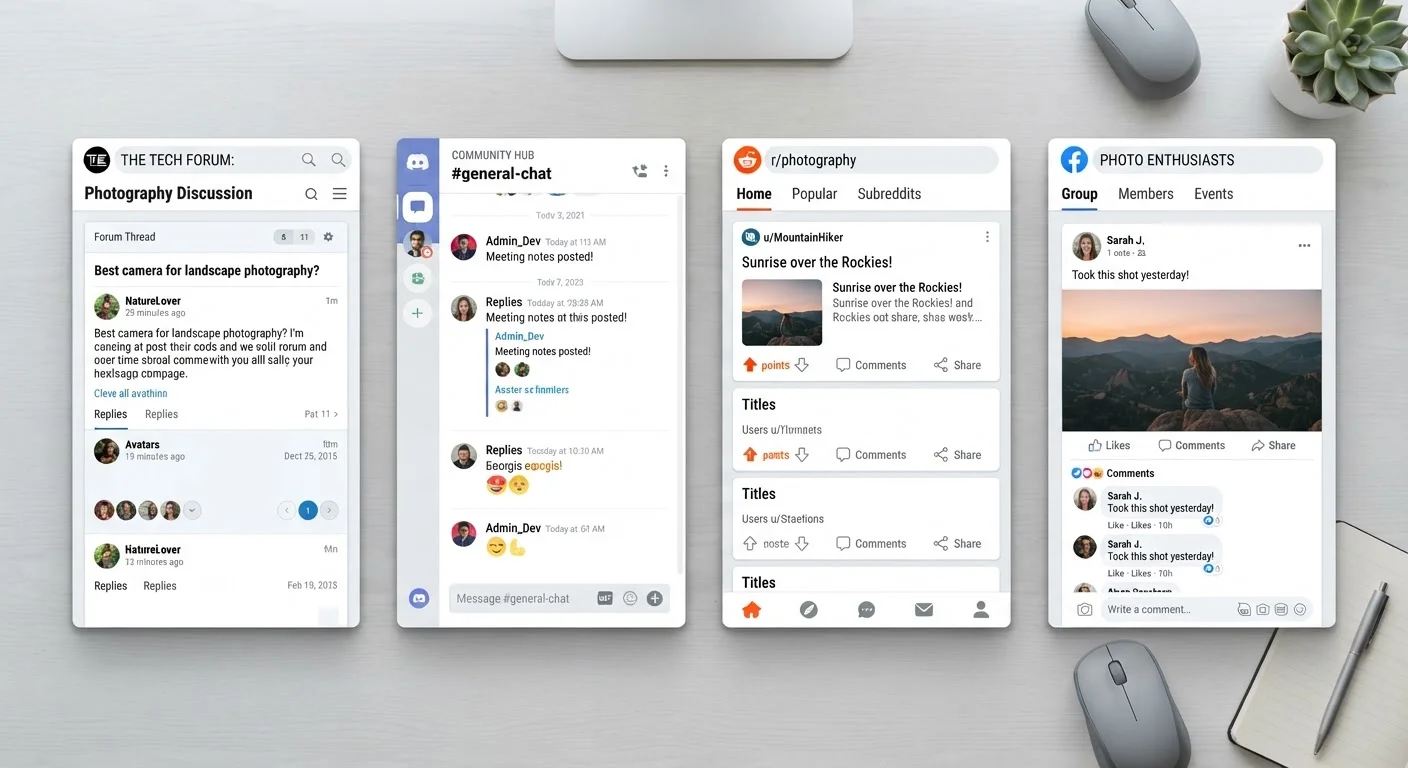
A discussion group moves from a threaded forum to a real-time chat app. Longtime members notice conversations feel more chaotic and harder to follow.
A platform tests hiding public 'like' counts on posts, showing them only to the original poster.
A Q&A site marks the first answer accepted by the original poster as 'correct,' pinning it above all other responses.
Why This Matters for How Communities Form
Platform structure doesn't just affect individual posts - it shapes the long-term culture of an entire community. Groups that migrate from one platform to another often find their norms shifting, not because the people changed but because the design changed what behaviors got reinforced.
Open versus closed access is another design dimension with major cultural consequences. Who can join, who can post, and who can see content all affect what kind of conversation develops. Our overview of open and closed platforms breaks down how those access decisions ripple through community dynamics.
It's also worth noting that platforms can and do change their designs - and those changes can disrupt established communities quickly. If you're part of a community that depends on a specific platform, understanding how platform rule changes affect users can help you anticipate and adapt to shifts before they destabilize your space.
The takeaway isn't cynicism - it's awareness. Knowing that the structure of a platform influences your behavior gives you more agency over how you participate in it.