
Why Burnout Happens in Online Communities
Online communities can be genuinely rewarding - places to learn, connect, and share interests with people you'd never meet otherwise. But they can also quietly drain you. Notification pings, heated threads, the pressure to keep up with fast-moving conversations: these aren't small irritants. They add up.
Burnout in online spaces usually isn't dramatic. It tends to arrive gradually - you stop enjoying a forum you once loved, start dreading checking in, or find yourself scrolling with a low-grade sense of obligation. Understanding why that happens is the first step to preventing it.
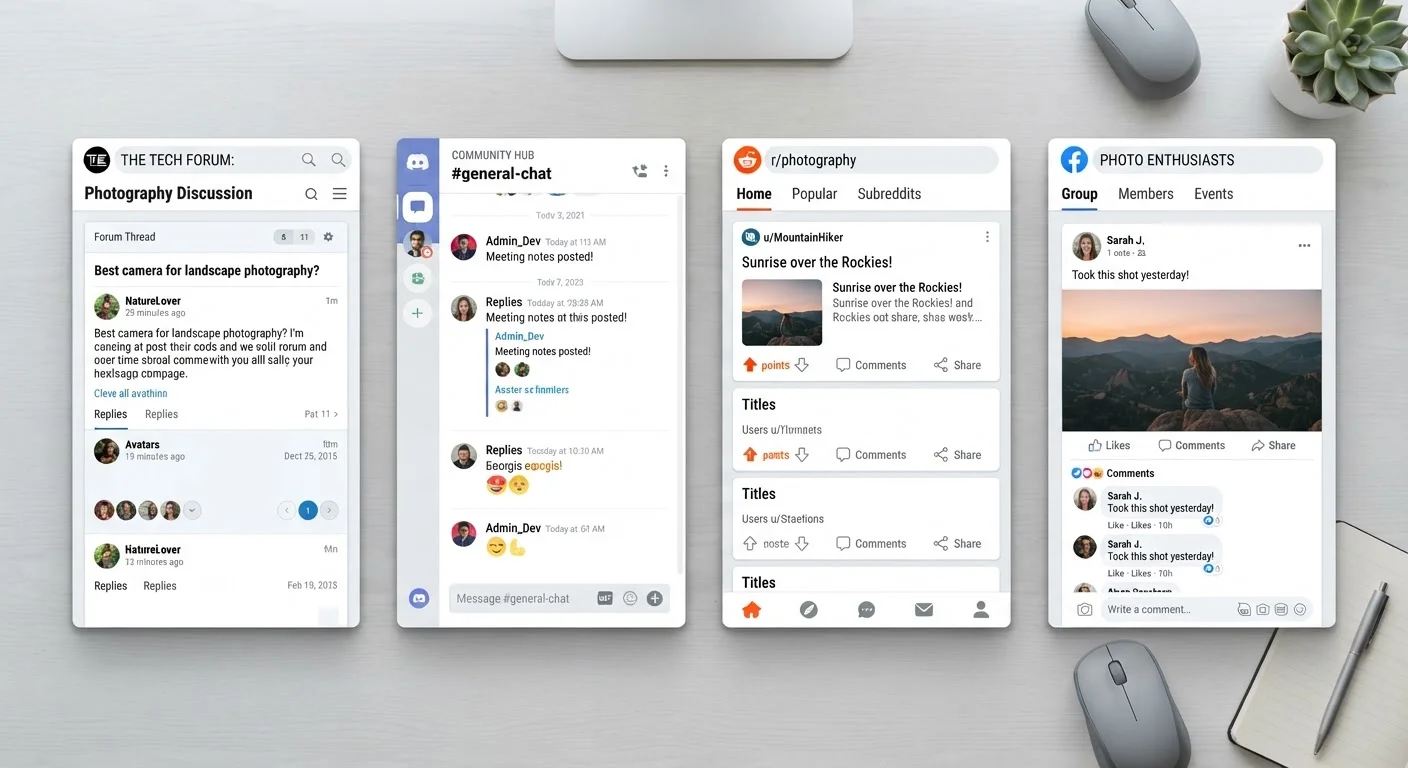
Most online platforms are designed to maximize your time on them, not your satisfaction. That distinction matters. Infinite scroll, real-time notifications, and algorithmic feeds all encourage reactive participation - jumping in impulsively rather than engaging on your own terms. For a broader look at how different platform types shape this dynamic, see our overview of online community types.
Define your participation windows before you open any platform.
Without set times, community browsing tends to bleed into the rest of your day. Reactive checking keeps you in a low-level state of alertness that's tiring over time. Scheduled windows give your brain clear on/off signals.
Join fewer communities with higher relevance to your actual interests.
Belonging to many communities dilutes the value of each one and creates a sense of obligation to stay current everywhere. A smaller number of well-chosen spaces tends to yield deeper, more satisfying interactions.
Mute or leave threads that consistently generate more frustration than value.
Not every conversation in a community you love will be worth your time. Staying in draining threads out of habit or a sense of completeness is a direct path to disengagement from spaces you'd otherwise enjoy.
Contribute on a schedule you actually control, not one set by the platform's pace.
Fast-moving communities can create a sense that you're always behind. Engaging at your own pace - even in communities with high posting volume - keeps participation from feeling like a second job.
Recognize your early burnout signals and treat them as information.
Dread, irritability when opening a platform, or posting just to feel heard rather than to contribute are all early signs. Catching them early lets you scale back before disengagement turns into abandonment.
Practical Habits That Make Participation Sustainable
Sustainable engagement isn't about logging fewer hours as a moral achievement - it's about making the time you do spend actually worthwhile. The practices below are concrete, not vague. They're also adjustable: take what fits your situation.
One habit that gets overlooked: participating with intention rather than out of reflex. Before posting or responding, a quick self-check - Is this adding something? Am I calm enough to communicate clearly? - can save you from interactions that leave you feeling worse. Our pre-post self-check guide walks through that process in detail.
It also helps to recognize that disagreement is inevitable in any active community. The difference between a draining argument and a worthwhile debate often comes down to approach. Constructive disagreement habits are learnable and genuinely reduce the emotional cost of conflict.
Curating Your Presence Without Disappearing
A common misconception is that avoiding burnout means reducing participation to almost nothing. In practice, the goal is curation - being more deliberate about where your attention goes, not eliminating community involvement entirely.
Start by auditing which communities you're actually in. Most active internet users belong to more groups, subreddits, servers, or forums than they actively follow. Leaving or muting spaces that no longer serve you isn't antisocial - it's maintenance. Platforms generally make it easy to reduce your footprint without deleting accounts entirely.
Notification settings deserve special attention. Research on digital habits consistently shows that constant interruptions fragment attention and increase cognitive load - notification overload carries real costs that extend well beyond screen time. Turning off non-essential alerts for community platforms is one of the highest-impact changes you can make with minimal effort.
Finally, remember that sustainable participation looks different from community to community. A sports fan forum during a playoff run demands different bandwidth than a slow-moving book club thread. Adjusting your involvement to match the season - rather than treating every space as equally urgent - is a sign of good judgment, not disengagement. For more on the full arc of online involvement, see how participation evolves over time.