
Finding the Right Community
Online participation begins with a simple question: where do you actually want to spend your attention? The internet hosts thousands of communities organized around nearly every subject imaginable - from hyperlocal neighborhood groups to global hobbyist forums. The challenge is not finding a community, it is finding one worth your time.
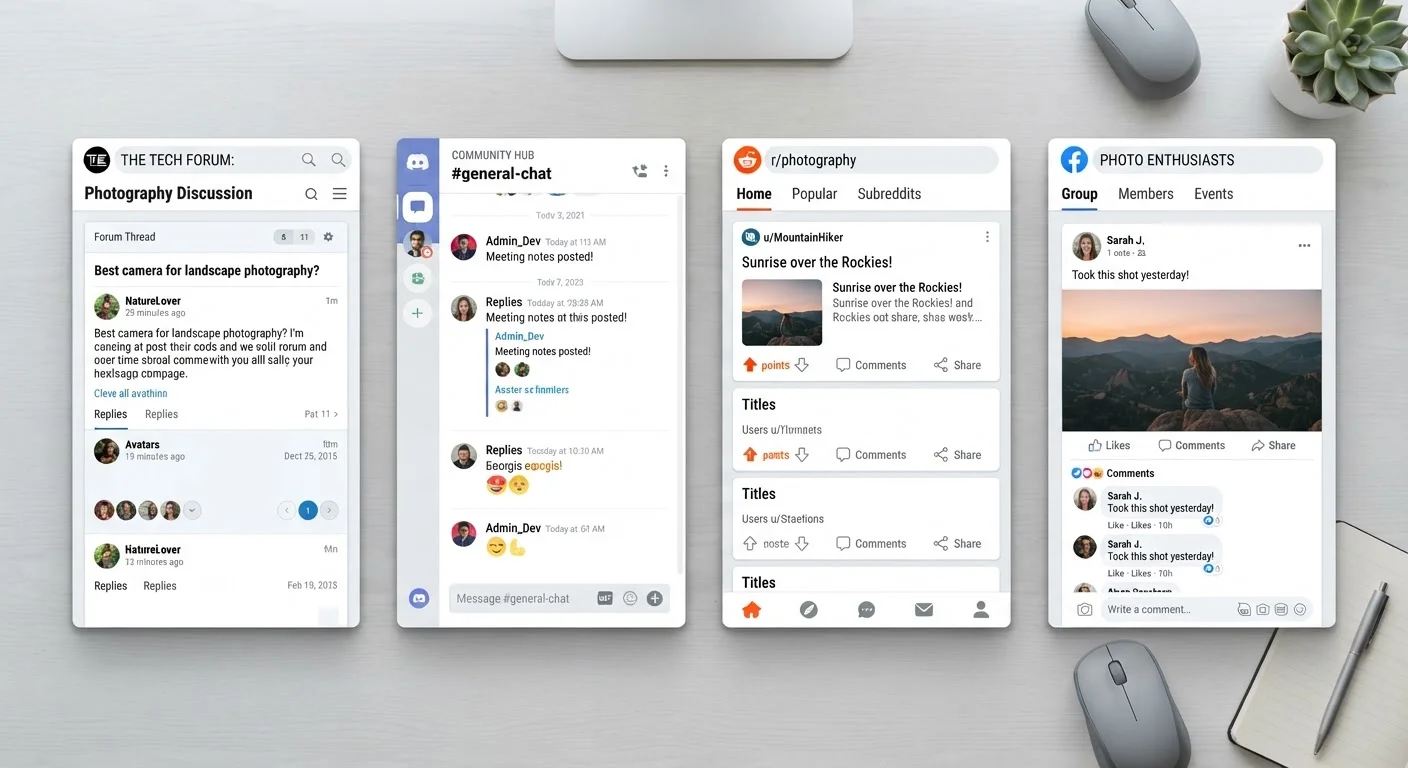
Start by matching format to your habits. Some people thrive in fast-moving real-time chat; others prefer the slower, more considered pace of threaded forums. See our guide to synchronous vs. asynchronous participation for a deeper breakdown of how timing shapes community culture.
Size matters too. Large communities surface more content but can feel anonymous. Smaller groups tend to be tighter-knit but may go quiet for long stretches. Browsing a community for a week before joining gives you a realistic sense of both its activity level and its mood. For broader context on what draws people in, see our piece on why people join online communities - and why they stay.
Before joining, search the community's name alongside words like "toxic," "drama," or "banned" - you will often find candid outside accounts of how the space actually operates.
Public reputation signals are often more revealing than a community's own self-description, helping you avoid spaces with persistent governance problems.
When you make your first post, ask a genuine question rather than sharing an opinion - it invites helpful responses and signals that you are there to participate, not perform.
Questions signal openness and lower the stakes of early interaction, making it easier for established members to welcome you without feeling challenged.
Learning How a Community Works
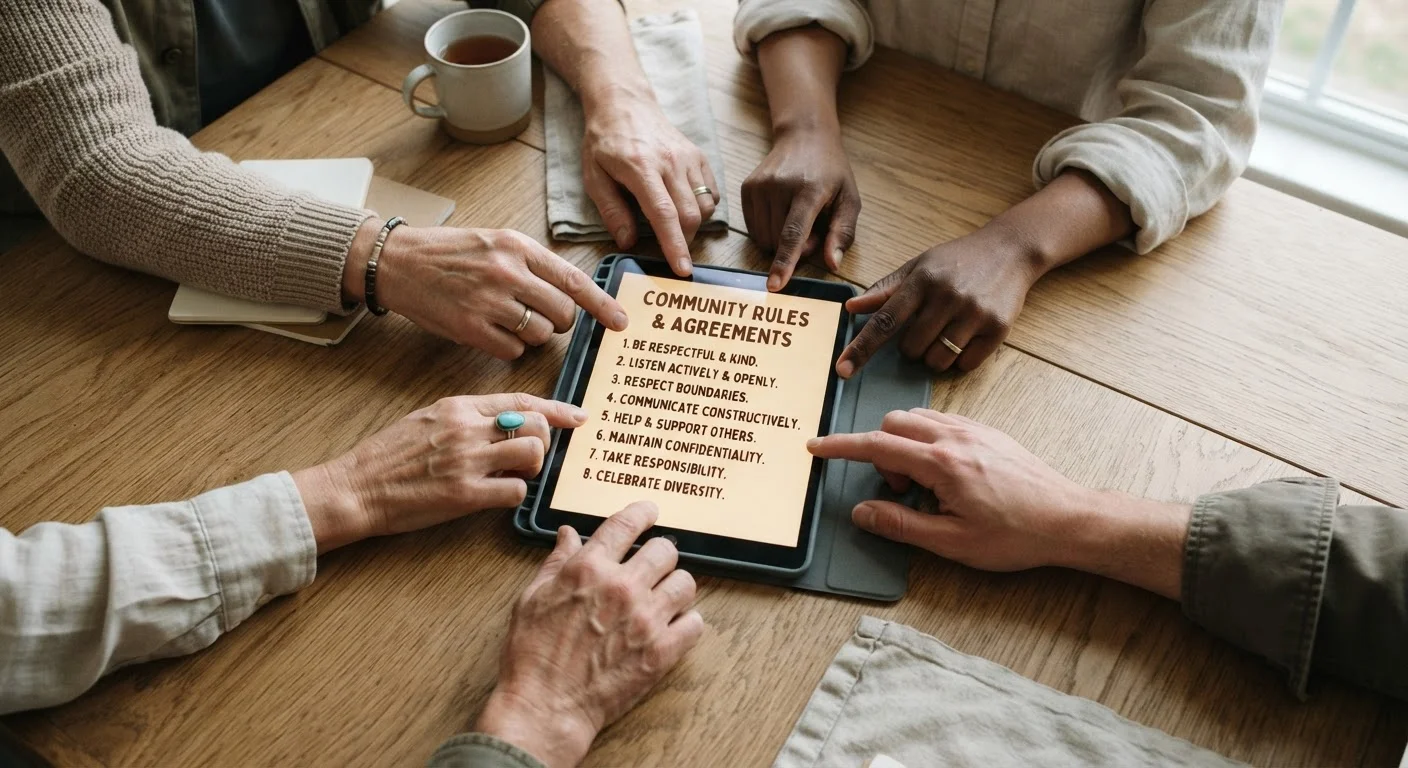
Every community has rules - some written, many not. Published guidelines (often called community rules, FAQs, or a pinned welcome post) tell you the basics: what topics are allowed, how to format posts, and what gets someone banned. Read them before you post anything.
The unwritten rules take longer to absorb. Which topics generate heated debate? Is humor welcomed or frowned upon? Are newcomers expected to introduce themselves? These norms only become visible through observation. Researchers who study online communities call this the "lurking" phase - reading without posting - and it is genuinely useful, not passive. Many people avoid this step based on misplaced impatience; our article on online community myths addresses why that assumption leads to early stumbles.
Understanding the platform itself is also part of this stage. Voting systems, reply threading, moderation tools, and notification settings all vary. Spending twenty minutes exploring the interface pays off over months of participation.
Communicating Effectively Online
Text strips out tone of voice and facial expression, which means meaning can go missing in transit. Being direct and specific reduces misunderstandings. Avoid vague statements that depend on context the reader does not have.
Good-faith engagement means assuming others are trying to make sense, not pick fights. When a post reads as aggressive, pause before responding - it may simply be poorly worded. Conversely, re-read your own posts before submitting them, especially on sensitive topics.
Avoid Venting in Public Threads
Posting in frustration - especially about other members or moderators - rarely improves a situation and often creates lasting negative impressions. If something upsets you, draft your response and wait at least an hour before deciding whether to post it. Most of the time, a measured private message or a formal report is more effective than a public callout.
Contribution quality matters more than quantity. A single thoughtful reply adds more to a conversation than five short reactions. Communities that stay healthy over time tend to reward depth over noise. For the habits that consistently distinguish constructive members from disruptive ones, see our principles of healthy online community participation.
Platforms vary in whether they favor long-form posts, short replies, images, or links. Matching your content to the platform's dominant format makes your contributions easier for others to engage with.
Handling Conflict and Difficult Moments
Conflict is not a sign that a community is broken - it is a sign that people care enough to disagree. What matters is whether the community has mechanisms to work through disagreement without collapsing into hostility.
At the individual level, disengaging from a thread that has turned toxic is always a valid option. You are not obligated to argue until someone concedes. Reporting rule-breaking content to moderators is more effective than engaging with bad actors directly - it routes the problem to people who have actual authority to address it.
At the community level, watch how moderators respond to disputes. Consistent, transparent enforcement signals a well-governed space. Arbitrary or absent moderation is a leading reason communities deteriorate. Our article on the life cycle of an online community explains how moderation quality shapes whether a community grows, stagnates, or declines.
~76%
U.S. adults who use at least one online community or forum
Pew Research Center studies consistently find that a large majority of American adults participate in some form of online group or community activity.
1 in 3
Online community members who cite conflict as a reason for leaving
Community management research indicates that unresolved conflict and poor moderation are among the top drivers of member departure.
Sustaining Long-Term Involvement
Initial enthusiasm is easy to sustain for a few weeks. Lasting participation requires a different kind of discipline - one that includes knowing when to step back. Digital communities can create a pull toward constant checking that, over time, erodes the enjoyment that brought you there. This mirrors dynamics described in our piece on always-on digital culture.
Set realistic expectations for your own involvement. Contributing once or twice a week is enough to build genuine connections in most communities. You do not need to be present for every conversation to be a valued member.
Long-term members often find that their role shifts over time - from newcomer to regular contributor to informal mentor for newer members. That progression is not just personally rewarding; it directly strengthens the community. Explore the community fundamentals hub for more on the forces that shape lasting online spaces.
Finally, it is worth periodically asking whether a given community is still serving you well. Interests change, communities change, and leaving one space for another - or taking a genuine break - is a healthy and normal part of online life.