How Each Platform Defines "Community" Differently
The word "community" gets used loosely online, but Reddit, Discord, and Facebook Groups each build it in structurally different ways. Understanding those differences matters whether you're starting a group or deciding where to join one. For a broader look at what separates these platforms at a foundational level, see our breakdown of major online community types.
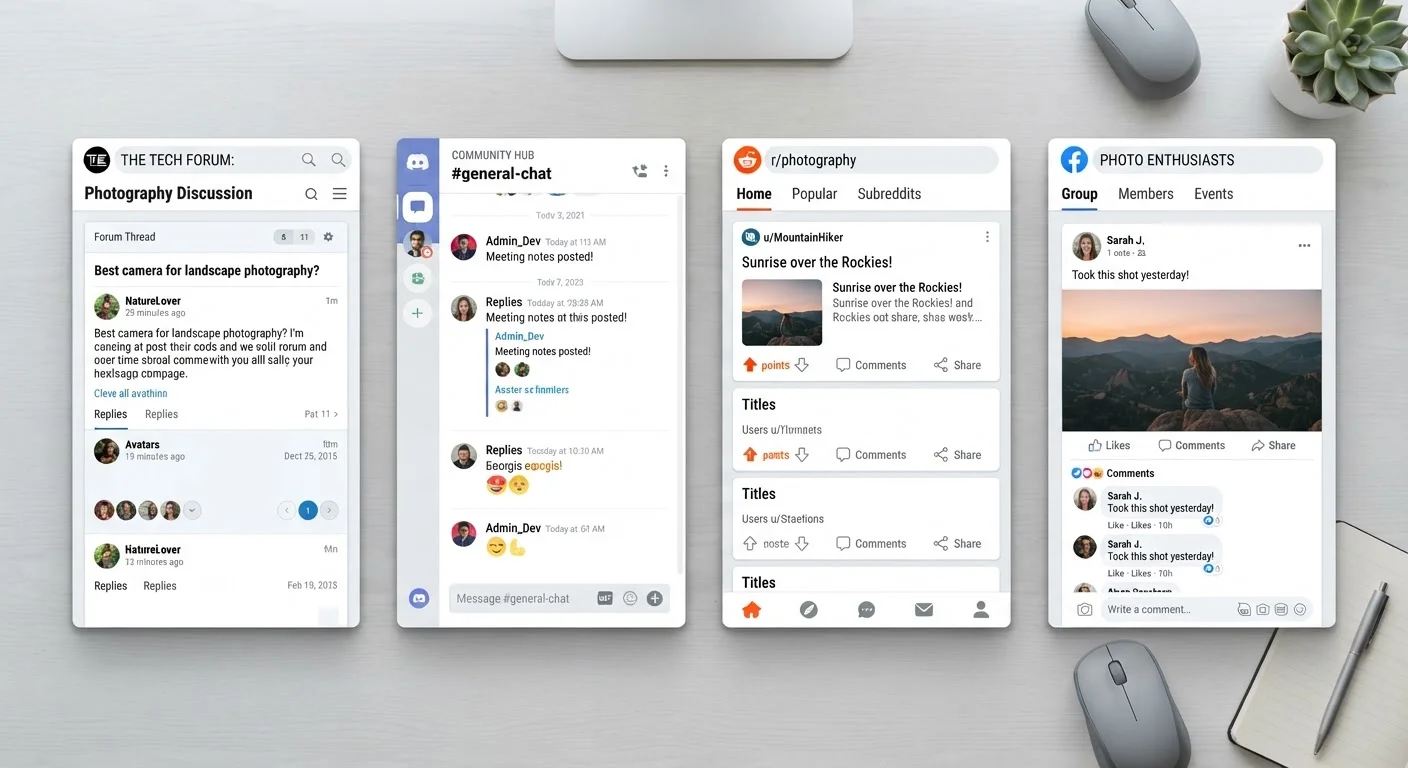
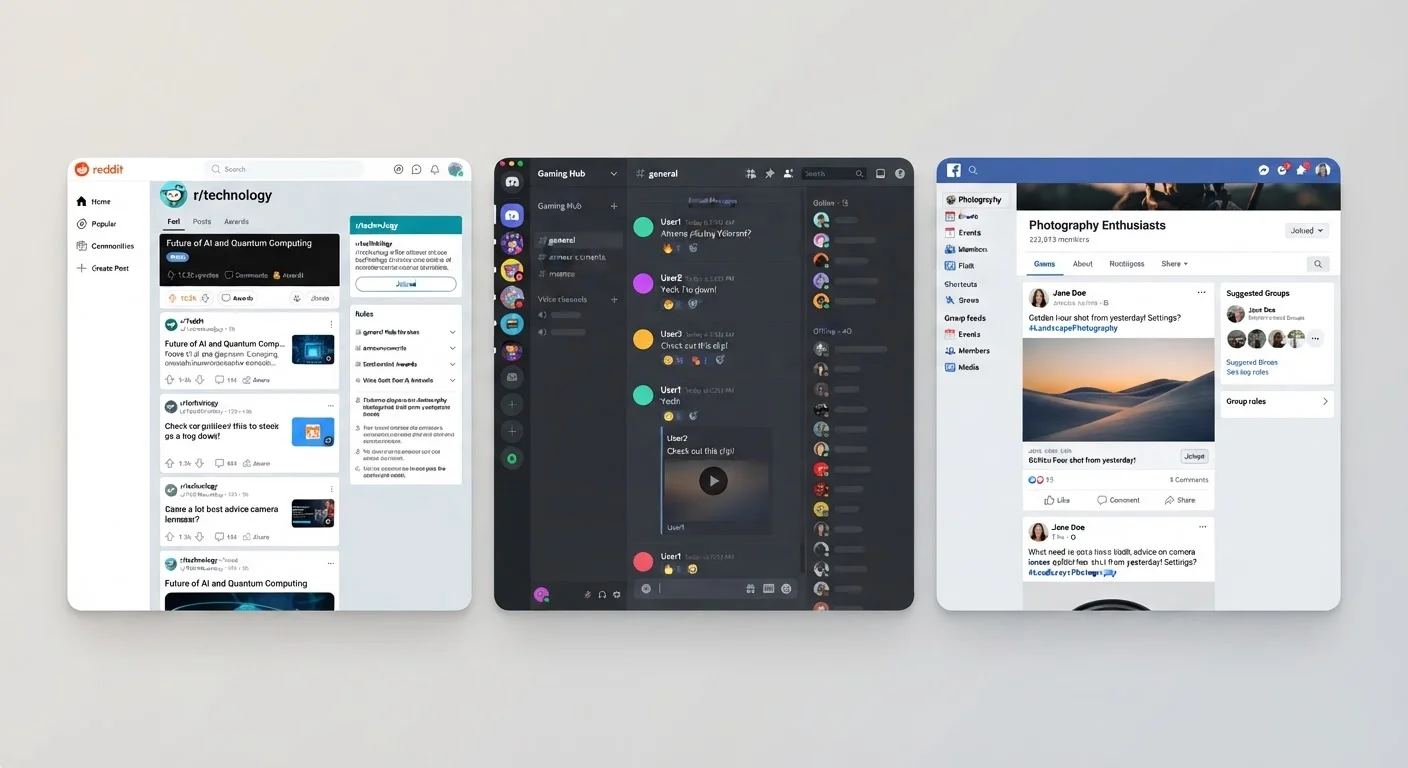
On Reddit, communities are called subreddits - topic-focused spaces where users post content and others vote it up or down. A subreddit dedicated to home cooking behaves much the same whether it has 500 or 5 million members: posts rise or fall based on collective votes, and the best-rated content stays visible longest. Participation is largely pseudonymous (users choose a username unconnected to their real identity), and most subreddits are publicly searchable.
Discord operates differently. It's built around servers - private or semi-private spaces divided into channels, much like separate rooms. The default mode is real-time text chat, with voice and video options built in. Members tend to know each other over time, and the culture rewards ongoing presence rather than one-off contributions.
Facebook Groups sit on a different axis entirely. They're embedded inside a social network where most people participate under their real names, connected to friends and family. Group membership often follows existing social ties, and the algorithm shapes what content members actually see - which can differ significantly from what was most recently posted.
Comparing the Platforms Across Key Dimensions
Each platform makes specific tradeoffs around privacy, content discovery, tone, and moderation. The table below summarizes how they compare across the criteria that matter most to community builders and participants.
| Reddit (Subreddits) | Discord | Facebook Groups | |
|---|---|---|---|
| Primary format | Threaded posts and comments | Real-time text chat channels | Social feed with posts and comments |
| Anonymity | Pseudonymous by default | Pseudonymous, username-based | Real-name identity expected |
| Content discovery | Voting algorithm surfaces top content | No algorithm; chronological chat | Platform algorithm controls visibility |
| Typical community size | Can scale to millions | Usually smaller, tighter groups | Varies widely; often mid-size |
| Moderation model | Volunteer mods, community-defined rules | Admin and mod roles, active oversight | Group admins plus platform policies |
| Public searchability | Most subreddits are public | Servers are mostly invite-only | Depends on group privacy settings |
One area where the platforms diverge sharply is content discovery. Reddit's voting system means high-quality or popular posts surface regardless of who posted them - a brand-new account can reach the front page of a subreddit if the content resonates. Facebook's algorithm, by contrast, prioritizes content based on social connections and engagement signals that aren't always transparent to users. Discord has no discovery algorithm at all; if you're not actively in the server, you won't see what's being discussed.
Moderation, Culture, and Who Actually Shows Up
Community culture is shaped in large part by who participates and how moderation works. Reddit subreddits are run by volunteer moderators who set their own rules within Reddit's platform-wide policies. Moderators can remove posts, ban users, and customize the community's appearance and rules. Because Reddit is pseudonymous, communities often develop distinct subcultures - sometimes irreverent, sometimes highly specialized - that feel separate from participants' offline identities.
New to Moderation? Start Small
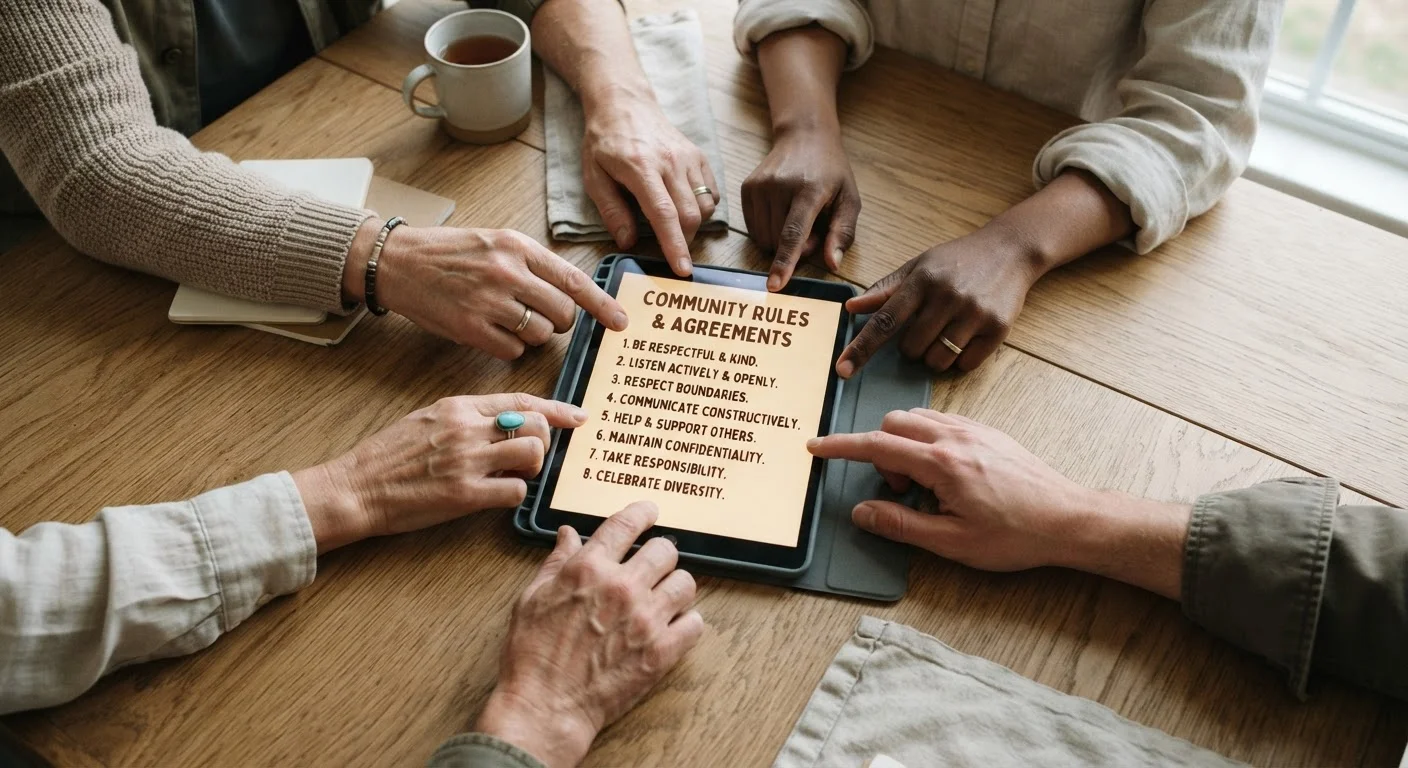
If you're launching a community for the first time, starting with a smaller, more controlled space - like a private Discord server or a new subreddit - lets you develop moderation norms before scaling up. Clear rules posted at the outset reduce the need for constant intervention later. Most experienced community managers recommend writing community guidelines before you invite your first members.
Discord moderation is handled by server administrators and moderators, but the real-time nature of chat changes the dynamic. Problematic behavior tends to be more immediately visible, and moderators often need to be more continuously active. The relatively smaller size of most Discord servers also means community norms can be communicated and enforced more personally.
Facebook Groups lean heavily on the social accountability built into real-name participation. Members know their posts are tied to their Facebook identity. That can make discourse more civil in some cases, but it can also discourage honest or vulnerable conversation - people may self-censor when their coworkers or relatives are in the same group. Group admins have moderation tools, but Facebook's own algorithmic decisions can override what admins intend in terms of content visibility.
If you're curious how these platforms fit into the wider landscape, our guide to matching platforms to community purposes goes deeper on that question.
Choosing the Right Platform for Your Goals
No single platform is objectively better - the right fit depends on what kind of community you're trying to build and who you're trying to reach. A few questions can help clarify the choice:
- How public do you want the community to be? Reddit subreddits are generally indexed by search engines and open to anyone. Discord servers can be invitation-only. Facebook Groups can be set to private, but they still live within Facebook's ecosystem.
- Is your audience already on the platform? If your target participants are active Facebook users, a Facebook Group removes a signup barrier. If they're gamers or hobbyists accustomed to Discord, starting there makes sense.
- Do you want asynchronous discussion or real-time chat? Reddit and Facebook Groups are better suited to threaded, asynchronous posts you can read later. Discord is built for ongoing, live conversation.
- How important is anonymity or pseudonymity? Reddit accommodates anonymous participation by design. Facebook actively discourages it.
Many larger communities end up using more than one platform - a subreddit for public discussion and a Discord server for closer community interaction, for example. Understanding the core purpose of each helps you use them together intentionally rather than redundantly. For context on what it takes for any of these spaces to function as a true community, see our piece on what makes a group of people an online community.