Why Platform Structure Actually Matters
Choosing where to participate online isn't just a matter of preference - the platform itself shapes how conversations happen, who speaks up, and what gets remembered. A discussion on a traditional forum looks and feels completely different from the same discussion on Discord or Reddit, even if the topic is identical.
Understanding those structural differences helps you read communities more accurately and decide where your own participation style fits best. For a broader look at how these spaces are organized, see Community Fundamentals. If you're new to online communities altogether, this starting guide covers the basics of getting involved.
| Traditional Forums | Discord Servers | Subreddits | Facebook Groups | |
|---|---|---|---|---|
| Conversation style | Threaded, sequential posts | Real-time chat channels | Voted posts and comment threads | Social feed with post replies |
| Identity | Username/pseudonym | Username/pseudonym | Pseudonymous username | Typically real name |
| Content ranking | Chronological threads | Chronological by channel | Community upvote/downvote | Algorithm-sorted feed |
| Searchability | High - posts persist | Low - chat scrolls away | Moderate - posts indexed | Limited - restricted access |
| Pace | Slow and deliberate | Fast, often live | Variable by subreddit | Variable, algorithm-driven |
| Moderation model | Volunteer moderators | Server admins and bots | Elected volunteer mods | Group admins and admins |
| Best for | Deep, reference-quality discussion | Live community and events | Topic discovery and debate | Real-identity group coordination |
Traditional Online Forums: Built for Depth and Permanence
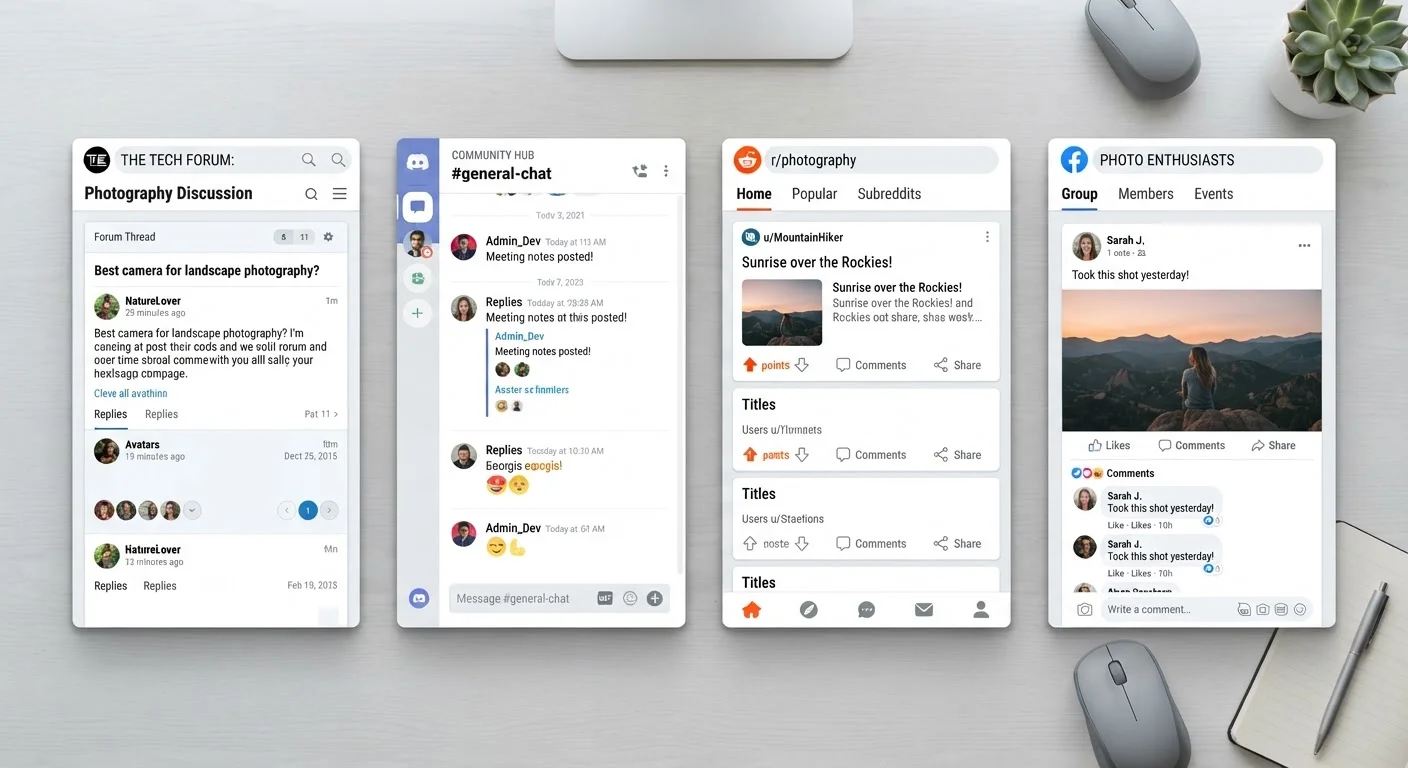
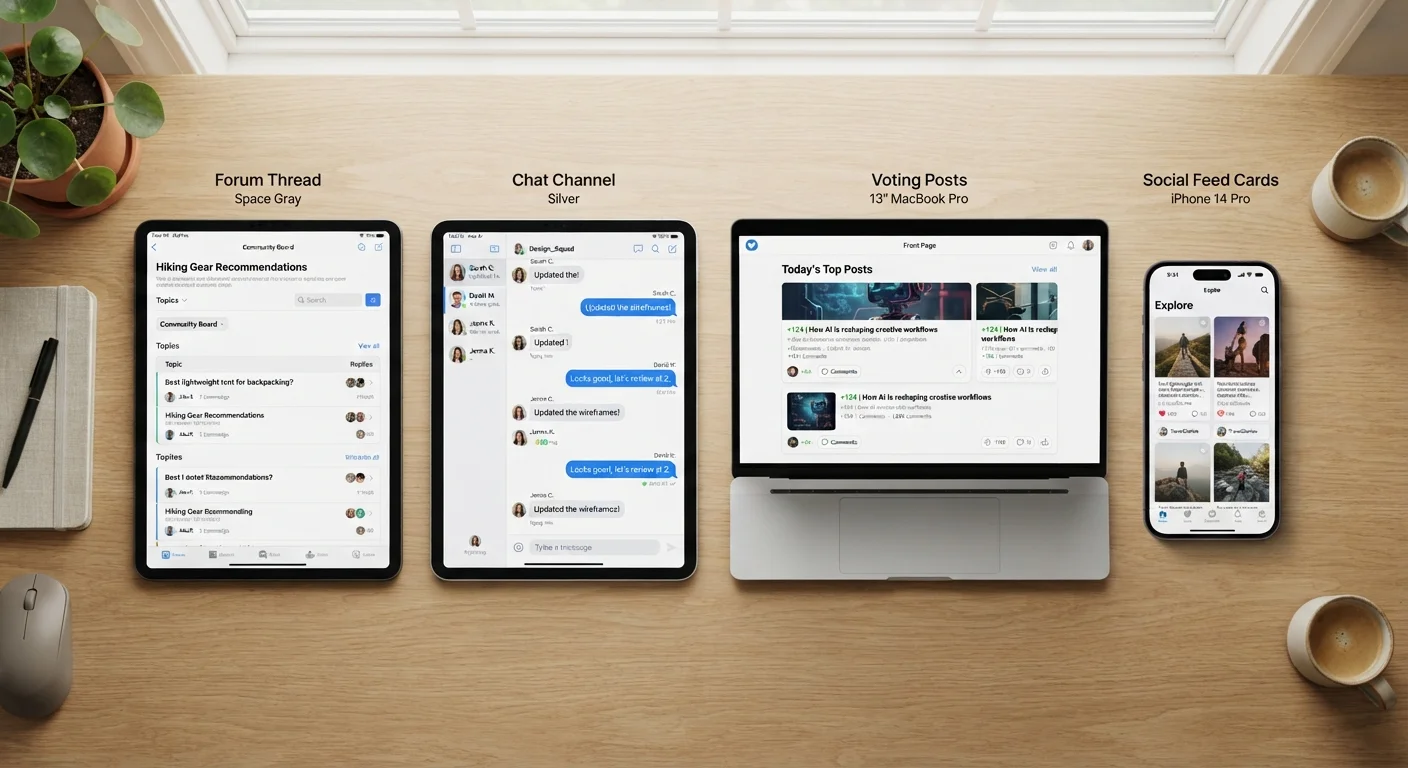
Traditional forums - think phpBB, vBulletin, or purpose-built community boards - organize conversations into threads within topic categories. A post stays visible indefinitely, making forums naturally searchable. Someone asking a question today might find a thorough answer posted three years ago.
Forum culture tends to reward longer, more considered posts. Replies are threaded and sequential, so conversations build logically over time. Anonymity varies by community, but usernames are typical. Moderation is usually handled by appointed volunteers who enforce rules specific to that community.
The tradeoff: forums can feel slow. If you post and check back hours later, you might find two replies - or none. They work best for hobbyists, professionals, and enthusiasts who value thoroughness over speed.
Discord Servers: Organized for Real-Time Chat
Discord is built around channels - dedicated chat rooms within a server, each focused on a specific topic or purpose. Servers can have dozens of channels covering everything from introductions to off-topic memes. Conversation happens in real time, meaning if you're not online, you'll likely miss a lot.
This real-time nature creates tight-knit communities, especially around gaming, content creators, and fan groups. Discord also supports voice and video channels, making it closer to a virtual hangout space than a message board. Synchronous vs. asynchronous participation is a key concept here - Discord leans heavily synchronous.
Moderation tools are robust, but the sheer pace of chat means rules violations can slip through quickly. Large servers often rely on bots to help enforce guidelines automatically.
Start Small in Any New Community
Regardless of platform, it's worth spending time reading before posting - a practice sometimes called 'lurking.' Each community develops its own norms, tone, and inside references. Observing first helps you understand what's welcome and what isn't, reducing the chance of an awkward or unwelcome first impression.
Subreddits: Community by Topic, Ranked by Votes
Reddit is organized into subreddits - individual communities each focused on a specific interest, from broad topics like r/science to hyper-specific niches. The defining feature is the upvote/downvote system: community members collectively vote on posts and comments, and the most-voted content rises to the top of the feed.
This crowd-curation model means popular or well-liked contributions get amplified, while low-effort posts fade away. It also means the community itself sets the tone more than any single moderator. Usernames are pseudonymous, and many people maintain different Reddit identities from their real-world presence.
Reddit can feel unwelcoming to new users - each subreddit has its own culture, rules, and even insider language. But for finding concentrated expertise and opinion on nearly any subject, subreddits are hard to match. For a direct comparison between Reddit and Facebook, see this breakdown.
Facebook Groups: Community Through Real Identity
Facebook Groups differ from the other three in one fundamental way: they operate within a platform built around real names and existing social connections. When you join or post in a Facebook Group, your profile - including your name and photo - is typically visible to other members.
This transparency shapes behavior. Conversations in Facebook Groups can feel more civil in some cases, or more charged in others, depending on the topic. Groups can be public, private, or secret, giving administrators meaningful control over who can see and join.
The integration with Facebook's broader feed means posts from groups you belong to appear alongside content from friends and pages. For some users this is convenient; for others, it blurs the line between community participation and general social media browsing. For a broader view of how these platforms compare when building a community, see this comparison.
Understanding the different roles people play across all these platforms - from quiet readers to active contributors - is also worth exploring. See who's actually in an online community for that breakdown.