Where the Distinction Came From
The idea that some creative work is "fine art" and other work is merely "craft" traces back to European academic traditions, particularly the 17th and 18th centuries, when institutions like the French Royal Academy of Painting and Sculpture began formalizing hierarchies of creative practice. Painting, sculpture, and architecture were elevated as intellectual pursuits; weaving, pottery, and metalwork were classified as trades - valuable, yes, but not quite art in the prestigious sense.
This separation was deeply tied to class and labor. Fine arts were associated with educated, often wealthy practitioners working for patrons, churches, or royalty. Crafts were associated with guild workers and artisans whose output served practical ends. Over time, those associations hardened into assumptions that persist in how museums, schools, and the art market operate today.
For a broader look at how creative disciplines are organized and understood, see this overview of creative arts hobbies.
How the Terms Are Typically Defined
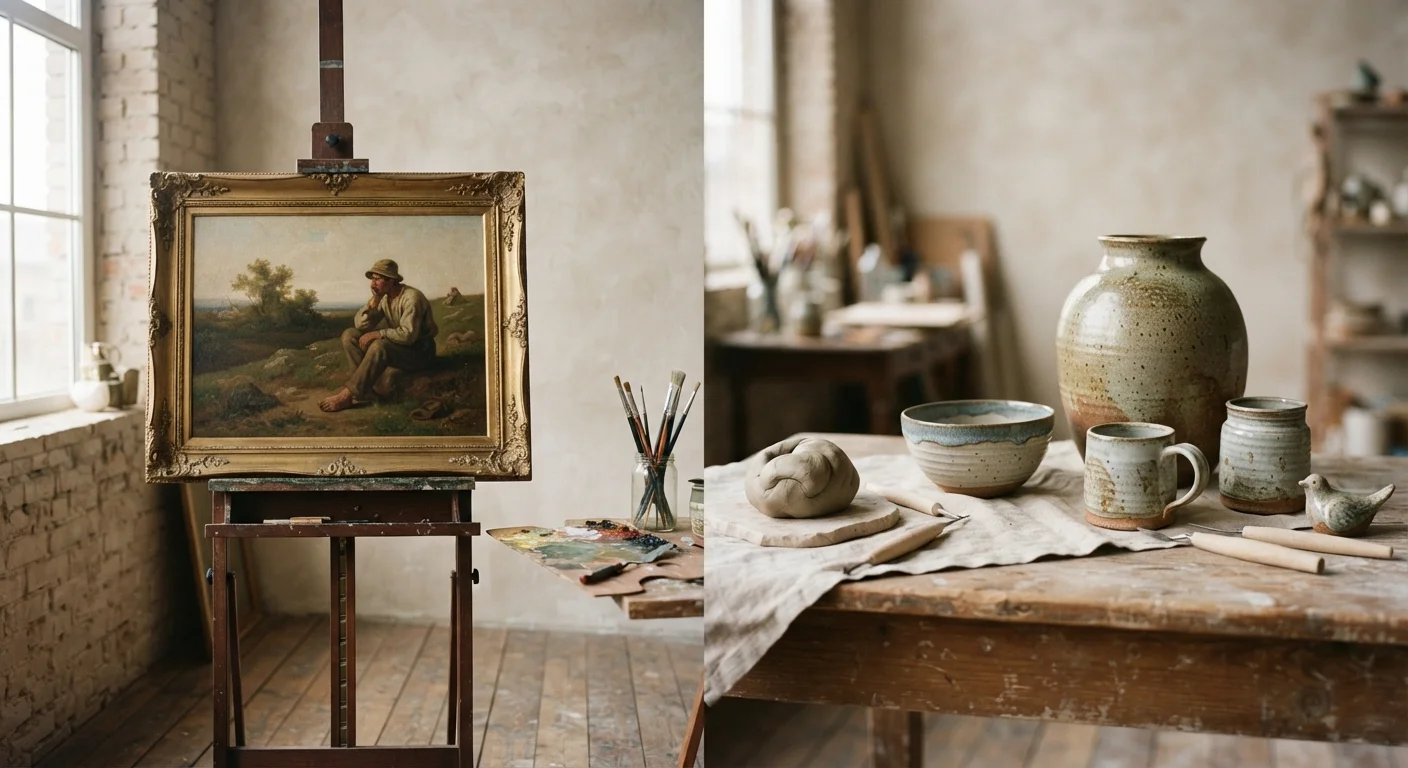
In conventional usage, fine arts refers to disciplines - primarily painting, drawing, sculpture, printmaking, and photography - whose primary purpose is aesthetic or intellectual expression. The work is valued for what it communicates or evokes, not for what it does.
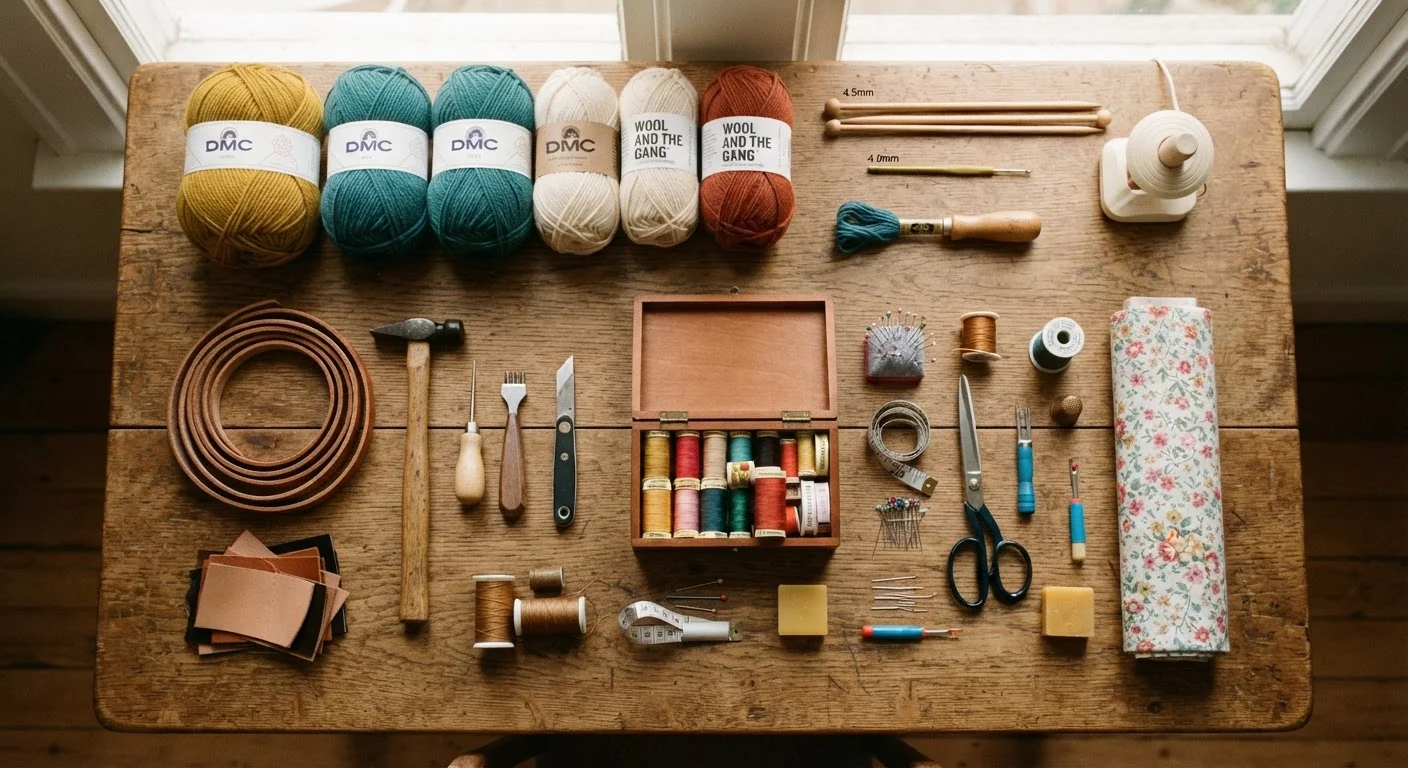
Craft, by contrast, traditionally describes making practices rooted in material skill and function. Ceramics, weaving, woodworking, glassblowing, and bookbinding are classic examples. Craft objects may be beautiful, but beauty is understood as secondary to utility or technique.
| Criterion | Fine Arts | Craft |
|---|---|---|
| Primary purpose | Aesthetic or intellectual expression | Function, utility, or technical skill |
| Historical status | Elevated by academic institutions | Associated with trade and guild work |
| Typical disciplines | Painting, sculpture, printmaking | Ceramics, weaving, woodworking |
| How value is judged | Concept, originality, expression | Skill, material quality, execution |
| Institutional recognition | Galleries, museums, academies | Craft fairs, guilds, folk traditions |
| Overlap zones | Studio ceramics, art textiles | Studio ceramics, art textiles |
These definitions sound clean enough until you consider how frequently they break down in practice. A hand-thrown ceramic vessel displayed in a museum gallery - is it craft or fine art? The answer often depends less on the object itself than on who made it, where it's shown, and how it's framed.
If you encounter unfamiliar terminology in either world, this glossary of creative arts terms is a useful reference.
Why the Boundary Keeps Shifting
The 20th century complicated the fine art/craft divide considerably. Movements like Arts and Crafts (which deliberately dignified handmade objects), the Bauhaus school (which sought to merge art and functional design), and later the Studio Craft movement all pushed back against the hierarchy. Artists like Anni Albers elevated textile work into major gallery contexts; Peter Voulkos transformed ceramics into expressionist sculpture.
Today, quilts hang in art museums. Hand-lettering occupies the space between graphic design and fine art. Digital illustration is claimed by both camps simultaneously. The institutional lines are moving - slowly, and unevenly - but moving nonetheless.
A Note on Institutional Bias
Art historians and critics have noted that the fine art/craft divide has historically marginalized work produced by women, Indigenous communities, and non-Western cultures - whose textile, ceramic, and decorative traditions were often labeled 'craft' even when deeply sophisticated. This bias is worth keeping in mind when evaluating how creative hierarchies developed and who they served.
What's often really being argued about when people debate fine art vs. craft isn't the nature of the work - it's whose labor gets recognized and compensated as prestigious. For a grounded look at what it means to pursue creative work at all, see what it means to have a creative hobby.
What This Means for Hobbyists and Makers
For most people pursuing creative work outside professional or commercial contexts, the fine art vs. craft distinction is largely irrelevant to the experience of making. Whether you're throwing pots, watercoloring landscapes, or knitting elaborate patterns, the cognitive, emotional, and social benefits are similar across disciplines.
That said, knowing where these labels come from helps you recognize when they're being used to unfairly gatekeep creative communities - and when they're simply being used descriptively. If a class or program emphasizes "fine arts" credentials, it may signal a particular kind of institutional context, not inherently better instruction. Craft-focused communities, meanwhile, often offer rich mentorship traditions and accessible entry points.
Explore the full range of what creative expression looks like across practices in this overview of creative expression forms.