How Creative Arts Hobbies Are Categorized
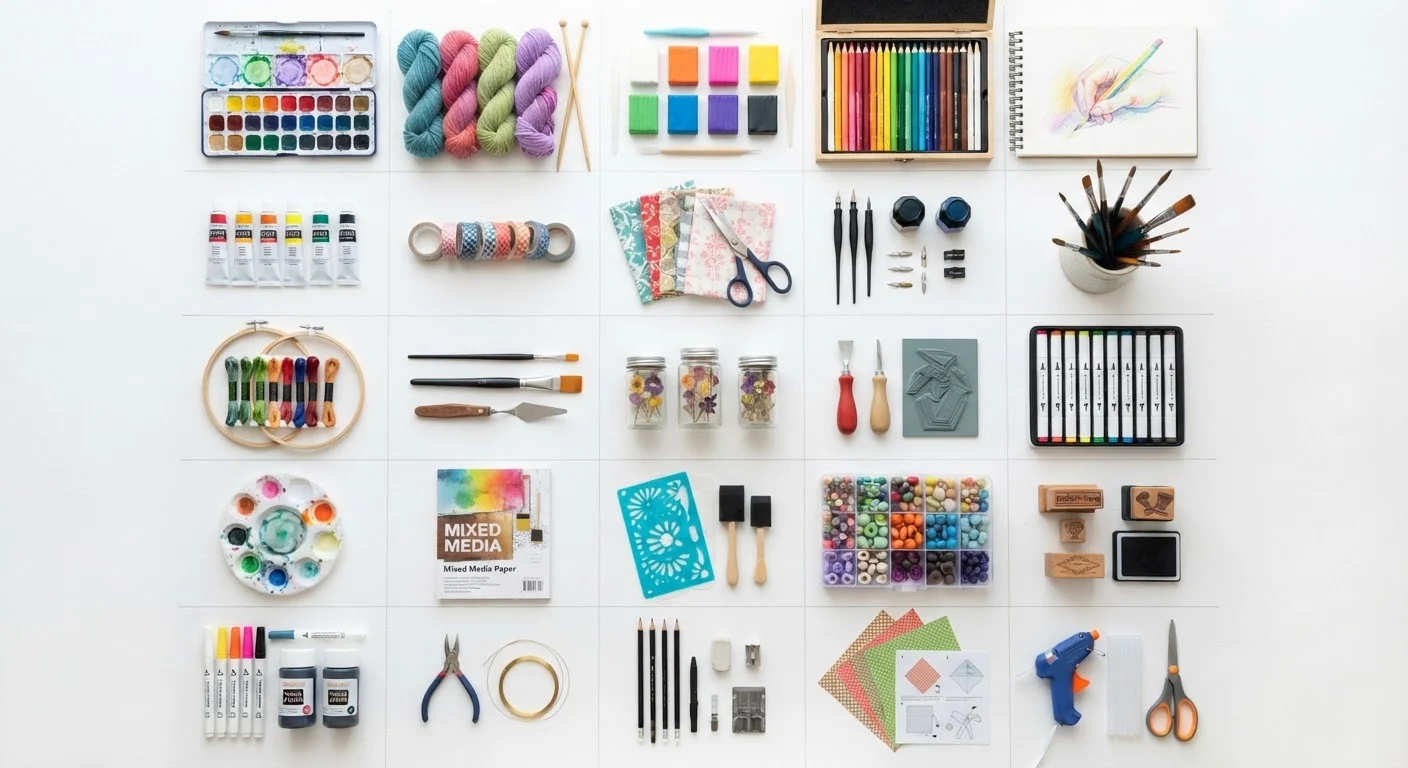
Creative arts hobbies cover an enormous range of practices, and understanding how they group together makes it easier to find your footing. Most disciplines fall into one of several broad families: visual arts, fiber and textile arts, three-dimensional arts, paper arts, and digital arts. Each family shares common tools, techniques, and communities, even though individual pursuits within them can look very different from one another.
It's worth noting that these categories aren't rigid. A quilter works with fabric (textile art) but also composes visual patterns (visual art). A printmaker bridges drawing and physical craft. The distinction between fine art and craft has long been debated, and in practice, most hobbyists move fluidly across lines that critics and institutions draw.
| Broad category families | 5 (visual, fiber/textile, 3D, paper, digital) |
| Most accessible entry point | Paper arts (low cost, minimal equipment) |
| Equipment-intensive disciplines | Ceramics, glasswork, woodturning |
| Fastest-growing area | Digital arts (driven by affordable tablets and apps) |
| Disciplines with strong online communities | Knitting, crochet, embroidery, digital illustration |
| Disciplines considered foundational | Drawing (supports most other visual arts) |
For a broader look at where creative pursuits fit among American leisure habits, see how Americans spend their free time.
The Major Families of Creative Arts
Visual Arts include drawing, painting, illustration, and photography. These disciplines focus primarily on creating images - whether representational or abstract - using pigment, light, or line. Drawing is typically considered foundational because it trains the eye and hand coordination that supports nearly every other visual medium.
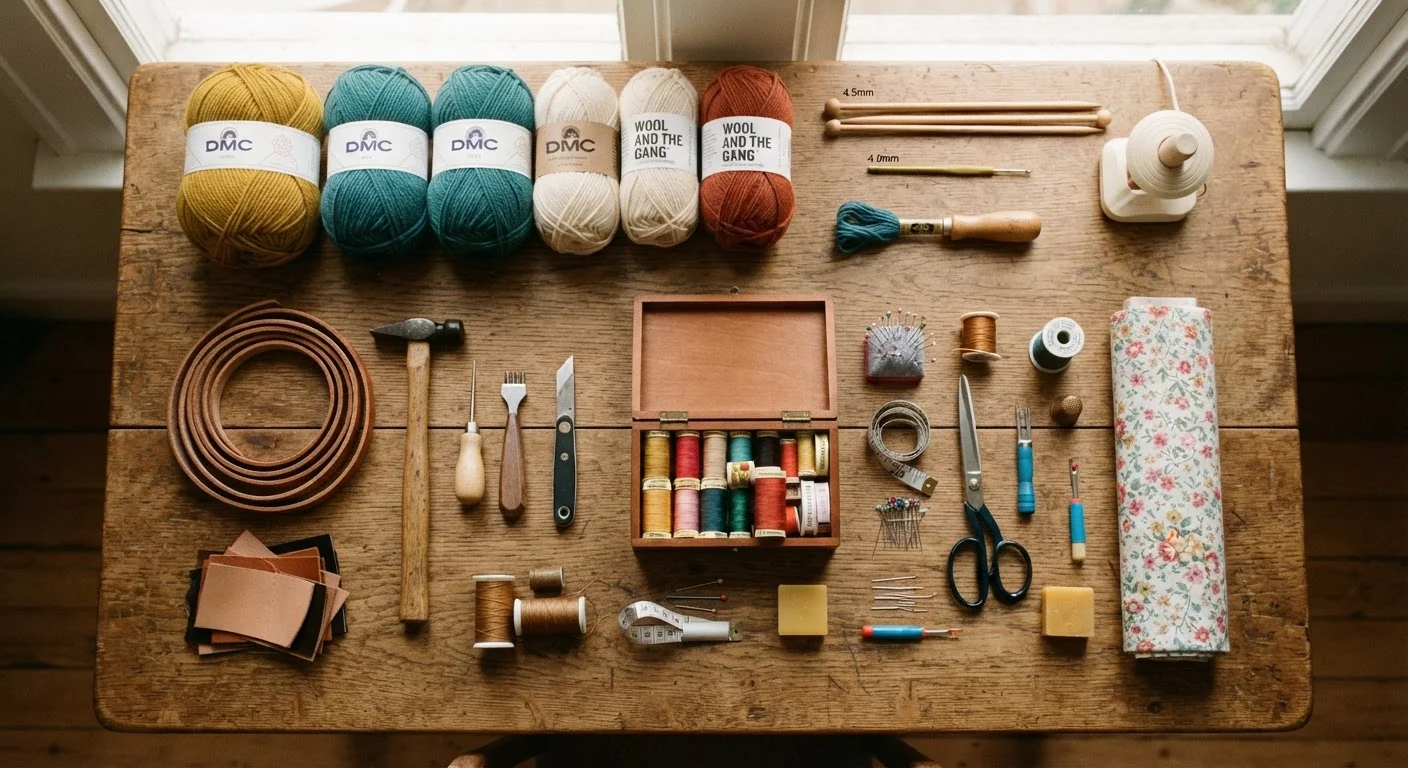
Fiber and Textile Arts encompass knitting, crocheting, weaving, embroidery, quilting, and hand-spinning, among others. These practices involve manipulating thread, yarn, or fabric to create both functional and decorative objects. They have deep roots in cultures worldwide and today represent some of the most active hobbyist communities online and in person.
Three-Dimensional Arts cover sculpture, pottery, ceramics, woodcarving, jewelry-making, and glasswork. The defining quality is working in physical space - shaping, carving, or assembling materials that have volume and mass. Many of these crafts require specialized equipment (a kiln for ceramics, a lathe for woodturning), which affects how accessible they are to beginners.
Paper Arts include origami, bookbinding, papercutting, cardmaking, and collage. Paper is inexpensive and widely available, making these disciplines particularly approachable for newcomers. Despite their accessibility, paper arts can reach extraordinary levels of technical complexity.
Digital Arts - digital illustration, graphic design, photo editing, and pixel art - use software and devices as their primary medium. These fields have grown rapidly as affordable tablets and free or low-cost applications have lowered the barrier to entry significantly.
Medium
The material or method an artist uses to create work - for example, watercolor, clay, or digital software. The plural is 'media' or 'mediums' depending on context.
Fiber Arts
A category of creative practices that use natural or synthetic fibers - yarn, thread, fabric - as the primary material. Examples include knitting, weaving, and embroidery.
Composition
The deliberate arrangement of visual elements within a work. Good composition guides the viewer's eye and gives a piece a sense of balance or intentional tension.
Three-Dimensional Arts
Creative disciplines that produce objects with physical depth, height, and width - such as sculpture, ceramics, and woodcarving - as opposed to flat, two-dimensional work.
Digital Illustration
The practice of creating drawn or painted artwork using a digital device such as a tablet and stylus, typically with image-editing or illustration software.
Mixed Media
Artwork that combines two or more different materials or techniques in a single piece, such as collage combined with paint or embroidery layered on a photograph.
What Makes Each Discipline Distinct
Beyond materials and tools, each creative discipline has its own learning curve, community culture, and set of core skills. Watercolor painting, for example, rewards an understanding of how water dilutes pigment and how paper absorbs moisture - skills that don't transfer directly to oil painting, even though both are painting forms. Similarly, crochet and knitting both use yarn but rely on entirely different hand techniques and produce distinct fabric structures.
This specificity is one reason hobbyists often find it helpful to spend time within a single discipline before branching out. A practical primer for creative beginners can help you assess which medium aligns with your interests, available space, and budget.
For those who want a thorough survey before committing to any one path, an overview of creative expression forms covers the most widely practiced disciplines and what each one actually involves day-to-day.
Understanding the vocabulary that cuts across disciplines also pays dividends early. Terms like medium, composition, and negative space appear across visual arts, photography, and even textile design. The glossary of creative arts terms is a useful reference to bookmark as you explore.
Once you've identified a direction, the longer-term question becomes sustainability - how to build a practice that fits real life. Everything that goes into a sustainable creative hobby addresses that end-to-end, from managing supplies and creative blocks to finding community.