
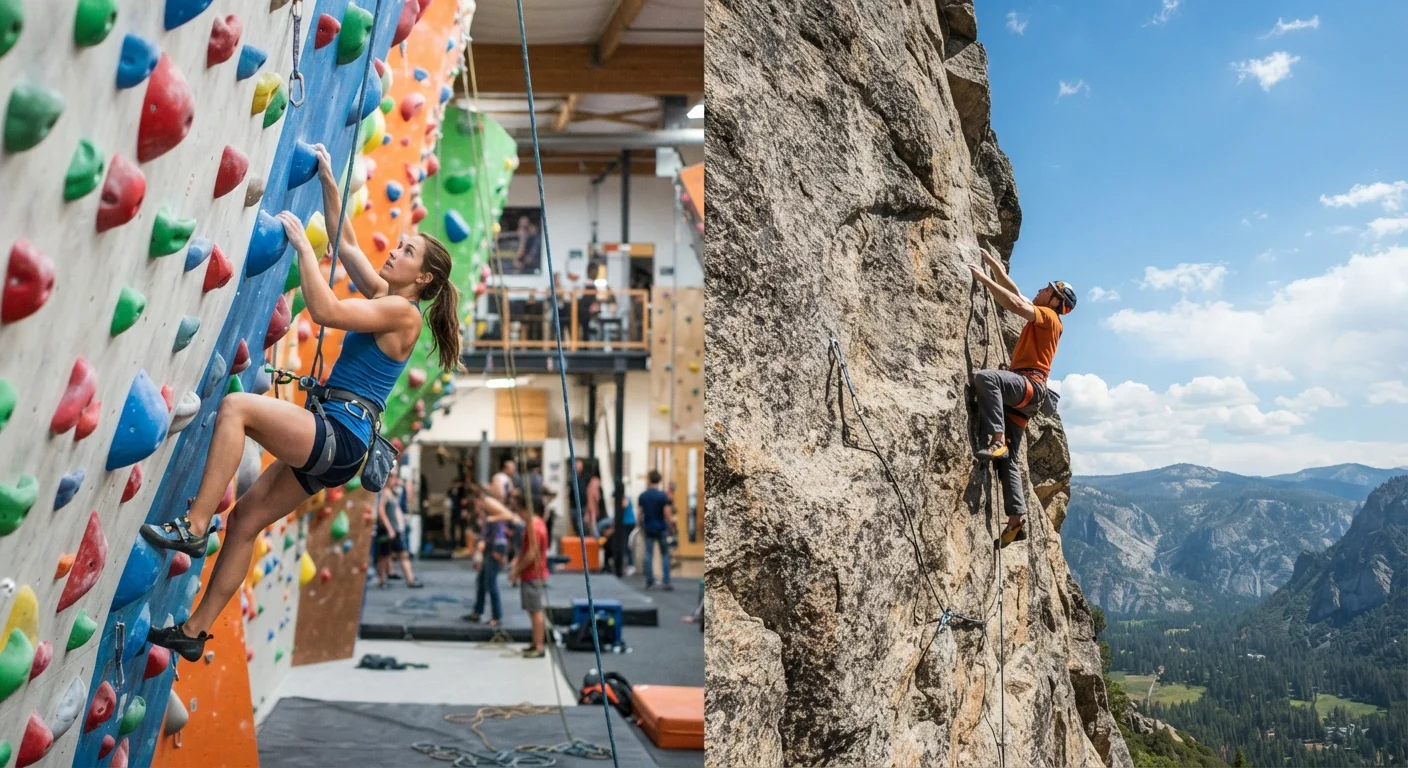
The Core Difference: Controlled vs. Variable Environments
At its heart, indoor climbing takes place in an engineered environment. Walls are angled at fixed degrees, holds are color-coded by difficulty, and routes are reset regularly by professional setters. Everything is designed to be graded, repeatable, and safe within a staffed facility. Outdoor climbing is the opposite: rock faces formed by geological processes offer no such guarantees. Texture, angle, weather, and route complexity vary not just from crag to crag but from hour to hour.
This distinction shapes almost every other difference between the two settings - from the physical demands on your body to the decisions you must make before ever leaving the ground. For a broader look at how environment shapes leisure pursuits, see our comparison of indoor and outdoor hobbies.
| Indoor Climbing | Outdoor Climbing | |
|---|---|---|
| Environment | Controlled, engineered walls | Natural rock, variable conditions |
| Weather dependence | None - year-round access | Highly weather-dependent |
| Skills emphasized | Movement, footwork, route-reading | Anchors, gear placement, route-finding |
| Primary safety risks | Overuse injuries | Rockfall, anchor failure, weather, remote rescue |
| Gear cost to start | Low - rentals widely available | Moderate to high - rope and hardware needed |
| Community access | Structured classes, beginner programs | Informal, network-dependent |
| Grade consistency | Standardized within each gym | Varies by region and rock type |
Skill Development: What Each Environment Teaches
Indoor gyms are genuinely excellent at teaching movement. Footwork, body positioning, grip technique, and reading a route's sequence are all skills a climber can develop rapidly on gym walls. Structured instruction is readily available, and the low-consequence nature of a padded gym floor means beginners can fall, reset, and try again without much anxiety.
Outdoor climbing demands a much wider repertoire. Trad climbing (short for traditional climbing) requires placing removable gear into rock features to build anchors - a skill with no meaningful indoor equivalent. Sport climbing outdoors means clipping fixed bolts, but the approach hike, route-finding, and managing rope drag in real terrain still add complexity absent from gym settings. Additionally, climbers must understand rock quality: some outdoor holds break without warning, and wet or dusty rock changes friction dramatically.
Bridge the Gap Intentionally
If you've been climbing in a gym for several months and want to try outdoor climbing, consider taking a single-day clinic with a certified guide before heading out on your own. Clinics cover anchor assessment, gear use, and route-finding in real terrain - skills that reading about alone doesn't fully prepare you for. Many climbing shops and guide services offer these courses at accessible price points.
Bouldering - climbing low routes without ropes - translates more fluidly between environments, but even here outdoor bouldering introduces uneven landings, lichen on holds, and unpredictable conditions not replicated indoors.
Safety: Different Risks, Different Preparation
Gyms minimize many objective hazards. Staff monitor facilities, crash pads are standardized, and ropes and hardware are regularly inspected. The primary risks indoors are overuse injuries - particularly finger tendons and shoulders - that arise from the high volume of climbing many gym visitors do.
Outdoor climbing introduces hazards that require deliberate preparation: rockfall, anchor failure, sudden weather changes, and difficulty of rescue if something goes wrong in a remote location. Cold weather adds additional layers of risk; the principles covered in our guide to cold-weather outdoor safety apply directly to alpine or shoulder-season climbing scenarios.
Newer climbers transitioning outdoors benefit strongly from mentorship or a course from a qualified guide. Knowing how to assess an anchor, read weather, and recognize loose rock are not optional skills - they are baseline requirements for safe outdoor climbing.
Gear, Cost, and Accessibility
Getting started indoors is relatively low-cost. Most gyms rent shoes and harnesses, so a first visit requires little financial commitment. Monthly memberships vary by region and facility type but generally offer unlimited climbing access. As a climber progresses, personal shoes and a harness become the main purchases.
Outdoor climbing requires more gear sooner. A rope, quickdraws, a belay device, carabiners, and a helmet are essential for sport climbing outdoors. Trad climbing adds a rack of removable protection that can represent a significant upfront cost. Access to outdoor areas also depends on transportation, which can limit participation for urban climbers without a car.
Accessibility in a social sense matters too. Gyms tend to have structured communities, classes, and beginner nights. Outdoor crags have their own culture - often more informal and self-directed - which some find liberating and others find harder to navigate without an existing network. For newcomers to outdoor pursuits generally, this plain-language introduction to outdoor hobbies offers useful context on getting started.
Which Environment Is Right for You?
Choosing between indoor and outdoor climbing is less about which is better and more about what you want from the sport at a given stage. Beginners benefit from starting indoors: instruction is accessible, mistakes are low-consequence, and progress is measurable. Climbers who spend time exclusively in gyms, however, often find outdoor climbing disorienting - grades feel harder, the environment feels unfamiliar, and skills they assumed they had don't quite transfer.
The most well-rounded climbers treat the two settings as complementary. Gyms build fitness and movement literacy; outdoor climbing builds judgment, adaptability, and a relationship with natural rock that is genuinely different from anything a gym can replicate. If you're curious how this indoor-outdoor dynamic plays out in other athletic pursuits, the comparison drawn in trail running vs. road running offers a useful parallel.
Whichever environment draws you in, the important first step is seeking proper instruction and building skills progressively rather than advancing faster than your judgment can keep up.