
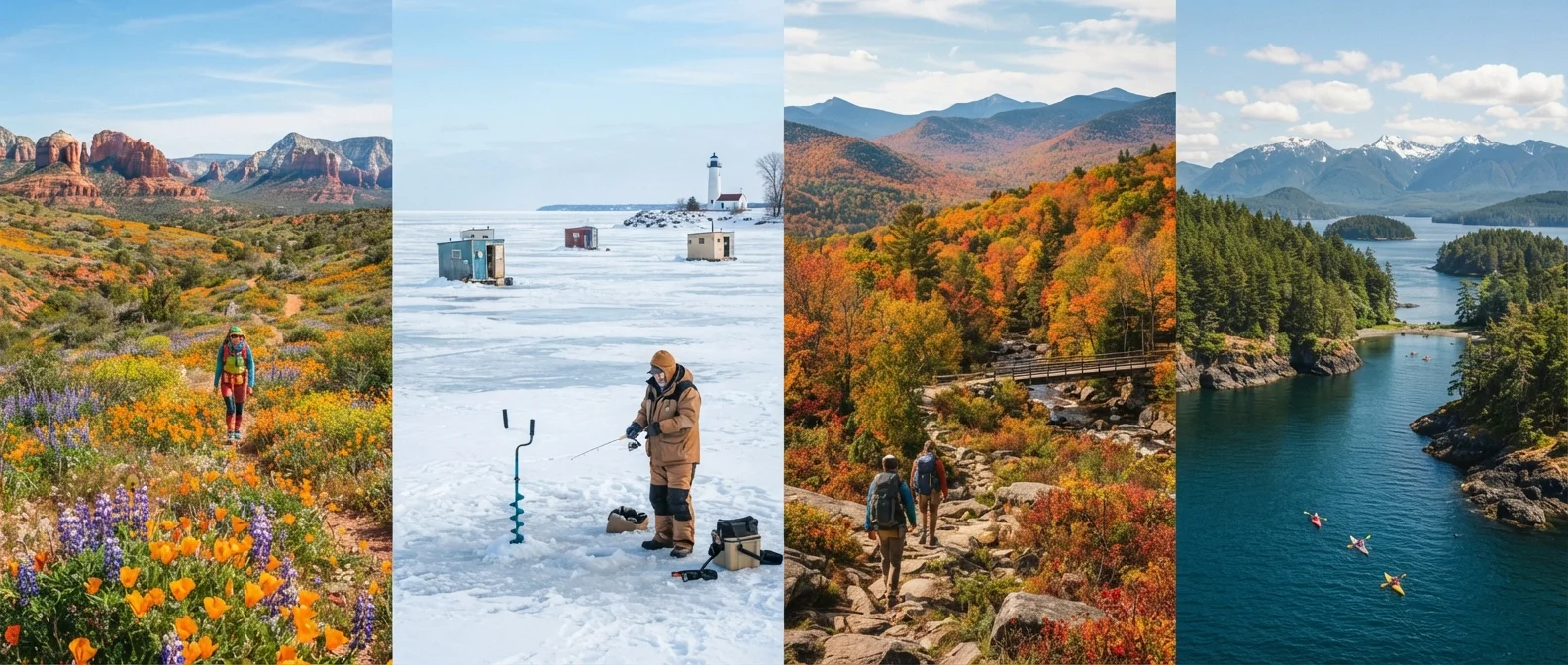
Why Season and Region Both Matter
The United States spans deserts, tundra, wetlands, mountain ranges, and coastlines - and that geographic range means the ideal outdoor activity in October in Minnesota looks nothing like what's worth doing that same month in Arizona. Timing and location work together. Chasing the right combination is what separates a memorable outing from an uncomfortable one.
Whether you're a committed hobbyist or someone just beginning to explore outdoor leisure, understanding regional seasonal patterns helps you plan more effectively. For a broader look at how Americans approach outdoor pursuits generally, see our introduction to outdoor hobbies for adults. And if you're still weighing whether an outdoor activity fits your lifestyle at all, comparing indoor and outdoor hobbies can help clarify the tradeoffs.
Below, we break down eight regional activity highlights organized by the season in which they shine most.
Southwest Desert: Wildflower Hiking in Spring
The Sonoran and Mojave deserts transform in late winter and early spring - roughly February through April depending on rainfall - when annual wildflowers blanket hillsides and canyon floors. Arizona, Southern California, and parts of New Mexico all experience this phenomenon, commonly called a superbloom in years of above-average precipitation.
Hiking during this window is low-impact, widely accessible, and visually striking. Temperatures are moderate compared to summer extremes, making trail distances achievable for most fitness levels. The main consideration is timing: blooms are short-lived and unpredictable, so local ranger station updates are the most reliable way to confirm peak conditions before making the trip.
Desert wildflower season offers some of the Southwest's most accessible and visually striking hiking of the year.
Pacific Northwest: Kayaking and Sea Kayaking in Summer
The Pacific Northwest's inland waters - Puget Sound, the San Juan Islands, and the coastal bays of Oregon - offer some of the most varied sea kayaking terrain in North America. Summer, from June through September, brings calmer seas, longer daylight hours, and frequent wildlife encounters including harbor seals and seabirds.
Beginners can take guided day trips through outfitter programs at many coastal parks without needing to own equipment. More experienced paddlers often plan multi-day island-to-island journeys. Tidal knowledge and basic navigation skills matter here - the waters, while scenic, require respect for currents and weather shifts that can develop quickly.
Puget Sound and the San Juan Islands provide some of North America's most varied and rewarding sea kayaking terrain.
Rocky Mountain Region: Alpine Wildflower Trails in Late Summer
At elevations above 9,000 feet across Colorado, Wyoming, and Montana, late summer - typically mid-July through August - brings a brief but spectacular alpine wildflower season. Meadows that are snow-covered through June burst into color as columbine, Indian paintbrush, and lupine reach peak bloom.
This window also coincides with the best conditions for high-altitude hiking before afternoon thunderstorms become a daily pattern in late August. Starting hikes early in the morning and descending below treeline before noon is standard safety practice at elevation. The combination of cooler temperatures, dramatic scenery, and manageable trail systems makes this a standout seasonal experience for visitors to the region.
Starting alpine hikes before noon is the key safety rule for avoiding dangerous afternoon thunderstorms at elevation.
Appalachian Region: Fall Foliage Hiking and Backpacking
The Appalachian Mountains, stretching from Maine to Georgia, produce some of the most celebrated autumn foliage in the world. Peak color typically progresses southward from late September in New England through mid-October in the mid-Atlantic and November in the Southern Highlands.
Hiking and backpacking through this corridor during peak foliage draws significant visitor numbers, particularly on the Appalachian Trail's most accessible segments. Planning ahead - reserving campsites early and arriving at trailheads on weekdays where possible - reduces crowding. The cooler fall temperatures are ideal for sustained mileage, and the color displays make even short out-and-back hikes memorable.
Appalachian fall foliage peaks progressively later moving south, giving visitors a multi-month window to plan their trip.
Gulf Coast: Birding During Spring and Fall Migration
The Gulf Coast, particularly coastal Texas and Louisiana, sits along one of North America's most active migratory flyways. Millions of songbirds, shorebirds, and raptors pass through in spring (April-May) and fall (September-October) as they travel between breeding grounds to the north and wintering areas to the south.
Birding - observing and identifying wild birds in their natural habitat - requires little equipment beyond binoculars and a regional field guide, making it one of the most accessible outdoor hobbies available. Coastal refuges and barrier islands become extraordinary gathering points during migration peaks, and even casual observers often encounter dozens of species in a single morning.
Birding along the Gulf Coast during migration requires little more than binoculars and patience - and rewards both.
Great Lakes Region: Ice Fishing in Winter
When lakes across Michigan, Wisconsin, and Minnesota freeze solidly - typically December through February - ice fishing communities emerge. Anglers drill holes through ice, often several inches thick, and fish for perch, walleye, and bluegill in conditions that range from informal outings to organized tournaments.
Ice fishing has a distinct social culture: shelters called ice shanties or fish houses create warm, semi-permanent communities on frozen lake surfaces. Beginners can often rent gear and shanties through local outfitters. Ice thickness safety is critical - most guidelines recommend a minimum of four inches for foot travel, though local rules and conditions vary. Before heading out, check with state licensing requirements for winter fishing, as regulations apply year-round.
Ice fishing's social culture - built around shared shanties on frozen lakes - makes it as much a community event as a sport.
Mid-Atlantic Coast: Surf Fishing in Autumn
As summer beach crowds thin out, autumn brings some of the best surf fishing conditions along the mid-Atlantic coast from Delaware to North Carolina. Striped bass and bluefish follow baitfish close to shore during their seasonal migration, creating productive fishing from beaches that are far less crowded than in peak summer months.
Surf fishing - casting from the shoreline rather than a boat - is an approachable entry point for people curious about saltwater angling. A basic rod, reel, and a few lures or natural baits are enough to get started. Many state parks and national seashores permit surf fishing with appropriate licenses, though specific rules on vehicle access to beaches vary.
Autumn surf fishing along the mid-Atlantic coast combines productive conditions with uncrowded beaches - a rare combination.
Northern Great Plains: Cross-Country Skiing and Snowshoeing in Winter
States like Minnesota, the Dakotas, and the Upper Peninsula of Michigan receive consistent snowfall that supports excellent cross-country skiing and snowshoeing from December through March. Unlike downhill skiing, these disciplines require no lift infrastructure - participants move through forested trails or open prairie terrain under their own power.
Both activities are considered moderate-intensity aerobic exercise and are accessible to most adults with basic winter preparation. Layering appropriately, carrying water, and informing someone of your planned route are baseline practices. For detailed guidance on staying safe in cold conditions, see our cold-weather outdoor safety overview. Many state parks in this region groom cross-country ski trails seasonally at low or no cost.
Cross-country skiing and snowshoeing require no lift tickets or reservations - just proper layering and a local trail map.
Planning Your Own Regional Adventure
Each of these activities benefits from a small amount of upfront research. Land access rules, licensing requirements, and seasonal permit systems vary significantly across states and land designations. Before heading out, it's worth understanding how national parks, national forests, and state parks differ - the rules for what you can do on each type of land aren't always obvious.
Anglers especially should prepare carefully: fishing licenses and regulations vary by state, species, and water body, so confirming local rules before casting is essential. Winter activity participants should also review cold-weather safety practices before venturing into icy or high-elevation terrain.
Outdoor recreation in America is remarkably accessible - and deeply regional. The best approach is to start with what's available close to home, learn the seasonal rhythms of your landscape, and expand from there. You may find that your own region offers more variety than you realized.
Start Local Before Traveling Far
You don't need to travel to a famous destination to enjoy regional outdoor activities. Many of the pursuits listed here - birding, snowshoeing, surf fishing - are available in or near most American cities and suburbs. Starting with local options helps you develop skills and discover preferences before investing in gear or long-distance trips.