Who's in Charge: Governing Bodies
The most fundamental difference between college and professional sports is who runs them. College athletics in the United States are primarily overseen by the National Collegiate Athletic Association (NCAA), a nonprofit membership organization that sets eligibility rules, academic standards, and competition guidelines for roughly 1,100 member schools. Conferences - such as the Big Ten, SEC, and ACC - add another layer of governance within that structure.
Professional leagues, by contrast, operate as private business entities. The NFL, NBA, MLB, and NHL each establish their own rules, negotiate their own broadcast contracts, and manage their own labor agreements with players' unions. There is no external nonprofit body governing how a professional league must operate. For a deeper look at how those leagues are structured, see The Four Major Pro Sports Leagues in America, Explained.
Athlete Compensation: From NIL to Max Contracts
For most of its history, the NCAA's amateur model prohibited athletes from earning money directly from their sport. That changed significantly in 2021 when the NCAA permitted student-athletes to profit from their name, image, and likeness (NIL) - allowing endorsement deals, social media partnerships, and other commercial arrangements. However, college athletes still do not receive salaries from their universities for playing.
Professional athletes, meanwhile, are paid employees. Salaries are negotiated individually or through collective bargaining agreements between leagues and players' unions, and they can range from league-minimum contracts to nine-figure deals for marquee stars. Financial guardrails like salary caps shape how teams allocate that spending - a topic explored in depth in Salary Caps, Luxury Taxes, and Why Sports Teams Can't Just Spend Freely.
| Criterion | College Sports (NCAA) | Professional Sports |
|---|---|---|
| Governing body | NCAA and conferences | Private league entities (NFL, NBA, etc.) |
| Athlete pay | No salary; NIL deals permitted | Negotiated salaries and contracts |
| Labor agreements | NCAA eligibility rules | Collective bargaining agreements |
| Primary revenue use | Athletic department operations | Franchise profit and operations |
| Fan identity anchor | School and regional loyalty | City and metropolitan identity |
| Competitive structure | Conferences and national championships | Divisions, playoffs, and championships |
Revenue and Economics
College sports generate enormous revenue - particularly in football and men's basketball - but that money flows differently than in professional leagues. Universities funnel revenue back into athletic departments, facilities, coaching staffs, and scholarships. Many athletic programs operate at a loss and rely on successful football or basketball teams to subsidize other sports.
Professional franchises are commercial enterprises with ownership groups, investors, and explicit profit motives. Revenue streams include ticket sales, broadcast rights, sponsorships, and merchandise. The economics behind those revenue streams are substantial - The Economics of a Professional Sports Franchise breaks down exactly how teams generate and spend money.
$1.1B+
NCAA annual revenue (approx.)
The NCAA has reported annual revenues exceeding one billion dollars, driven largely by the Division I Men's Basketball Tournament media rights deal.
~2%
College athletes who turn professional
The NCAA estimates that only a small fraction of college athletes in any given sport advance to play professionally.
350+
Division I athletic programs
More than 350 schools compete at the NCAA Division I level, the highest tier of college athletics.
Fan Culture and Identity
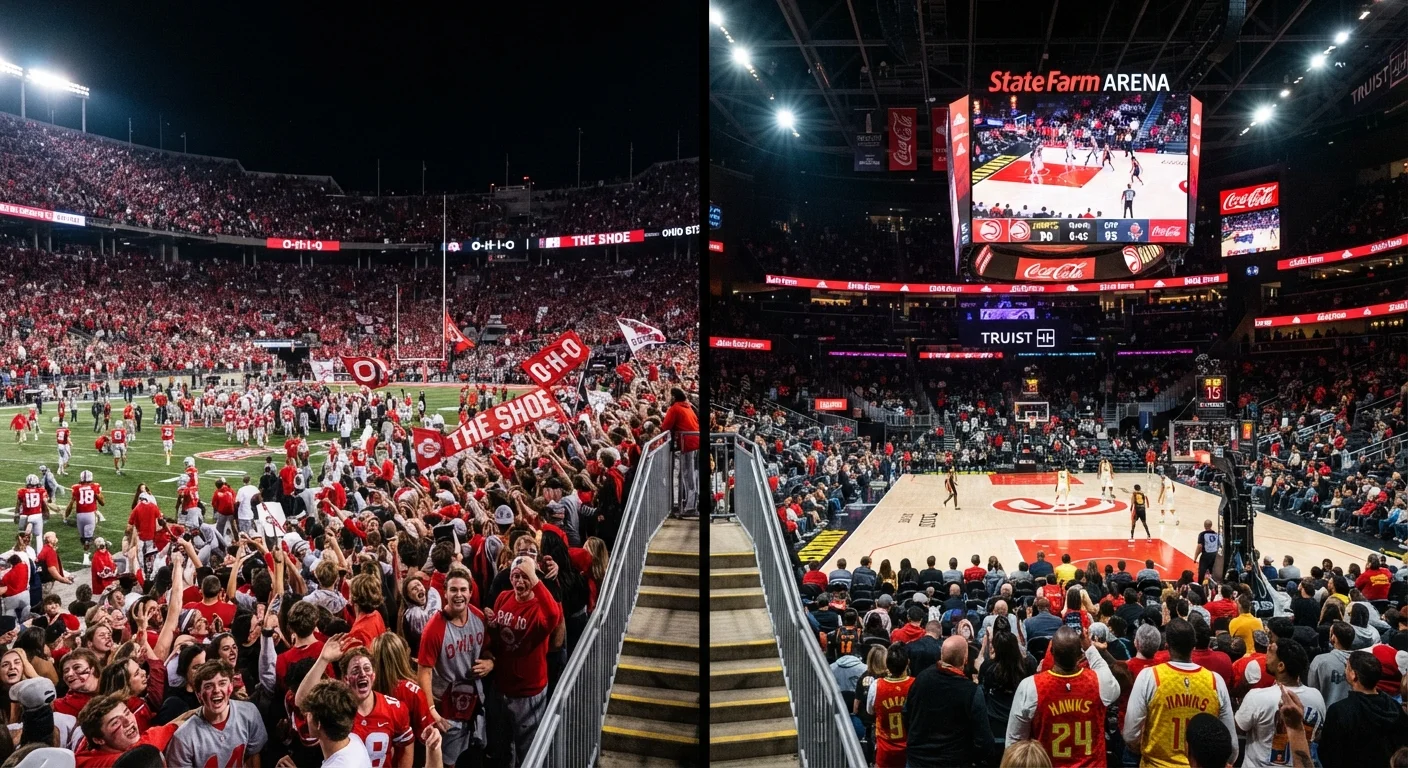
College sports fandom is often rooted in geographic and institutional loyalty. Many fans support a school because they attended it, grew up near it, or inherited allegiance from family members. In states without a major pro team - think Alabama, Iowa, or Kentucky - college programs serve as the dominant sports identity for an entire region.
Professional sports fandom tends to center on city or metropolitan identity. Fans follow franchises that represent their home market, and that loyalty can persist across generations regardless of roster changes. The culture surrounding each major professional league also takes on its own character. How Fan Culture Differs Across the NFL, NBA, MLB, and NHL explores those distinctions in detail.
NIL Rules Are Still Evolving
The NCAA's name, image, and likeness framework has changed significantly since its 2021 introduction and continues to be shaped by state laws, court rulings, and ongoing NCAA policy updates. The rules governing what college athletes can earn and how are not yet fully settled, and the landscape may look different in coming years.
The Pipeline: How College Feeds the Pros
For most major American sports, college programs function as the primary development pipeline for professional leagues. The NFL Draft, NBA Draft, and MLB Draft are annual events through which professional teams select eligible college (and in some cases high school or international) athletes. This creates a direct, structured relationship between the two worlds.
College performance is closely tracked by professional scouts, making high-level college competition a de facto audition stage. Not all athletes make the leap - the vast majority of college athletes never turn professional - but the draft system ensures the two tiers remain institutionally linked. Understanding what a professional sports season looks like after that transition is explained in What a Sports Season Actually Looks Like: Preseason, Regular Season, and Playoffs.