
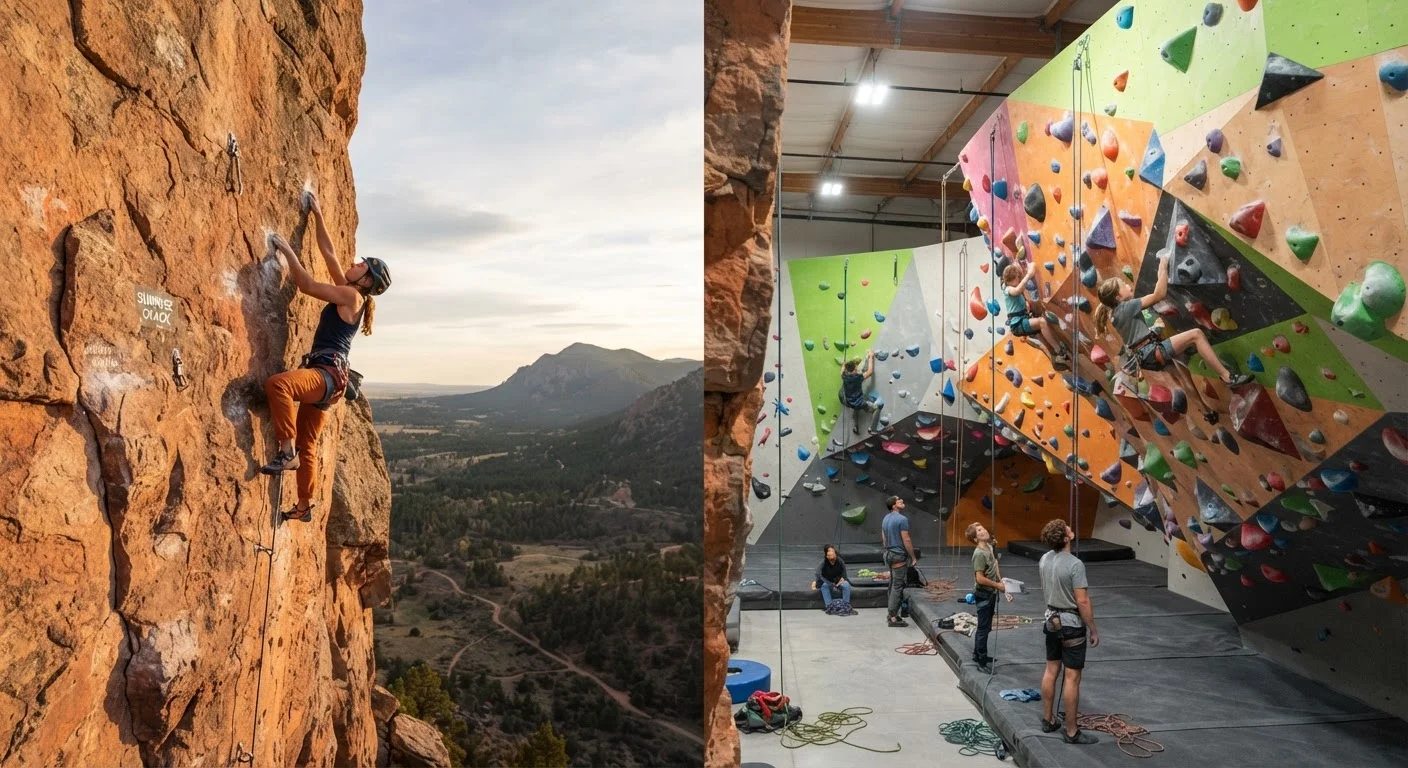
The Core Differences at a Glance
Climbing is a single sport with two very different theaters. Indoor climbing gyms use artificial walls fitted with color-coded holds - plastic or resin shapes bolted to structured surfaces - to simulate the physical demands of the sport in a predictable environment. Outdoor rock climbing takes place on natural formations: granite, sandstone, limestone, basalt, and more, each with unique textures and movement patterns.
The distinction matters because the skills, equipment, risks, and culture surrounding each setting diverge in meaningful ways. Someone who climbs exclusively indoors may be physically strong but lack the technical knowledge to climb safely outside. Conversely, experienced outdoor climbers often use gym sessions to build strength and technique during off-seasons or poor weather periods.
| Criterion | Indoor Climbing | Outdoor Rock Climbing |
|---|---|---|
| Environment | Artificial walls, controlled setting | Natural rock, variable terrain |
| Beginner accessibility | High - instruction and rentals available | Moderate - requires guided introduction |
| Gear required to start | Shoes and harness (rentable) | Rope, draws, harness, helmet, shoes |
| Weather dependence | None - year-round access | High - rain, heat, and ice limit climbing |
| Skill complexity | Physical technique focus | Adds anchoring, gear, route-finding |
| Risk level | Lower - managed environment | Higher - environmental hazards present |
| Ongoing cost | Monthly membership model | Lower ongoing cost after gear purchase |
| Community culture | Social, fitness-oriented, urban | Adventure-focused, conservation-minded |
Skill Sets: Where They Overlap and Where They Diverge
Both environments develop grip strength, footwork, body positioning, and the ability to read movement sequences - skills that transfer well between settings. This is why gyms are widely regarded as the fastest way to build foundational climbing fitness.
Outdoors, however, climbers must also master a separate technical layer. Traditional (trad) climbing requires placing removable gear - cams, nuts, and hexes - into rock features to create protection as you ascend. Sport climbing outdoors uses pre-drilled bolts for protection but still demands knowing how to build anchors, clip efficiently, and assess rock quality. Bouldering outdoors on low rocky formations requires reading natural problems with no holds labeled and no foam mat below.
Route-finding is another outdoor-only skill. In a gym, colored tape or matching holds guide climbers. On a crag, identifying the correct line - especially on multi-pitch routes - requires map reading, beta from guidebooks, and experience. If you're curious about how environment shapes skill development across outdoor pursuits more broadly, see our introduction to outdoor hobbies for adults.
Safety and Risk: Gym Margins vs. Crag Realities
Indoor climbing is designed to minimize risk. Auto-belay devices (mechanical systems that lower a climber automatically), padded bouldering floors, and staff supervision make gyms among the safer recreational fitness environments. Most gym injuries involve fingers, tendons, and shoulders - typically from overuse or falls that aren't cushioned properly.
Outdoor climbing carries a wider risk profile. Rockfall, loose holds, anchor failure, weather changes, and the difficulty of self-rescue all factor into the equation. Lead climbing outdoors means a potential fall longer than the equivalent gym fall. Helmets - optional for most gym climbers - are strongly recommended outdoors for this reason.
Bridging the Gym-to-Crag Gap Safely
Many experienced climbers recommend taking a formal outdoor climbing course before leading routes on natural rock, even if you're comfortable in the gym. The American Alpine Club and local climbing coalitions frequently offer crag days, clinics, and mentorship programs. Skills like anchor-building and gear assessment are best learned hands-on under qualified supervision before being applied independently.
This doesn't make outdoor climbing prohibitively dangerous, but it does mean education is non-negotiable. Organizations like the American Alpine Club offer resources and courses specifically designed to bridge the gym-to-crag transition safely.
Cost, Access, and Gear
Indoor climbing is relatively affordable to start. A gym day pass typically covers shoe rentals and a harness, and monthly memberships give unlimited access to walls, training boards, and sometimes fitness equipment. The gear required to begin is minimal.
Outdoor climbing has a higher gear threshold. A basic sport climbing rack - quickdraws, a rope, harness, helmet, and shoes - represents a meaningful upfront investment. Trad climbing adds a full protection rack and significantly more technical knowledge before a climber is ready to lead safely. That said, gear is often shared within climbing partnerships, and many clubs lend equipment for introductory outings.
Geography also plays a role. Not everyone lives near quality outdoor climbing areas. World-class crags like Red River Gorge in Kentucky, Joshua Tree in California, or Rumney in New Hampshire attract climbers who travel specifically to access them - an added cost and commitment. For those exploring the broader range of outdoor recreational activities, our comparison of camping styles offers useful context on how adventure-based activities vary in access and investment.