What Sets These Three Styles Apart
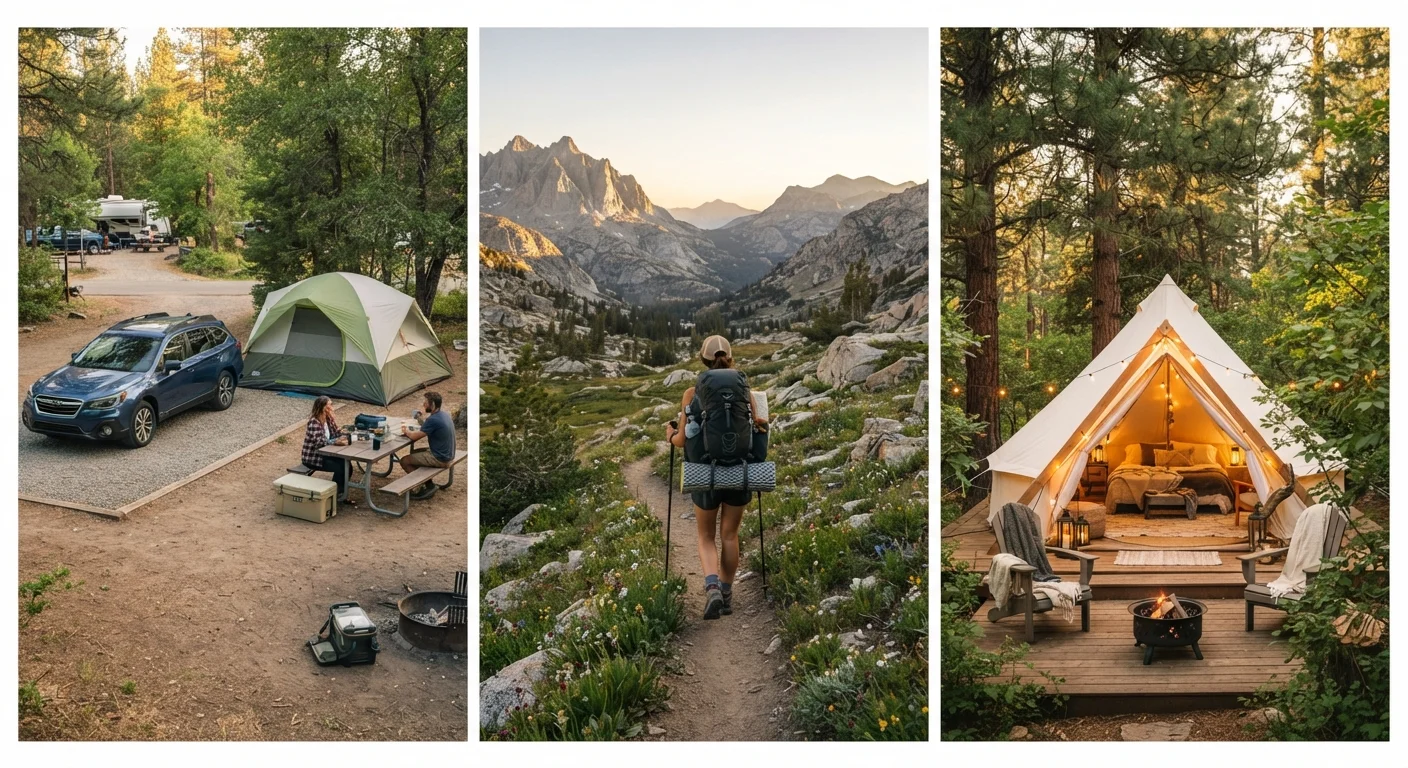
Camping covers a surprisingly wide range of experiences. A weekend at a state park campground with a car full of gear looks almost nothing like a four-day solo traverse of a mountain wilderness - and neither resembles a stay in a furnished canvas tent with a wood-burning stove and a catered breakfast. Yet all three count as camping.
Understanding the core differences between car camping, backpacking, and glamping helps you choose the experience that actually fits your life - not just the one that looks appealing in photos. The three styles diverge most sharply across four dimensions: gear demands, physical effort, cost, and access to nature. For a broader look at outdoor pursuits, see the Outdoor Activities hub.
| Car Camping | Backpacking | Glamping | |
|---|---|---|---|
| Physical effort | Low | High | Minimal |
| Gear you must own | Moderate kit needed | Specialized, lightweight gear | None required |
| Upfront gear cost | Low to moderate | Moderate to high | None |
| Per-night cost | Low (campsite fees) | Very low (permit fees) | High (lodging rates) |
| Wilderness access | Limited to roads | Deep backcountry access | Usually near amenities |
| Suitable for beginners | Yes | Not without preparation | Yes |
| Flexibility and spontaneity | Moderate | Requires planning | Low - must book ahead |
Car Camping: The Accessible Middle Ground
Car camping - driving to a designated campsite and setting up camp within steps of your vehicle - is the most common form of camping in the United States. Because gear travels in the trunk rather than on your back, weight is almost never a constraint. Families can bring full-size coolers, cast iron cookware, folding chairs, and canopy shelters without compromising comfort.
Most car camping happens at developed campgrounds run by state or federal agencies, which typically provide fire rings, picnic tables, restrooms, and sometimes electrical hookups. Fees vary by location but are generally modest compared to hotel stays. Reservations at popular sites, especially during summer weekends, are often required well in advance.
The physical demands are low - setting up a tent and gathering firewood are the main exertions. That accessibility makes car camping ideal for families with young children, older adults, and anyone new to sleeping outdoors. First-time campers often underestimate weather preparation and food storage logistics, but the convenience of having gear on hand makes course-correcting easier than in other styles.
Backpacking: Earning the View
Backpacking carries everything you need for multiple nights in a single pack - typically between 25 and 50 pounds depending on trip length and season. That weight constraint fundamentally changes how you camp. Gear must be lightweight and multi-purpose; food must be calorie-dense and shelf-stable. There's no bringing extras just in case.
In exchange for that effort, backpackers access terrain that's off-limits to casual visitors: remote alpine lakes, canyon backcountry, coastal wilderness. Nights away from road noise and light pollution carry a particular quality that's hard to replicate at a developed campground. The differences from day hiking are significant - navigation, emergency preparedness, water filtration, and Leave No Trace waste management all become essential skills once you're spending the night.
Upfront gear costs for backpacking are substantial. A quality lightweight tent, sleeping system, and pack can represent a significant investment. However, once equipped, per-trip costs are low: backcountry permits are often inexpensive or free, and food costs are modest. Those considering solo trips should weigh the specific considerations covered in our look at camping alone.
Start Light, Then Refine Your Backpacking Kit
Borrowing or renting gear before buying is one of the most practical ways to test backpacking without committing to significant expense. Many outdoor recreation centers and outfitters offer rental programs. After one or two trips, you'll have a much clearer sense of which gear investments are worth making for your specific terrain and trip style.
Glamping: Outdoor Setting, Indoor Comfort
Glamping (a portmanteau of glamorous and camping) has grown into a distinct hospitality category. Stays typically take place in pre-furnished structures - canvas bell tents, safari-style lodges, converted Airstreams, yurts, or treehouses - that eliminate nearly all traditional camping logistics. Bedding, lighting, and often meals are provided.
The appeal is clear: guests experience nature, wildlife sounds, and starlit skies without sleeping on the ground or hauling any gear. Glamping is particularly popular for special occasions, couples' retreats, and travelers curious about the outdoors but not ready to commit to a full camping setup.
The trade-off is cost. Glamping properties can charge rates comparable to boutique hotels, and the experience is shaped more by the operator's design choices than by genuine wilderness immersion. You're unlikely to find yourself miles from another person. Still, for the right traveler, glamping is a legitimate and enjoyable way to spend time outside - and it sometimes serves as a gateway to more independent outdoor pursuits. If you're newer to outdoor recreation broadly, a plain-language introduction to outdoor hobbies can help frame where glamping fits within the wider landscape of options.