Your Team, Your Self
To understand why a loss in a game you never played can ruin your weekend, you first have to understand how deeply fans merge their personal identity with a team. This isn't casual preference - it's a documented psychological phenomenon.
Researchers in sports psychology use the term team identification to describe the degree to which a fan's self-concept overlaps with their team. At low levels, someone enjoys watching but stays emotionally detached. At high levels, the team becomes part of how a person defines who they are - their community, their values, their heritage.
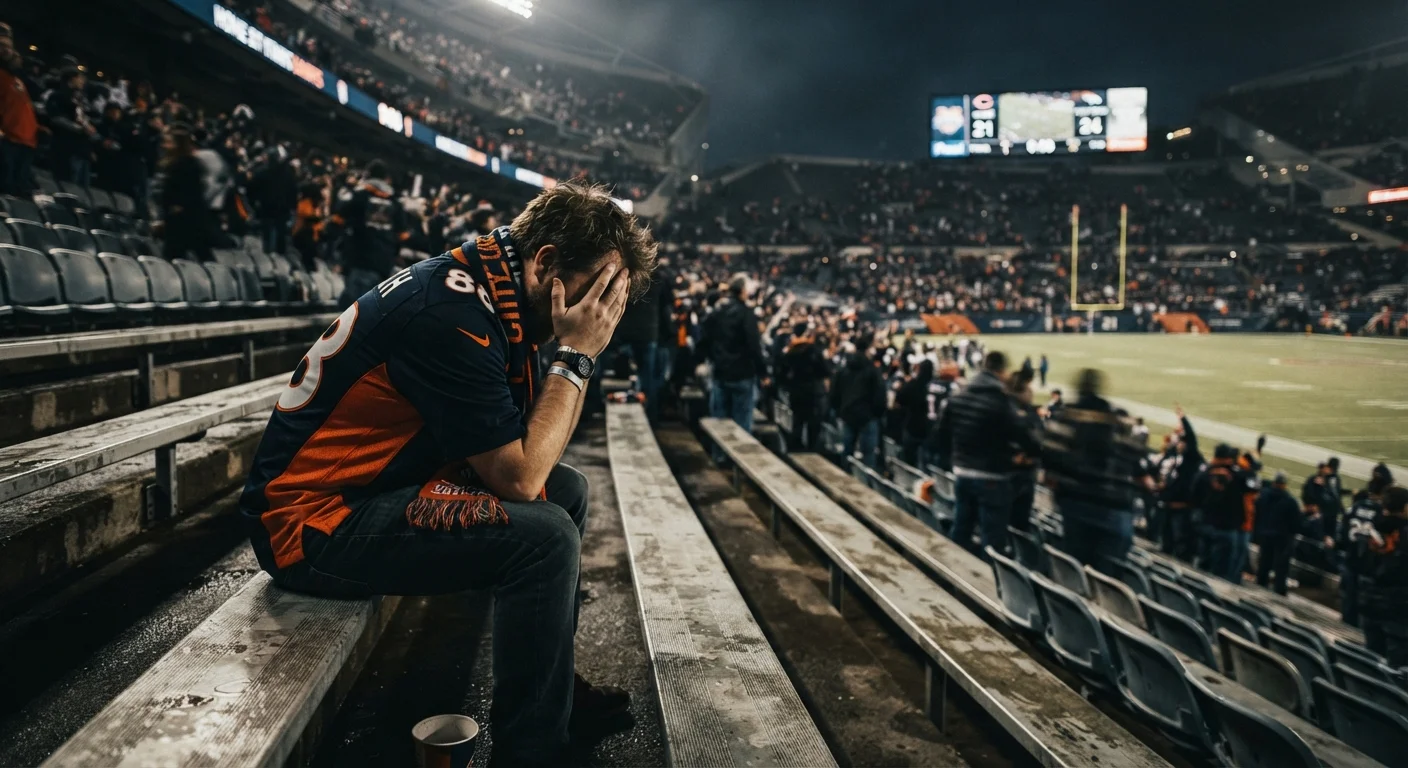
What it actually means to be a sports fan goes far beyond wearing a jersey. For highly identified fans, a team loss is processed by the brain in ways that parallel personal failure - including elevated cortisol levels and disruptions to mood and concentration.
~50%
Fans reporting post-loss mood disruption
Studies in sports psychology have found roughly half of highly identified fans report noticeable mood disruption lasting more than a few hours after significant team losses.
3x
Emotional intensity gap: high vs. low identification
Research comparing fan groups consistently finds highly identified fans experience wins and losses approximately three times more intensely than low-identification spectators.
1 in 4
American adults identify as avid sports fans
Gallup polling has found approximately one quarter of American adults describe themselves as avid sports fans with strong team loyalties.
The Social Layer: Why Groups Amplify the Pain
Fan identity is rarely a solo experience. Teams are anchored in communities - cities, neighborhoods, families, and friend groups. When a team loses, it's not just one person's identity that takes a hit; it's a shared social world.
This communal dimension raises the stakes considerably. A loss can feel like a fracture in social cohesion, particularly when a season-ending defeat ends a ritual that thousands of people were participating in together. Psychologists note that shared emotional experiences - whether euphoric or devastating - bind communities tightly. The same mechanism that makes celebrating a championship feel so meaningful makes absorbing a loss feel so heavy.
“The team becomes a social identity, not just an entertainment preference. When that identity is threatened by a loss, the emotional response is psychologically equivalent to a personal setback.”
— Daniel Wann, Professor of Psychology and leading researcher in sports fan identity
This also helps explain why rival wins provoke such strong reactions. It's not just that your team lost - it's that another group's identity was elevated at the expense of your own.
BIRGing, CORFing, and the Mind's Defense System
Sports psychologists have identified two predictable coping patterns fans use to manage how outcomes affect their self-image. BIRGing - Basking in Reflected Glory - is what happens after a win: fans say "we won" and feel personally elevated by the team's success. CORFing - Cutting Off Reflected Failure - is the opposite: after a loss, some fans emotionally distance themselves, suddenly saying "they lost" rather than "we lost."
CORFing is a self-protective instinct. By psychologically separating from the losing team, fans preserve their self-esteem. But for deeply identified fans, this distancing can feel like a betrayal of loyalty - creating an internal conflict between self-protection and group belonging.
Understanding these patterns doesn't make the grief any less real, but it does reveal it as a rational psychological response rather than irrational over-investment. For more on how intense fandom can sometimes tip into unhealthy territory, see when fan passion crosses into toxic territory.
Managing the Emotional Investment
None of this means fans should disengage from teams they love. Emotional investment is precisely what makes sports meaningful. The goal isn't to care less - it's to understand the psychological machinery at work so you can engage more intentionally.
Fans who maintain perspective often cultivate what researchers call multiple identity sources - their sense of self is rooted in career, family, friendships, and personal achievements, not primarily in their team's record. When a loss lands, it hits one part of identity rather than the whole structure.
Habits that sustain long-term fandom enjoyment matter more than fans often realize. Rituals, community connection, and balancing fandom with other fulfilling parts of life are practical buffers against the deepest valleys of a losing season. The passion doesn't have to diminish - it just needs a stable foundation underneath it.