
Why Written Rules Only Go So Far
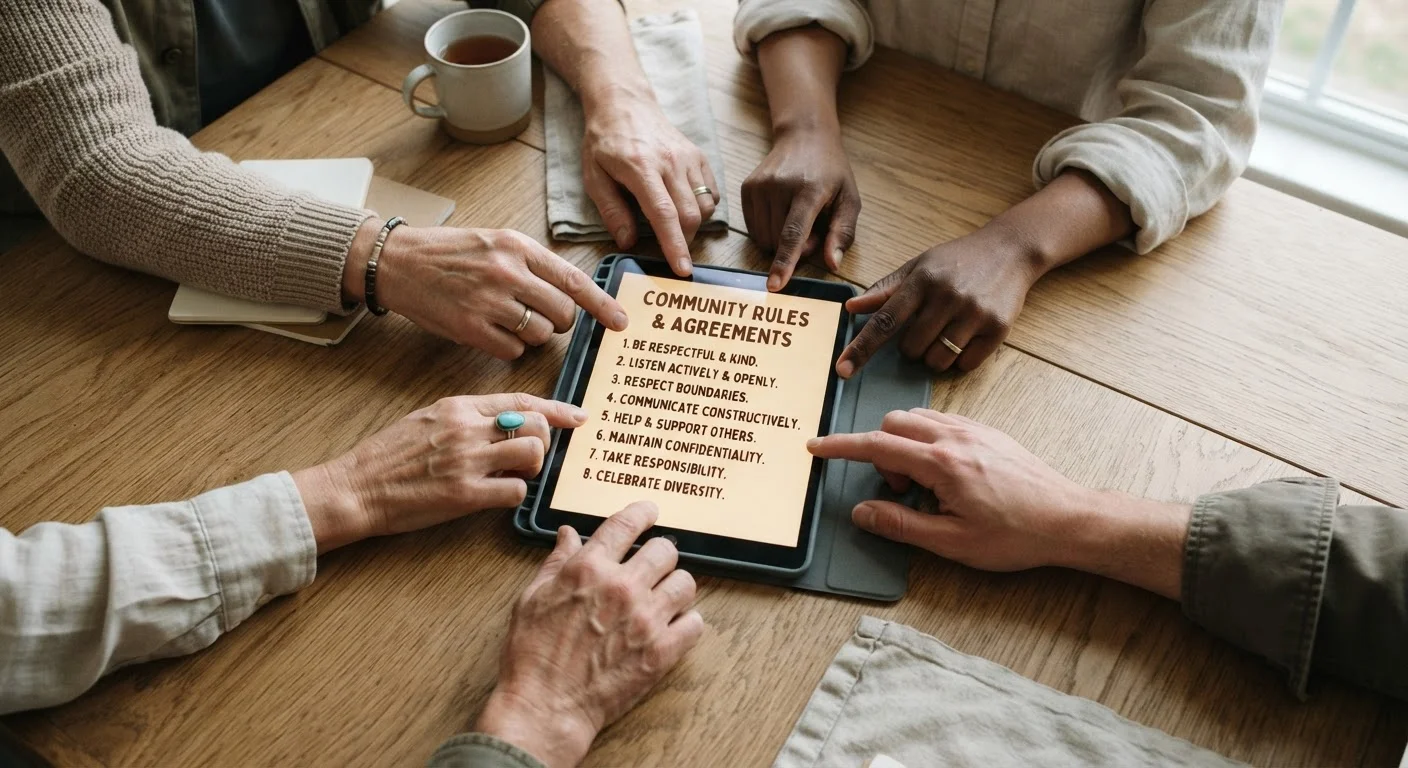
Every online community has some form of official guidelines - a list of things you're not allowed to do. But anyone who has spent time in forums, subreddits, Discord servers, or Facebook groups knows that the written rules don't capture everything. There's an entire layer of expected behavior that nobody ever formally documented.
These unwritten expectations are sometimes called norms - shared understandings about how members ought to act. They cover things like how long a post should be, whether humor is welcome in a serious thread, how to address disagreement, and even what topics are considered off-limits even when they're not banned. Understanding them is just as important as reading the posted rules.
For a broader look at how official rules and social structure fit together, see the anatomy of an online community. And to understand how guidelines are written and enforced in the first place, community guidelines demystified is worth a read.
How Norms Form Without Anyone Deciding
Norms don't usually get invented by a founder or voted on by members. They emerge gradually through repeated interactions. When someone posts something that doesn't fit the group's culture - say, a promotional link in a support forum - and several members respond critically, that reaction teaches everyone watching what's acceptable. Over time, these moments accumulate into a recognizable culture.
Early members tend to have an outsized influence. The behavior they model and reward in the community's early days often becomes the baseline others follow. A community that started with detailed, well-researched posts tends to develop norms around thoroughness. One that began as a casual chat space tends to stay that way even as it grows.
~80%
Online community members who primarily lurk
Research on online participation consistently finds that a small minority of members produce most content, while the majority observe - a pattern known as the 90-9-1 rule or 'participation inequality,' discussed in academic web research going back to Jakob Nielsen's early work.
1 in 4
Adults who say they've left an online community
Pew Research Center surveys on online communities have found a significant share of American adults report leaving a community due to conflict or feeling unwelcome, underscoring how much social climate affects retention.
Platform design also plays a role. Upvote and downvote systems, reaction buttons, and reply threading all create feedback mechanisms that reinforce certain behaviors and discourage others - without any human moderator making a decision. The community, in effect, governs itself through these signals.
For a deeper look at why these norms differ so much from one group to another, what online community norms actually are explains the forces at work.
What Netiquette Actually Covers
The word netiquette has been around since the early internet era, but its substance is still relevant. At its core, netiquette is about applying social awareness to digital communication - recognizing that there are real people on the other side of the screen who have expectations shaped by the community they've built.
“Norms are the invisible architecture of social life. They guide behavior without force, and their power comes from shared expectations rather than written codes.”
— Cristina Bicchieri, Professor of Social Ethics and author of research on social norms
In practice, netiquette varies by platform and community. On some forums, responding to a post that's years old without adding anything new - called 'necroposting' - is considered bad form. On professional networks, tagging someone just to boost visibility on your own post is frowned upon. In hobby communities, posting the same question that appears in the FAQ will often earn a blunt redirect rather than a warm welcome.
None of these behaviors are usually listed in the rules. But members notice, and the community responds. Learning the local version of netiquette is a key part of becoming a trusted, respected participant in any online space.
How Communities Enforce Their Own Standards
Formal moderation handles clear rule violations. But the vast majority of norm enforcement happens between ordinary members. Downvotes, short dismissive replies, pointed corrections, or simply ignoring a post - these are all forms of social feedback that signal when someone has stepped outside the community's expectations.
In tight-knit communities, reputation accumulates over time. Members who consistently follow both written and unwritten rules are extended more trust. Those who repeatedly breach norms - even without breaking official rules - may find their posts met with skepticism or their contributions overlooked.
This peer-to-peer enforcement has limits. It can become exclusionary or be weaponized against newcomers who simply didn't know better. Healthy communities find ways to correct behavior without humiliating members, especially those who are new. Understanding these dynamics can help you participate more thoughtfully and recognize when social pressure has crossed the line.
If you want to learn how to read these signals before you ever post, our guide on reading a room online walks through what to look for.
Observe Before You Participate
When joining any new online community, spend at least a few days reading existing posts before contributing. Notice what kinds of content get positive responses, how members address disagreement, and what topics seem off-limits. This simple habit - sometimes called 'lurking' - is one of the most effective ways to avoid accidentally breaking unwritten rules.