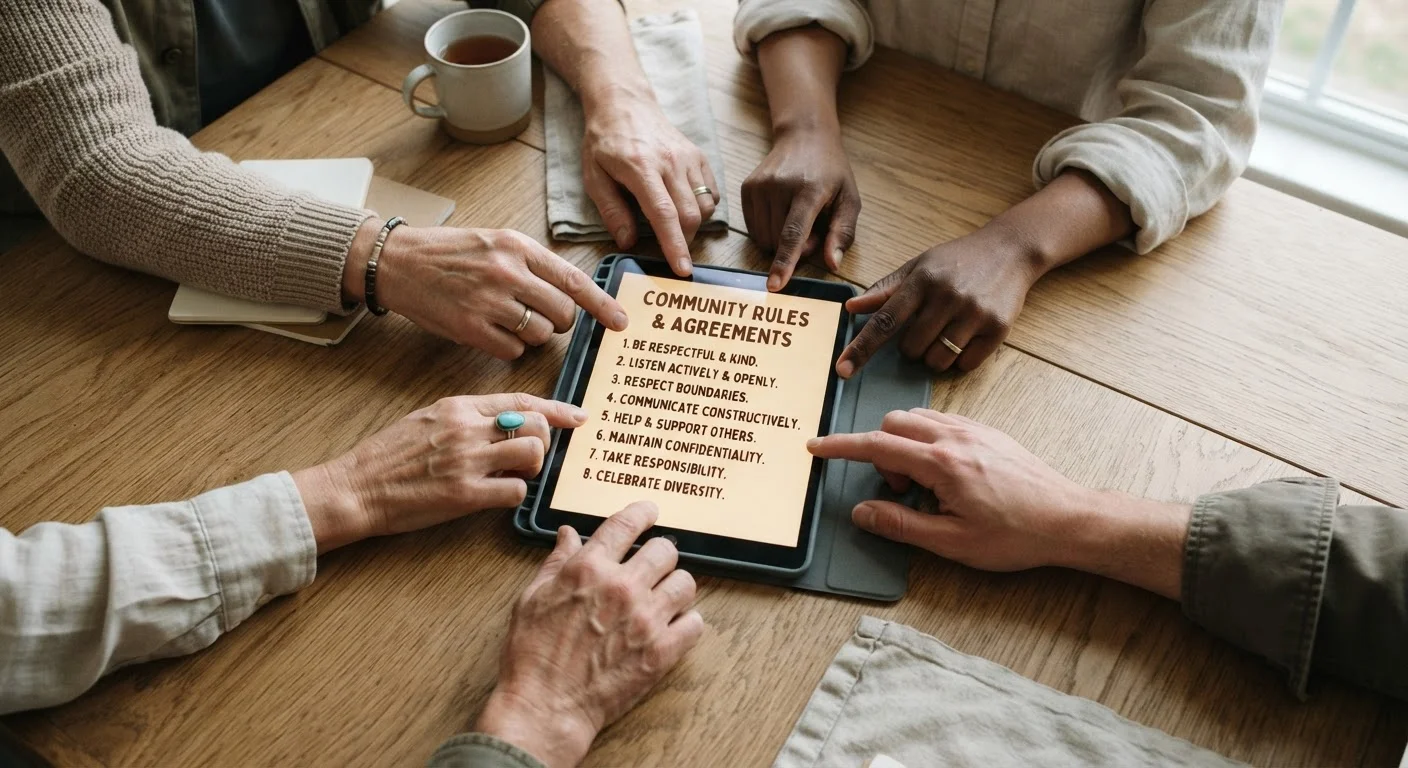

Why the Written Rules Aren't Enough
Most online communities post a ruleset somewhere - a pinned FAQ, a sidebar, a welcome message. These are worth reading. But they're a floor, not a ceiling. The actual culture of a community is built from thousands of small interactions that no rule document captures.
Think of it like starting a new job. The employee handbook tells you about vacation policy and the dress code. It doesn't tell you whether people actually take lunch breaks, how your manager prefers to communicate, or which topics to avoid at the team meeting. You learn those things by watching.
The same logic applies online. Unwritten community norms shape behavior far more than most newcomers expect. This checklist gives you a structured way to read those signals before you post a single word.
Observe Before You Post
Assess Moderator Presence
Read How Members Treat Each Other
Spot Unwritten Expectations
Evaluate Fit Before Committing
What to Look for and Why It Matters
The signals below aren't complicated - they're just easy to miss when you're excited to jump in. Running through this checklist when you join a new space gives you a much clearer picture of what you're actually stepping into.
Don't Mistake Activity for Health
A community can be extremely active and still be a hostile or low-quality space. High post volume, fast response times, and large membership numbers are neutral signals on their own. What matters is the nature of the activity - not its quantity. Run through the full checklist even in spaces that look thriving at first glance.
Pay special attention to how established members respond to questions that have probably been asked before. A community that greets repetitive questions with patience has a very different culture from one that meets them with a dismissive link to a search function. Neither is universally right or wrong, but knowing which type you're in helps you calibrate your approach.
Community roles and structure also influence the signals you'll find here. In communities with active moderators and clear hierarchies, culture tends to be more consistently enforced. In looser spaces, norms may shift depending on which members happen to be most active at a given time.
Once you've worked through the checklist, you'll be in a much stronger position to decide whether to lurk a while longer or start participating. Either choice is valid - the goal is making it deliberately rather than by accident.
For a broader orientation to community life, the complete starting point for new participants covers setup, etiquette, and safety basics. And if you want to understand how reputation systems like upvotes and karma color the culture you're reading, this breakdown of reputation mechanics is a useful companion. The norms and netiquette guide goes deeper on how informal expectations form over time.
Community search function
Search the community's own archive to find how past questions were received and what topics have already been covered extensively.
Browser history or bookmarks
Keep track of specific threads that illustrate the community's culture so you can revisit them before your first post.
Text or notes app
Jot down recurring terms, member names, and norms you notice during your observation period so patterns become visible over time.