What Makes an Online Community Tick
Log into almost any active forum, subreddit, Discord server, or Facebook group and you'll sense something beyond the posts themselves - a distinct culture, a set of expectations, and a reason people keep coming back. That underlying structure is what separates a thriving community from a chaotic comment section.
Not every group chat or forum qualifies as a true community. What elevates a gathering of people into a community is a combination of three core elements: roles (who people are within the group), rules (the stated and unstated expectations for behavior), and shared purpose (the reason everyone showed up in the first place). Pull any one of these out and the whole structure gets shaky.
This guide walks through each element clearly, so you can better understand the communities you're already part of - or make smarter choices about the ones you're considering joining.
Member Roles: Who Does What
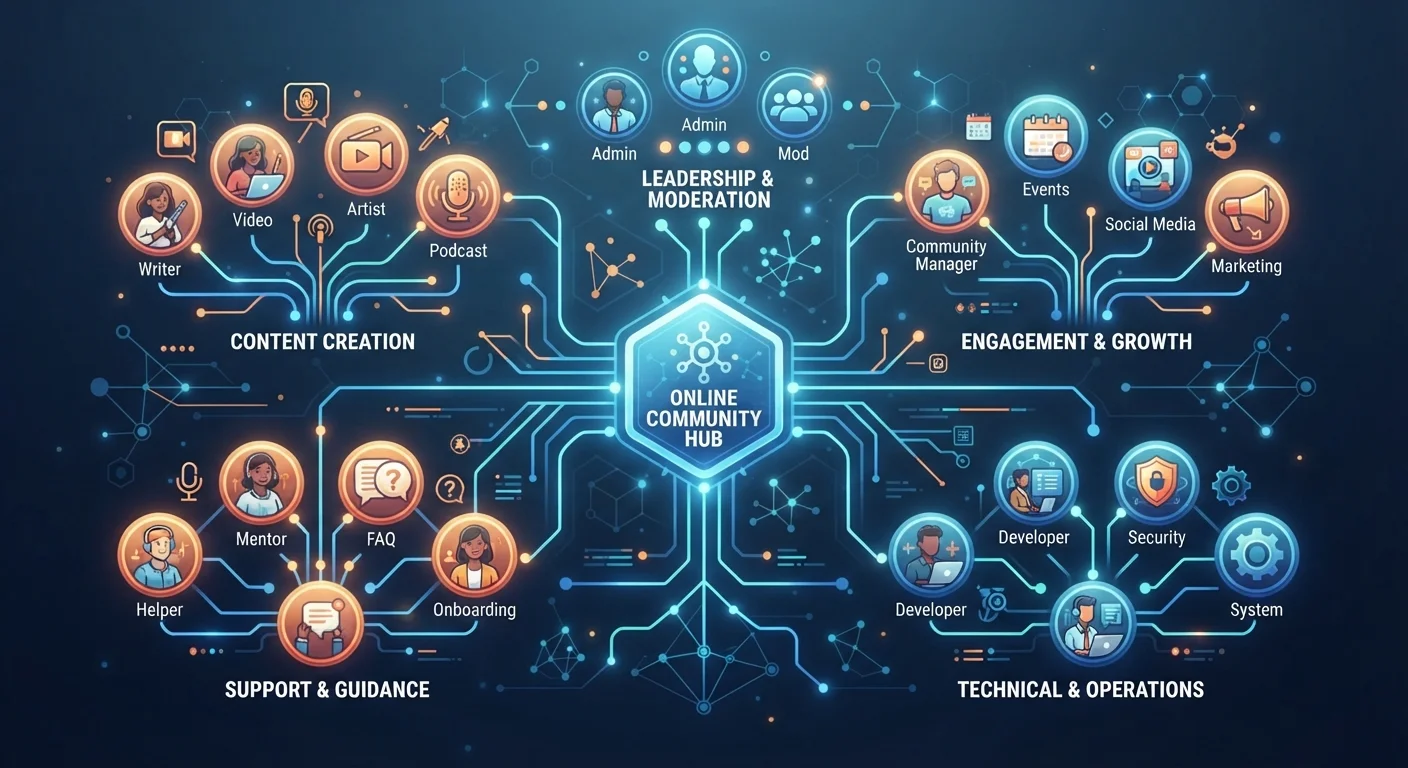
Online communities aren't flat. Even groups that feel informal tend to develop a recognizable hierarchy over time. Here are the most common roles you'll encounter:
- Founders / Owners: The person or people who created the space. They set the original tone, make platform-level decisions, and often hold the highest level of administrative access.
- Moderators (Mods): Volunteers or appointed members who enforce the rules, review reported content, and mediate disputes. Moderators are the front line of community health.
- Power Users / Regulars: Long-standing members who post frequently, answer questions, and informally shape culture. They don't hold official titles but carry social authority.
- New Members: People who recently joined. Most communities have an onboarding period - formal or informal - during which new members learn the ropes.
- Lurkers: Members who read and observe without actively posting. Research consistently finds that lurkers make up the majority of most online communities. Their presence matters even when their voices aren't heard.
When joining a new community, spend at least a week reading before you post. Observing lets you pick up unwritten norms that newcomers who dive in immediately often violate.
Most community friction involving new members stems from norm violations, not rule violations - and norms can only be learned through observation.
If you moderate a community, document your unwritten norms periodically and consider adding them to your guidelines. Surfacing implicit expectations reduces the burden on moderators and helps new members onboard faster.
Research on online community governance consistently shows that communities with transparent, accessible norms experience less conflict and lower moderator burnout.
Understanding where you fit in this structure - and where others fit - helps you interpret community dynamics more accurately and engage with more confidence. Explore more about effective online participation to develop those skills further.
Rules, Norms, and the Social Contract
Every community operates on two layers of behavioral expectations: the written rules and the unwritten norms.
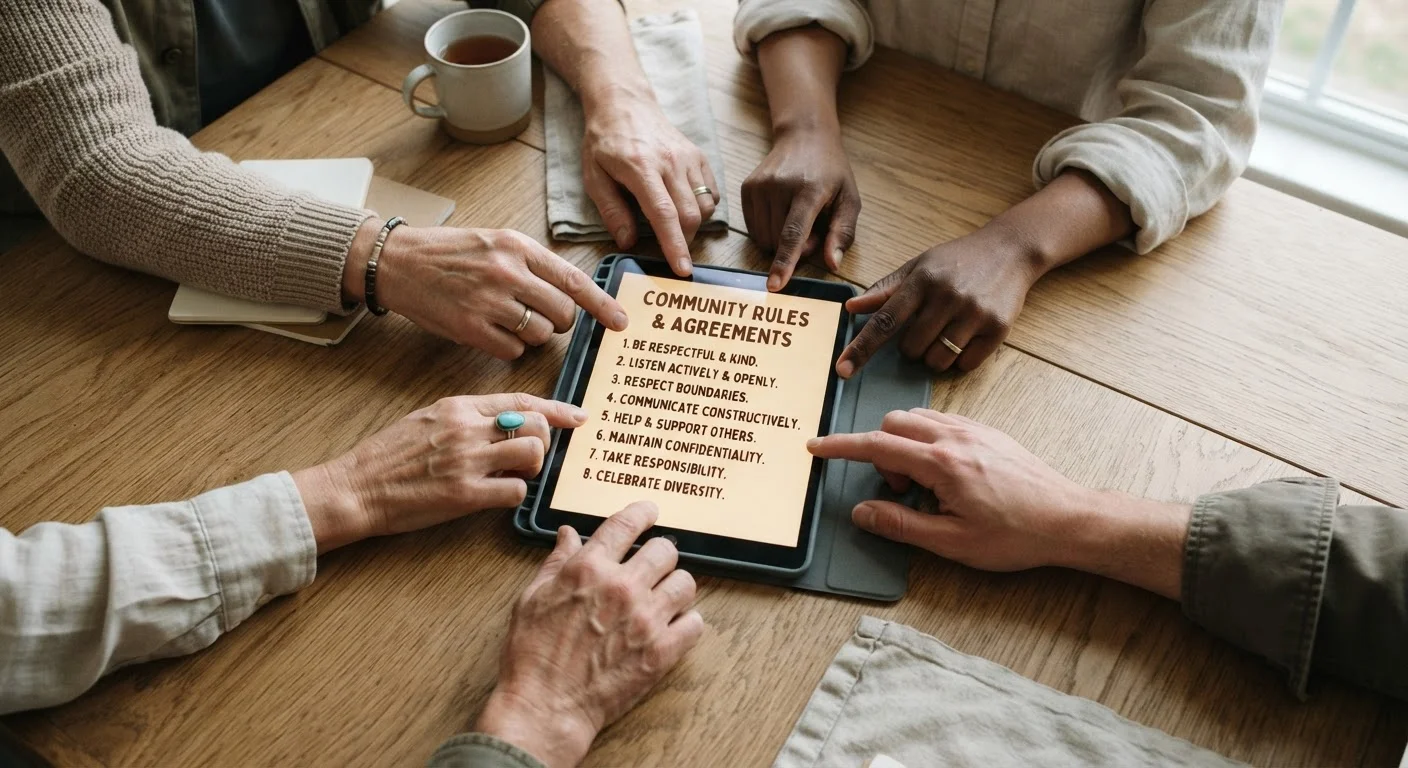
Written rules - sometimes called community guidelines, terms of service, or a code of conduct - are typically posted in a pinned thread or sidebar. They spell out what's explicitly prohibited: harassment, spam, off-topic posting, and so on. These rules create a baseline floor for behavior.
Unwritten norms are subtler and often more powerful. They develop organically through repeated interactions and aren't documented anywhere. For example, a knitting community might have no written rule against political debate, but members quickly learn it's frowned upon. These informal expectations shape behavior in ways written rules simply can't.
Watch for Rule-Norm Misalignment
If a community's written rules say one thing but members routinely behave another way - and moderators don't act - that's a signal the community lacks healthy governance. It often leads to inconsistent enforcement and an environment where bad actors can exploit the gap. Pay attention to how moderators actually respond, not just what the posted rules say.
When rules and norms are well-aligned - when the written policy reflects what members actually believe in - communities tend to self-regulate effectively. When they diverge, conflict and enforcement fatigue follow.
Shared Purpose: The Glue That Holds It Together
Roles and rules create structure, but shared purpose creates belonging. A community coalesces around something members care about - a hobby, a cause, an identity, a shared challenge, or a common goal.
That purpose doesn't have to be grand. A neighborhood buy-nothing group and a global open-source software project are both communities, even though one orbits free furniture and the other orbits code. What matters is that members feel they're there for the same reason.
~90%
Members who lurk rather than post
The '1% rule' in online communities suggests roughly 90% of users consume content without contributing, per long-observed patterns in internet participation research.
3-5x
Higher retention in purpose-driven communities
Community practitioners widely observe that groups with a clear, articulated mission retain members significantly longer than loosely organized gathering spaces.
Purpose also does something practical: it tells members what's relevant. When a community has a clear reason for existing, off-topic content stands out and on-topic contributions feel rewarding. Without it, conversations drift and membership drops off. Belonging, identity, and purpose all play a role in why people join - and why they stick around.
How These Elements Work Together
Think of roles, rules, and shared purpose as a three-legged stool. Remove one leg and the whole thing tips. A group with clear purpose but no structure devolves into chaos. A group with rigid rules but no purpose feels like a waiting room. A group with roles and rules but nothing to rally around loses members as quietly as it gained them.
Healthy online communities continuously tend all three: leaders recruit good moderators, moderators enforce fair rules, and members reinforce the shared purpose through the content they contribute and the behavior they model.
As you navigate different online spaces - whether on major platforms or niche digital spaces - look for these elements. A community that has invested in its structure is almost always a better place to participate than one that hasn't. And if you're thinking of building one yourself, now you know exactly what you need to get right from day one.