What 'Open' and 'Closed' Actually Mean
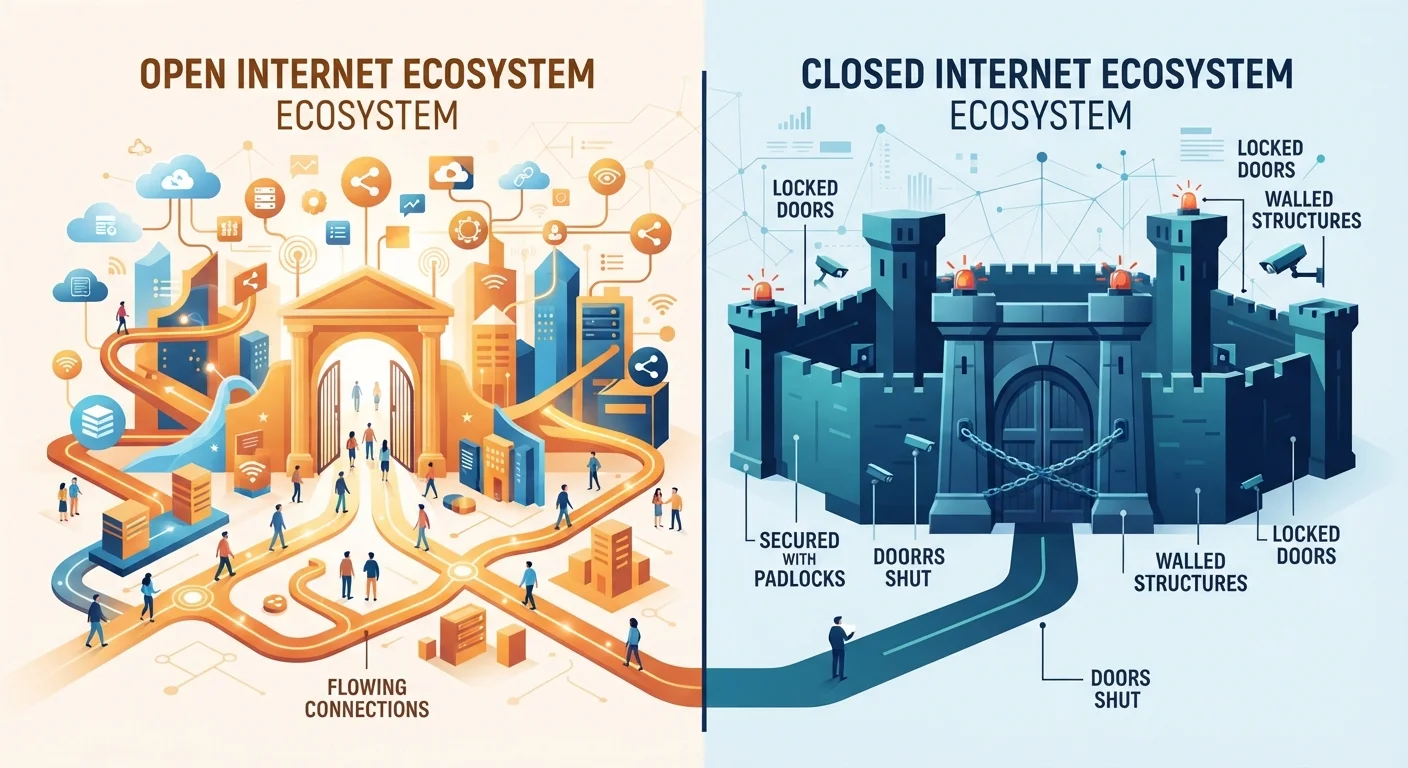
The terms get thrown around loosely, so it helps to break them into concrete dimensions. When technologists call a platform 'open,' they typically mean one or more of the following: the source code is publicly available, outside developers can access its data through an API, or anyone can participate without special permission. 'Closed' means the opposite - a company controls the code, limits outside integrations, and sets the terms for who can use it and how.
These aren't binary categories. Most platforms mix open and closed traits. A platform might let anyone sign up (open registration) while keeping its recommendation algorithm secret (closed design) and prohibiting third-party apps from accessing its data (closed API). Understanding which dimensions are open or closed tells you far more than a single label.
For a broader picture of how platforms are structured, see our overview of online community types.
71%
U.S. adults who use at least one social media platform
According to Pew Research Center's ongoing social media use tracking surveys, a large majority of American adults participate on platforms with varying degrees of openness.
3+
Platforms the average user belongs to
Research from Pew and similar organizations suggests most active social media users spread their participation across multiple platforms, each with different openness policies.
How Platform Openness Shapes Communities
For the people who actually live in online communities, the open/closed distinction has real consequences. On a closed platform, the company sets the rules - and can change them overnight. Communities can grow large and vibrant, then find their features removed, their reach limited by an algorithm shift, or their entire space deleted. This isn't hypothetical; it has happened repeatedly across social networks and forums.
Open platforms distribute some of that power. When a community runs on open-source software or an open protocol, members can fork the project, migrate to a different server, or build tools the original developers never imagined. The tradeoff is that open platforms often demand more technical know-how to set up and maintain.
How a community manages access is a related but separate question - that's about membership policy, not platform architecture. Both matter for how a community feels and functions.
A hobbyist knitting group builds years of tutorials and discussion threads on a popular social network, only to find the platform has removed the groups feature and their content is no longer accessible.
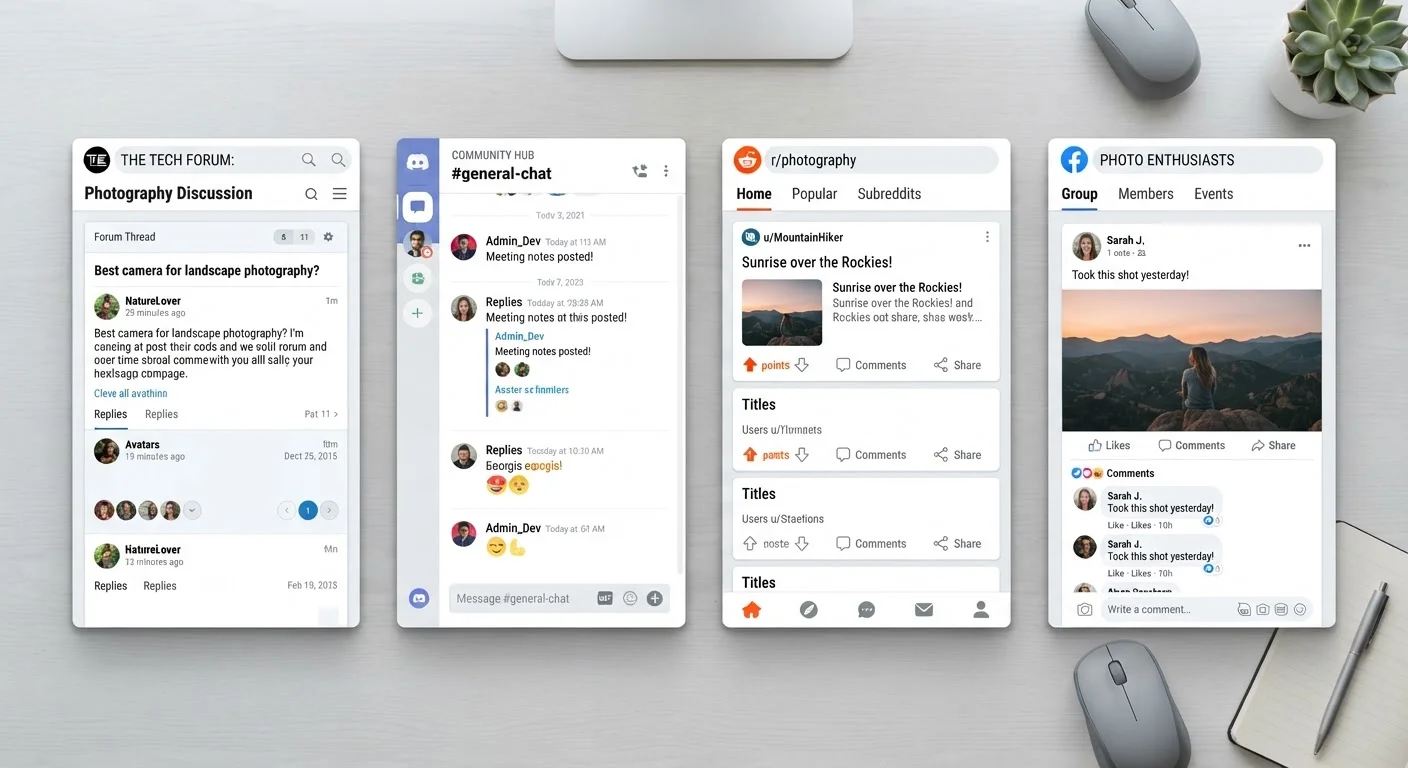
A tech-focused community runs on an open-source forum platform hosted on its own servers, maintained by volunteer administrators.
A podcasting network uses an open RSS feed standard to distribute episodes across dozens of apps and platforms simultaneously.
A neighborhood watch group uses a closed private app that requires invitation codes and a verified address to join.
The Practical Tradeoffs for Members and Builders
Choosing where to build or join a community always involves implicit tradeoffs. Closed platforms typically offer a more polished, consistent experience - they invest heavily in design, stability, and user support because their business depends on keeping people engaged. That convenience comes at a cost: you're a tenant, not an owner. Your data, your audience, and your community norms are all subject to the platform's decisions.
Open platforms flip that equation. They give communities more autonomy - the ability to set their own rules, own their data, and move if things go wrong. But they can also feel rougher around the edges, and smaller communities may struggle to attract new members without the built-in network effects of a large closed platform.
Back Up Your Community's Content
Regardless of which platform you use, periodically export or archive important posts, member lists, and resources. Many platforms offer a data download option in account settings. Doing this regularly means you have a copy of what your community has built - even if the platform changes its policies or disappears.
Platform design choices - not just openness - also shape behavior in ways most users don't notice. See how features like upvotes and reply threads influence what communities actually do. And if a platform you depend on ever changes its rules, understanding why those shifts happen can help your community respond more effectively.
Questions Worth Asking Before You Commit
Whether you're starting a community or joining one, a few practical questions cut through the open/closed complexity. Can you export your posts, member lists, or community history? What happens to your content if the platform shuts down or gets acquired? Can outside developers build tools for your community, or are you locked into whatever the platform provides?
You don't need a degree in computer science to think through these questions. The answers are usually findable in a platform's terms of service or help documentation. Understanding what makes a community worth building in the first place is the right starting point - then these architectural questions become easier to evaluate in context.
The open/closed spectrum isn't about which platforms are good or bad. It's a framework for understanding where power sits, what risks exist, and how much control a community actually has over its own future.