Why Community Migrations Fail More Often Than They Should
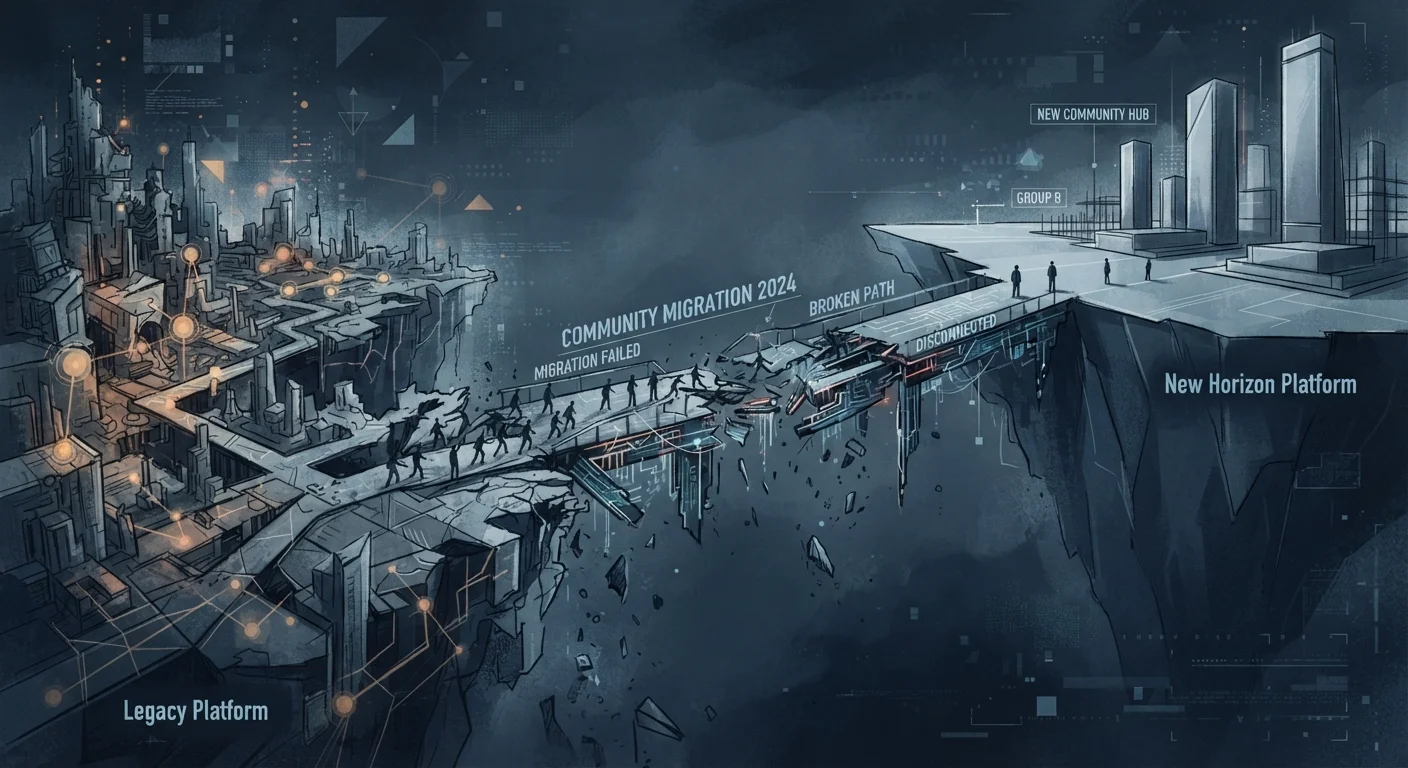
Moving an online community to a new platform is one of the highest-stakes decisions an organizer can make. Done well, it can revitalize a space and give members better tools. Done poorly, it can splinter a group that took years to build. The frustrating truth is that most migrations don't fail because of technology - they fail because of how people are treated during the process.
Understanding where your community is in its life cycle matters here. A young, growing community handles disruption differently than a mature one where members have deep roots and expectations. Either way, the core principle is the same: members need to feel informed, included, and respected - or they'll simply stop showing up.
~40%
Communities that lose half their members during platform migrations
Community management practitioners commonly report that poorly planned migrations lose 30-50% of active members, based on case studies shared in community management forums.
3-6 months
Realistic timeline for a smooth community migration
Experienced community organizers widely recommend allowing three to six months for a phased migration, including announcement, overlap, and full cutover stages.
The mistakes below are the ones that organizers repeat most often. Recognizing them in advance is the first step to avoiding them.
The Most Common Mistakes - and What to Do Instead
Announcing the move without involving members in the decision.
Why it happens: Organizers often treat platform choice as an administrative decision that belongs to leadership, not the broader community.
Setting an unrealistically short transition timeline.
Why it happens: Organizers underestimate how long behavior change takes, especially for members who engage out of habit and aren't checking announcements closely.
Choosing the new platform based on features rather than member fit.
Why it happens: Organizers focus on what the platform can do - integrations, moderation tools, design - rather than whether typical members will find it intuitive.
Failing to export and migrate historical content.
Why it happens: The urgency to get people onto the new platform overshadows the slower work of preserving old discussions, resources, and pinned guides.
Going silent after the initial migration announcement.
Why it happens: Organizers assume the announcement speaks for itself and shift their energy entirely to building out the new space.
Not recruiting volunteer ambassadors to help members through the transition.
Why it happens: Organizers try to manage the migration alone, underestimating how many small questions and friction points arise for everyday members.
Platform policy instability is often what forces these migrations in the first place. If you want to understand why platforms change the rules in ways that upend communities, our piece on why online platforms keep changing their rules covers the dynamics behind those shifts and what organizers can do to stay ahead of them.
Don't Pull the Plug Too Soon
Shutting down your old platform immediately after announcing a migration is one of the most damaging moves an organizer can make. Members who weren't ready to switch lose access to content, contacts, and context all at once. Keep the old space accessible in read-only mode for at least 60 to 90 days whenever possible, giving members time to transition on their own terms.
What a Successful Migration Actually Looks Like
A well-managed migration looks less like a product launch and more like a community event. The organizer communicates early, listens actively, and gives members agency in the process. The new platform is introduced through familiar voices - existing moderators and trusted regulars - not just an announcement from the top.
Momentum Is Hard to Rebuild
Once members disengage during a poorly handled migration, many don't come back - even if the new platform is objectively better. Research on online community behavior consistently shows that participation drops sharply when users encounter friction or feel unheard. Treat the migration window as your community's most fragile period and plan accordingly.
New and less-experienced members are especially vulnerable during a chaotic migration. If you're thinking about how this lands for people just finding their footing online, our guide to getting started in your first online community is worth keeping in mind as you design the onboarding experience on your new platform. A migration is, in effect, a fresh start - and that's an opportunity to do onboarding right this time. Thoughtful execution here can strengthen your community rather than diminish it. The organizers who succeed treat the migration itself as a community-building moment, not just a logistical task.